Daily logistics scenarios such as loading docks, warehouse access corridors and underground garage entrances are all equipped with fixed ramps, which are common operation scenarios for electric forklifts. For frontline forklift operators, mastering the correct operation logic for standard ramp slope for forklift is not only the basic requirement of safety production specifications, but also the core method to extend the service life of vehicle power components.
Generally, the standard ramp slope for forklift in daily non-special operation scenarios is controlled within 10% for full-load climbing condition, and the slope for no-load descending can be properly relaxed to 15% within the vehicle's design bearing range. Before the formal operation, operators need to first confirm the obvious slope marking of the site ramp, and avoid driving the forklift on the ramp with unclear slope data or damaged pavement structure.
When driving on the ramp, operators should keep the load facing the upward direction no matter the vehicle is climbing or descending, to prevent the goods from slipping or the vehicle from tipping over due to the shift of center of gravity. Do not turn on the ramp, do not carry out fork lifting or stacking operation on the non-special reinforced ramp, and keep a safe distance of more than 1 meter from the edge of the ramp during the whole driving process.
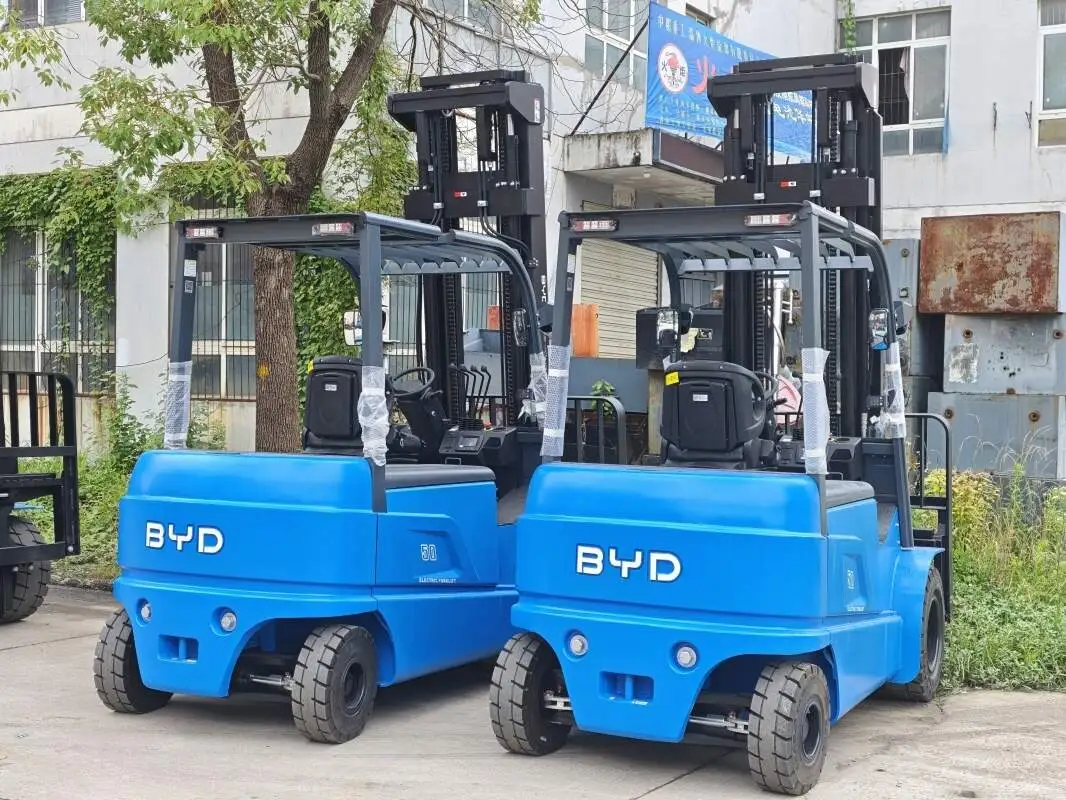
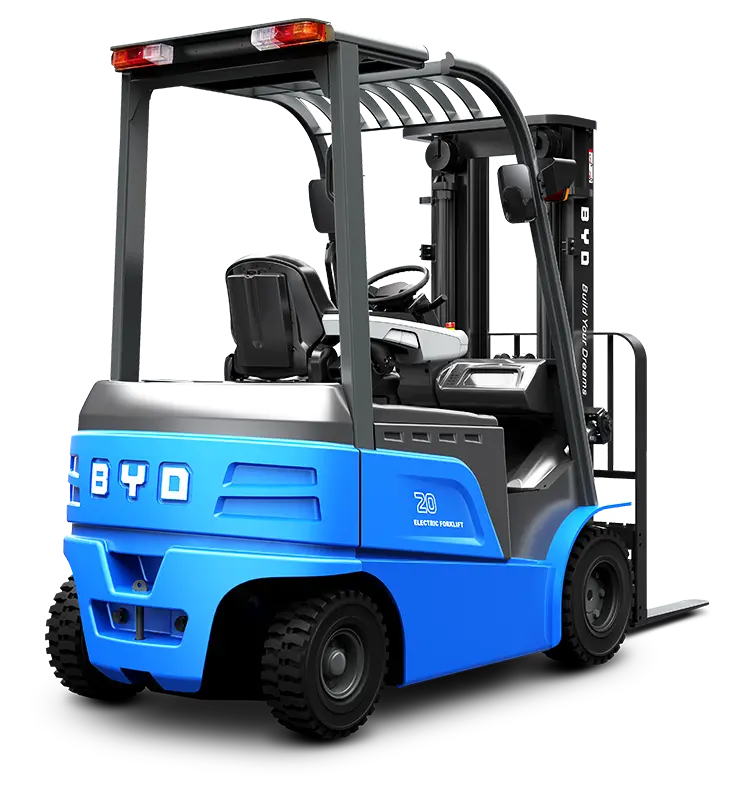
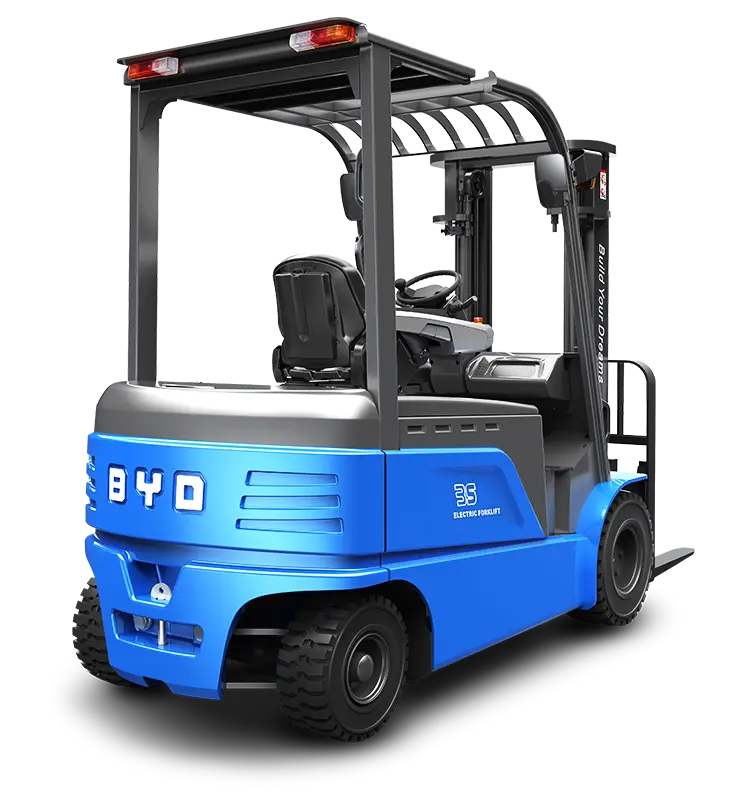
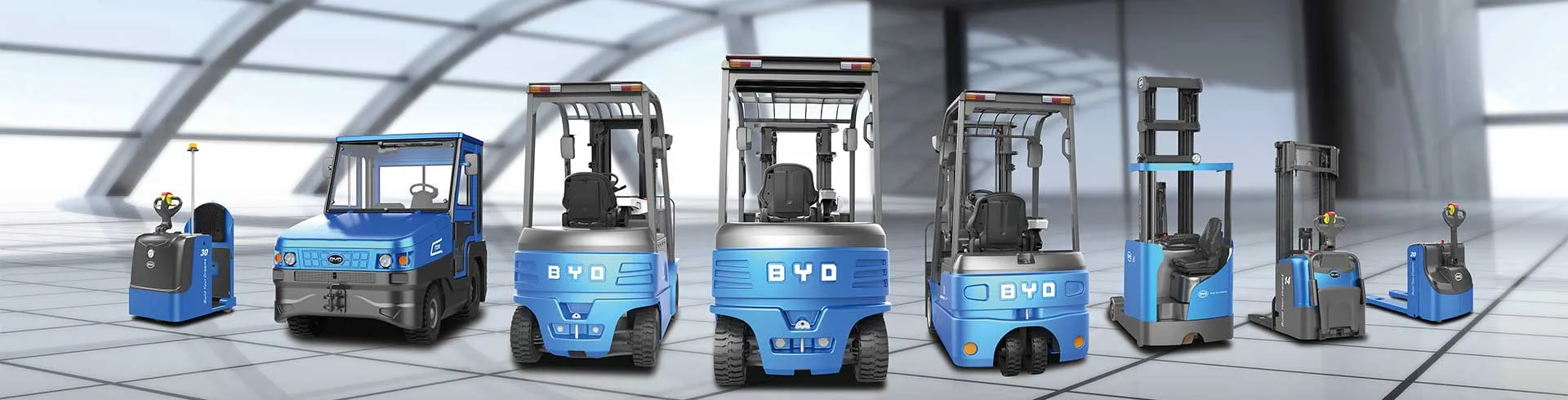
As a professional new energy forklift supplier, Jianshu New Energy specializes in supplying BYD electric forklifts, and we will also provide targeted operation training for customers when delivering vehicles, to help operators get familiar with the power output characteristics of electric forklifts on ramps. When the forklift is climbing a standard slope, keep the driving speed at a low steady state, do not step on the acceleration pedal sharply, and do not frequently step on the brake pedal when going downhill, to avoid causing damage to the power battery and motor components.
In daily work, operators also need to regularly check the wear degree of the forklift tires, the sensitivity of the braking system, and the tightness of the goods binding, before entering the ramp operation section. If abnormal conditions such as slippery ramp pavement in rainy and snowy days are encountered, the slope operation should be suspended in time, and anti-slip treatment should be carried out on the ramp surface before continuing the work. Standardized ramp operation can effectively reduce the safety hidden dangers in the logistics operation process, help enterprises improve the operation efficiency of electric forklifts, and create a more stable and reliable working environment for frontline operators.