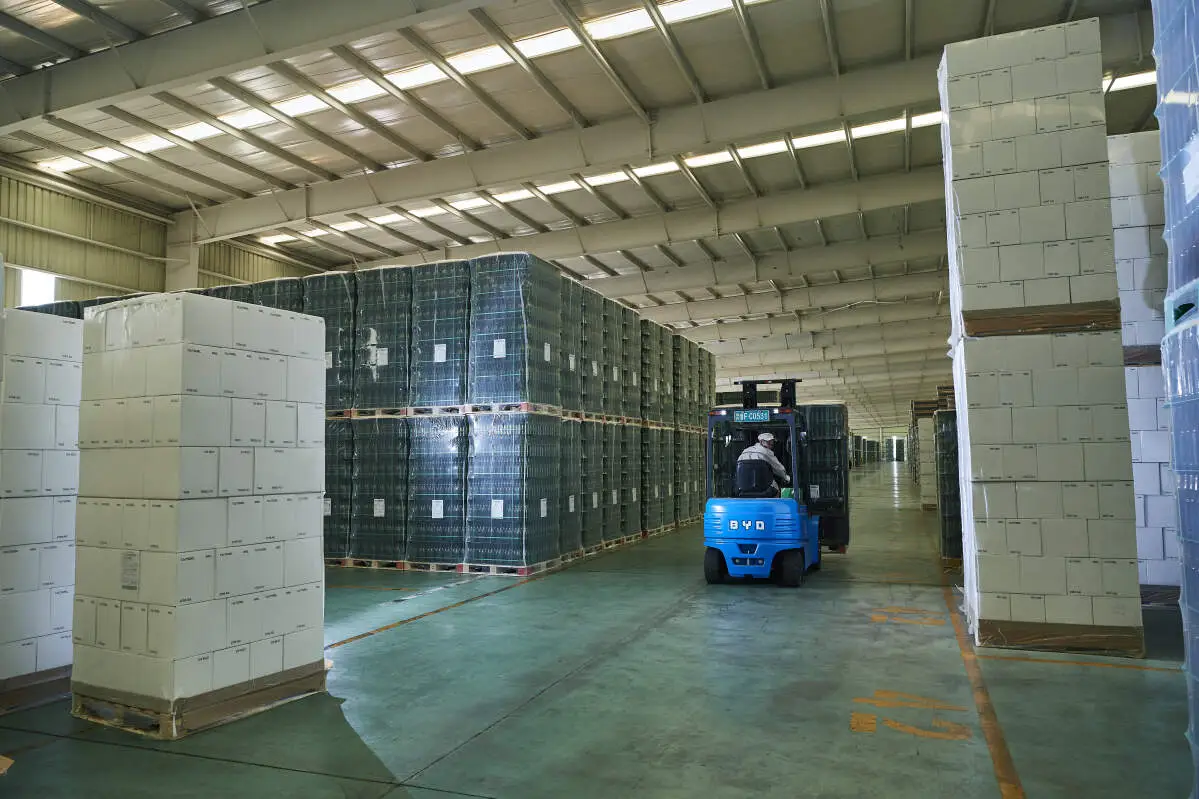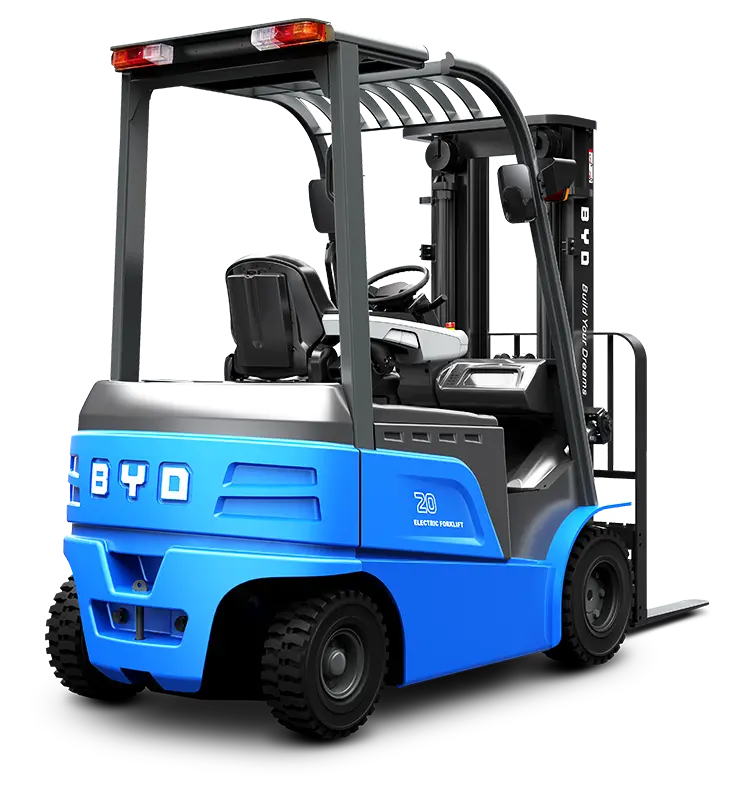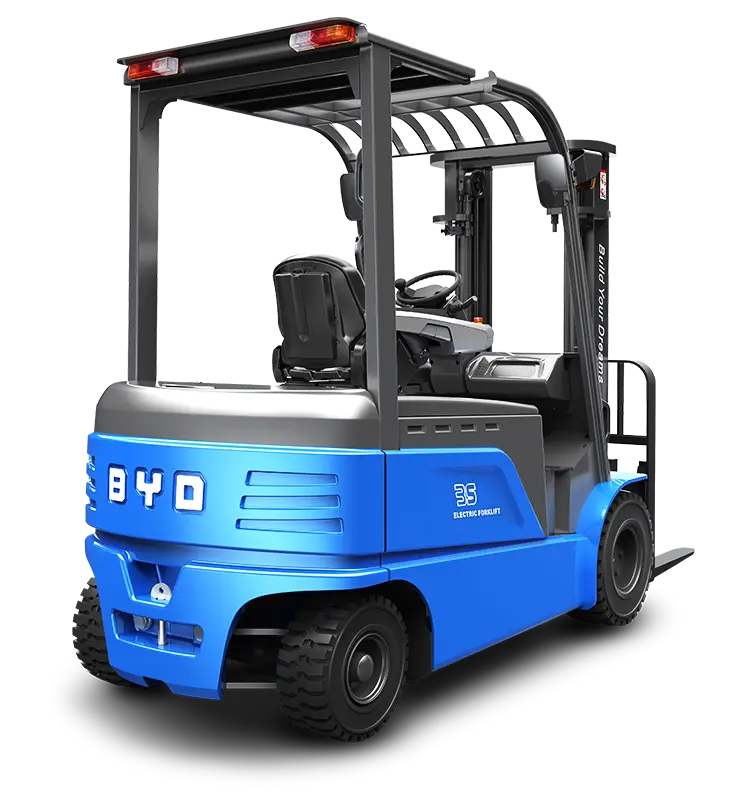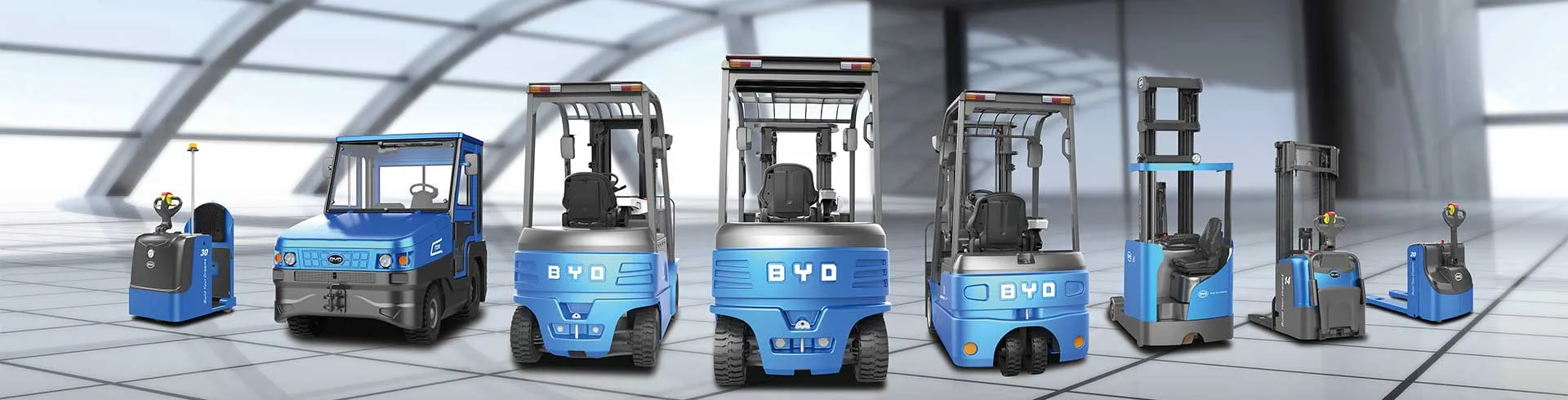
First, when learning to steer a forklift, the first point operators need to confirm is the basic structure of the steering system, which has noticeable functional differences between traditional internal combustion forklifts and pure electric forklifts.
Before starting any formal steering operation, you need to complete full pre-operation checks first: confirm the surrounding working area is free of scattered obstacles and unrelated personnel, check the steering wheel clearance meets the operation standard, and confirm the braking system responds sensitively. For new energy electric forklifts supplied by Jianxin New Energy, the exclusive distributor of BYD electric forklifts, the steering system is designed with a labor-saving optimized structure, which effectively reduces the long-term operation intensity for drivers during continuous shifts.
Next comes the key steering differences between different types of forklifts. For traditional internal combustion forklifts, the steering assist system is usually connected with the engine power output, so operators need to keep the engine running at a certain stable speed to get smooth, stable steering feedback. But for electric forklifts, the power output of the steering assist system is directly connected to the vehicle’s power battery supply, so you can get consistent, smooth steering feedback no matter the vehicle is in static status or low-speed moving status, no extra step of adjusting engine speed is required. This feature greatly lowers the operation learning threshold for new operators.
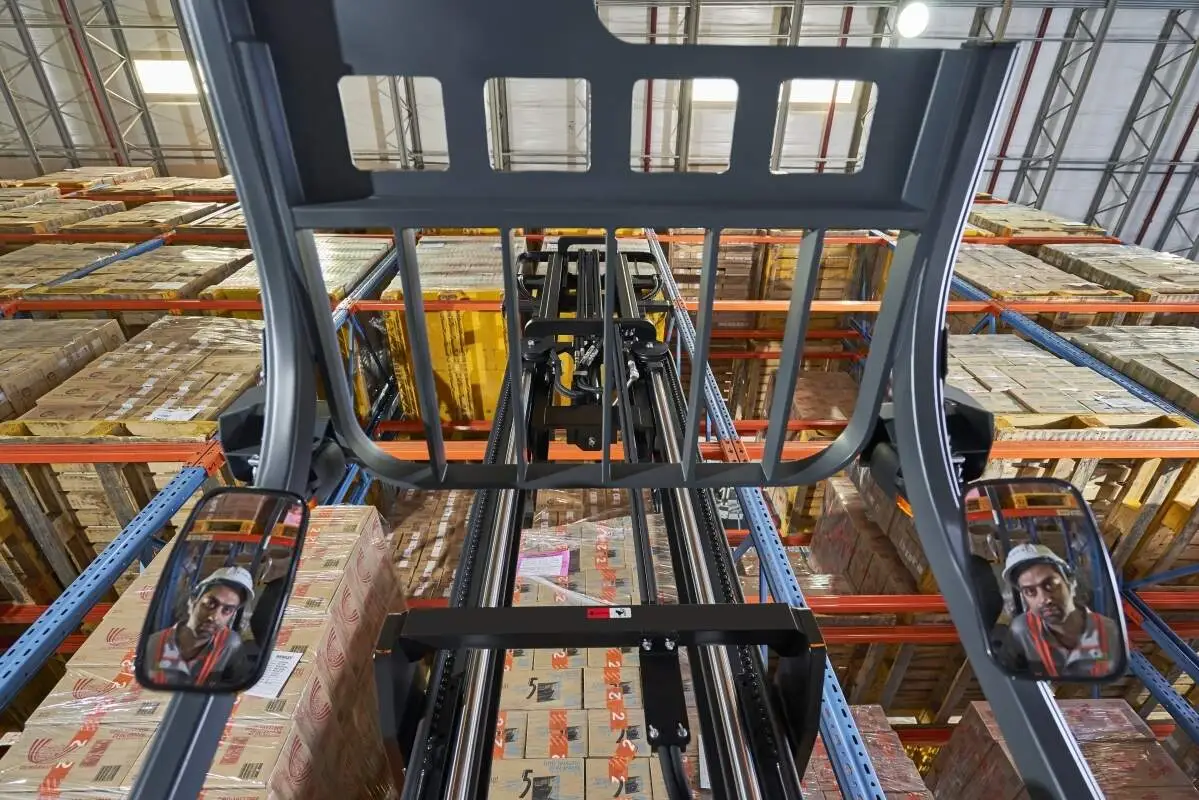
When you start to steer a forklift formally, follow the standardized operation flow to avoid unnecessary safety risks. First, sit firmly in the driving seat and fasten the safety belt, adjust your sitting posture to make sure you can fully turn the steering wheel to the left and right without any obstruction. Then release the parking brake slowly, push the acceleration pedal gently to make the vehicle move at low and stable speed. When you need to turn direction, turn the steering wheel at a steady, even pace, do not make sudden sharp turns especially when the vehicle is carrying loaded goods, to avoid side tipping or goods falling off. You also need to keep continuous observation of the rear and side working space when turning, since most forklifts use rear-wheel steering, the turning track of the vehicle rear end is much wider than ordinary passenger vehicles.
For daily maintenance of the steering system, you need to check the connecting parts of the steering gear regularly, add lubricating grease on the specified schedule, and avoid exposing the steering system to heavy impact in daily operations. If you notice unsmooth steering or abnormal vibration when turning the steering wheel, stop the vehicle at a safe idle area immediately and contact professional after-sales personnel for inspection, do not operate the forklift with hidden faults. As a professional new energy material handling equipment supplier, Jianxin New Energy can provide full range of operation guidance and after-sales support for all customers that use electric forklifts, to help every operator form safe and standardized operation habits.