forklift tipping point refers to the critical state where the overall center of gravity of the forklift shifts beyond the stable support range, and a slight external force will trigger the vehicle to tip over. Mastering the key points to identify the tipping point is the core prerequisite for every forklift operator to avoid safety risks in daily operations.
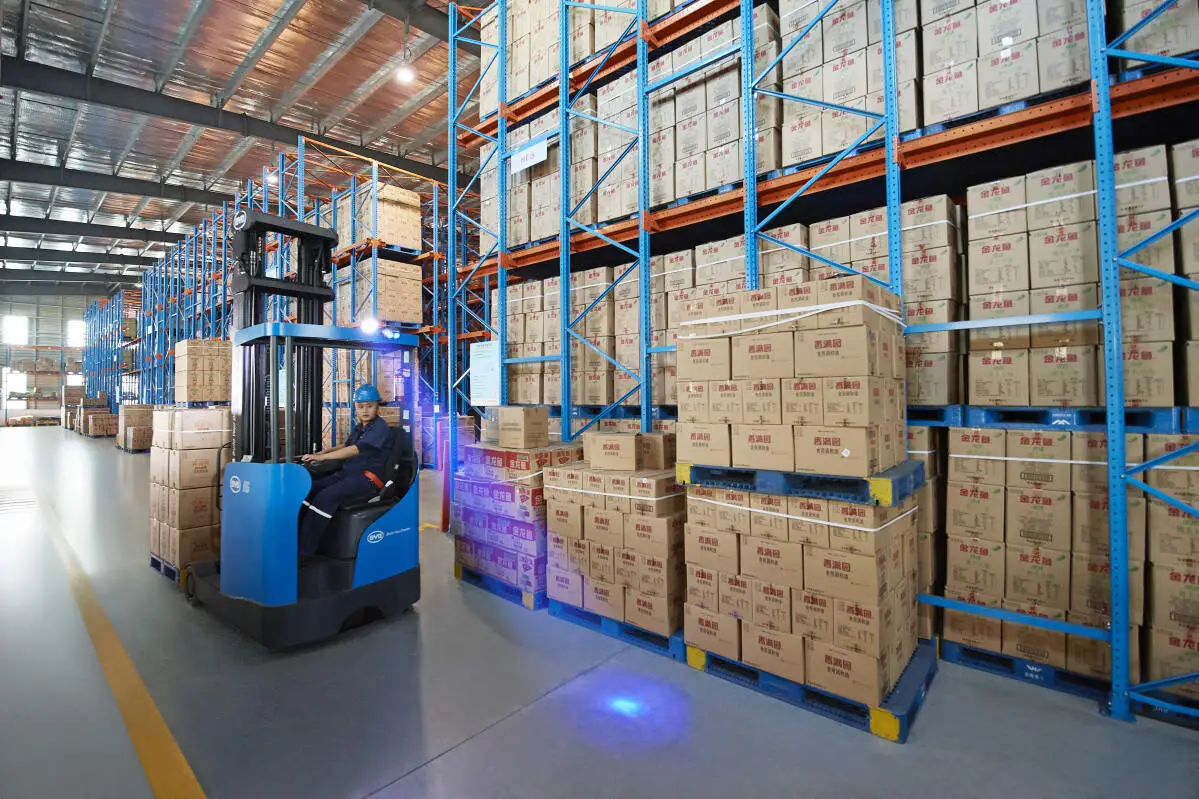
First, you need to focus on the matching state between the load and the lifting height. Under the rated load range, the tipping point of the forklift is dynamically adjusted according to the lifting height of the goods. When the goods are lifted to more than 3 meters, the forward movement of the center of gravity will significantly reduce the remaining safety margin of the tipping point. At this time, the operator should avoid sharp steering, sudden braking or driving on the sloped section with heavy load, otherwise it will easily break through the tipping point and cause safety accidents.
Second, pay full attention to the influence of ground conditions on the tipping point. The tipping point of the forklift designed under standard flat ground conditions will change significantly when the vehicle runs on non-standard roads. Slight pits, water accumulation, soft road surfaces or slopes that exceed the safe allowable range will reduce the original stability threshold, and even an empty forklift may cross the tipping point during high-speed steering. It is recommended to inspect the operating area in advance before each operation to mark dangerous areas that may change the stability of the vehicle.
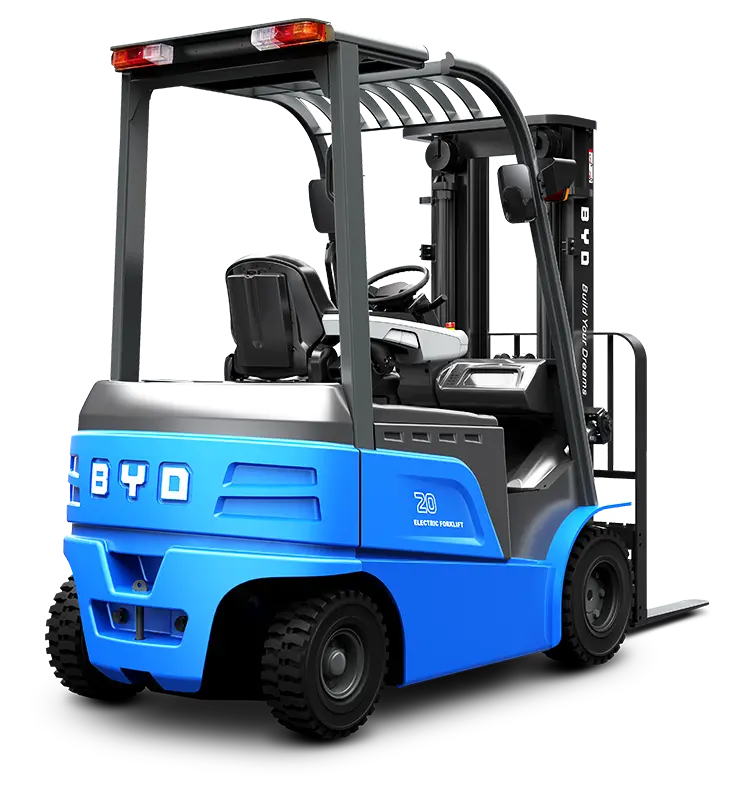
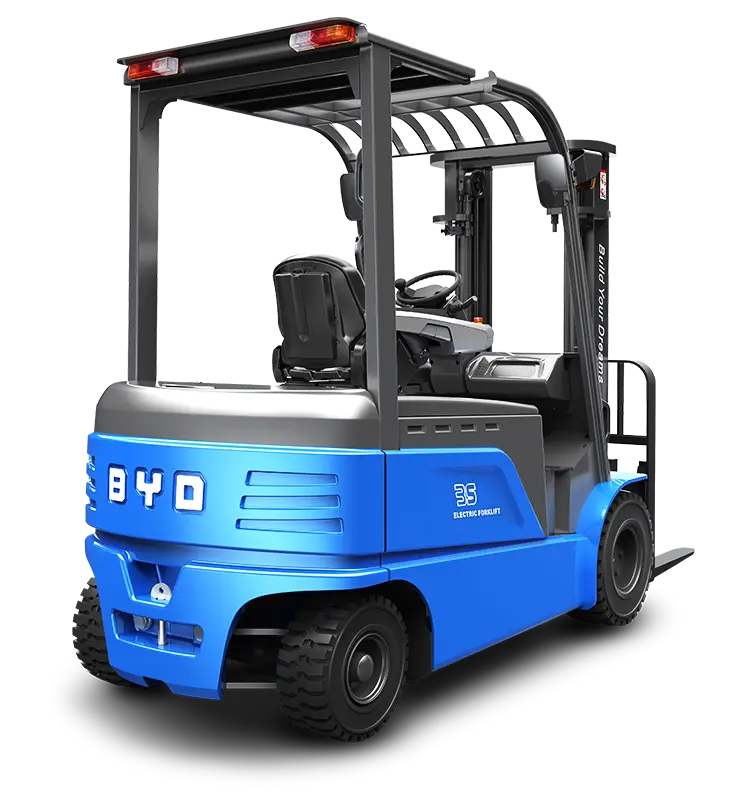
Third, check the working condition of the forklift itself regularly to avoid unnecessary deviation of the tipping point. Sharp Tree New Energy, specializing in BYD electric forklifts, will focus on reminding operators to check the tire wear, lateral support structure and counterweight fastening state in the delivery training of each vehicle. Excessive tire wear, loose structural parts or aging of the supporting system will cause the actual tipping point of the forklift to be lower than the design value, which will bring hidden dangers to daily operations that follow the standard operation process.
Finally, develop good operating habits to sense the dynamic change of the tipping point in real time. Keep the goods at a low position close to the ground when the forklift is driving, only lift the load when it is necessary to access the goods, avoid violent steering and sudden acceleration and deceleration, and do not carry out overloaded operations that exceed the rated load. Fully mastering these operation details can effectively keep the forklift running within the safe range before reaching the tipping point, and ensure the safety of personnel and goods in the whole warehousing handling process.