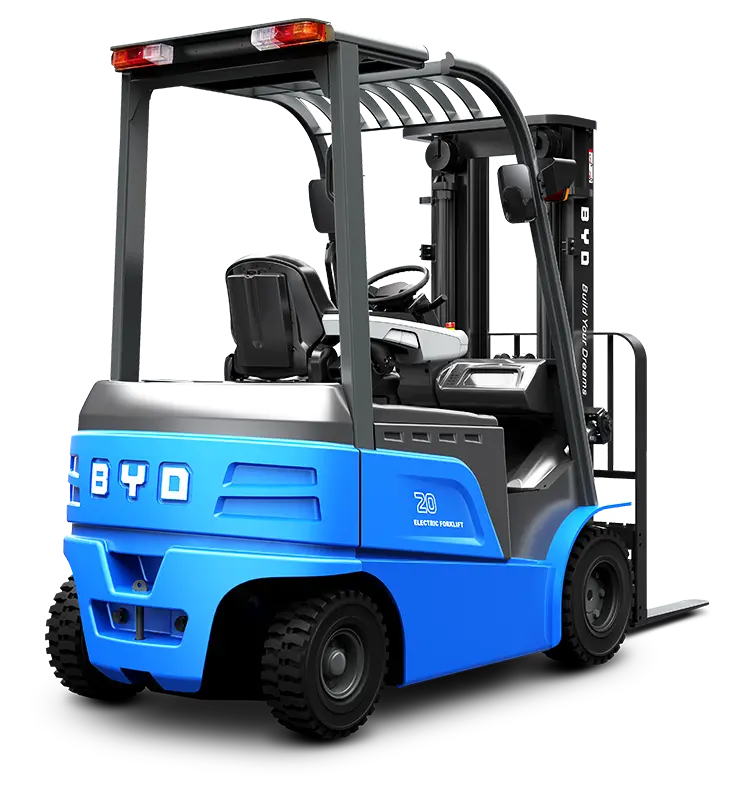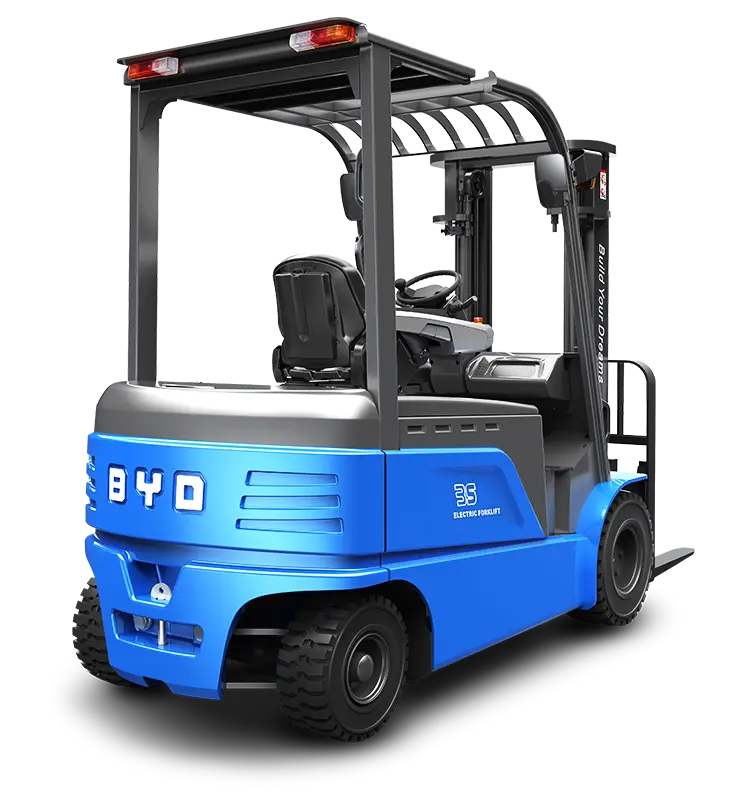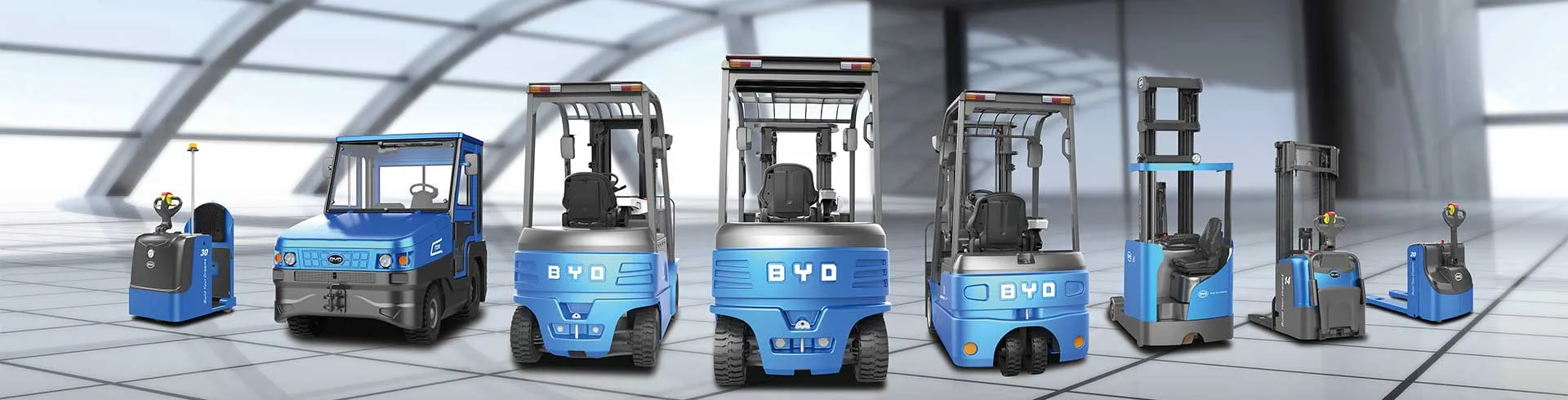
For forklift operators, mastering reasonable backward driving scenarios is a core part of standardized safe operation, which can effectively avoid collision accidents, reduce cargo damage and improve overall operation efficiency. As a professional supplier specializing in new energy electric forklifts, Jianshu New Energy, which focuses on the distribution of BYD electric forklifts, always advocates normative operation specifications for all types of electric forklift products, and sums up common applicable scenarios for backward driving combined with a large number of actual warehouse operation cases.
First, when the carried cargo completely blocks the front view of the operator, choosing to drive backwards is the most common reasonable scenario. When the forked cargo stack is higher than the front cab baffle, the forward field of vision will be completely covered. At this time, driving backwards with the full view of the rear aisle can ensure that the operator can clearly observe the surrounding pedestrians, obstacles and route marks, and avoid accidental collisions.
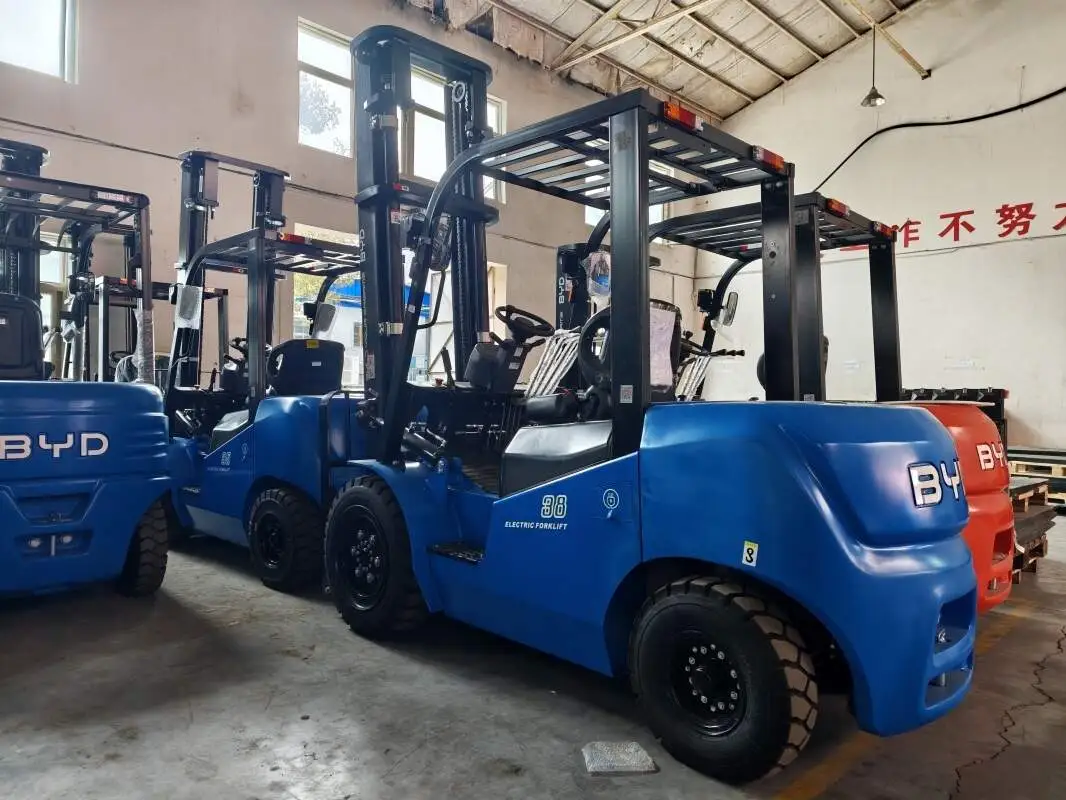
The second applicable scenario is long-distance transfer of bulky, super-high cargos that cannot be lowered below the line of sight. Even if the front end of the forklift is equipped with auxiliary peep mirrors, there will still be unavoidable visual blind spots for long-distance forward driving, and backward driving can eliminate most of the blind spot risks.
Third, when you need to go downhill with loaded cargos, especially for new energy electric forklifts with large load capacity, choosing to drive backwards downhill can avoid the danger of the cargo slipping and falling forward due to inertia, and ensure that the center of gravity of the whole vehicle stays in the stable range of the vehicle body at all times.
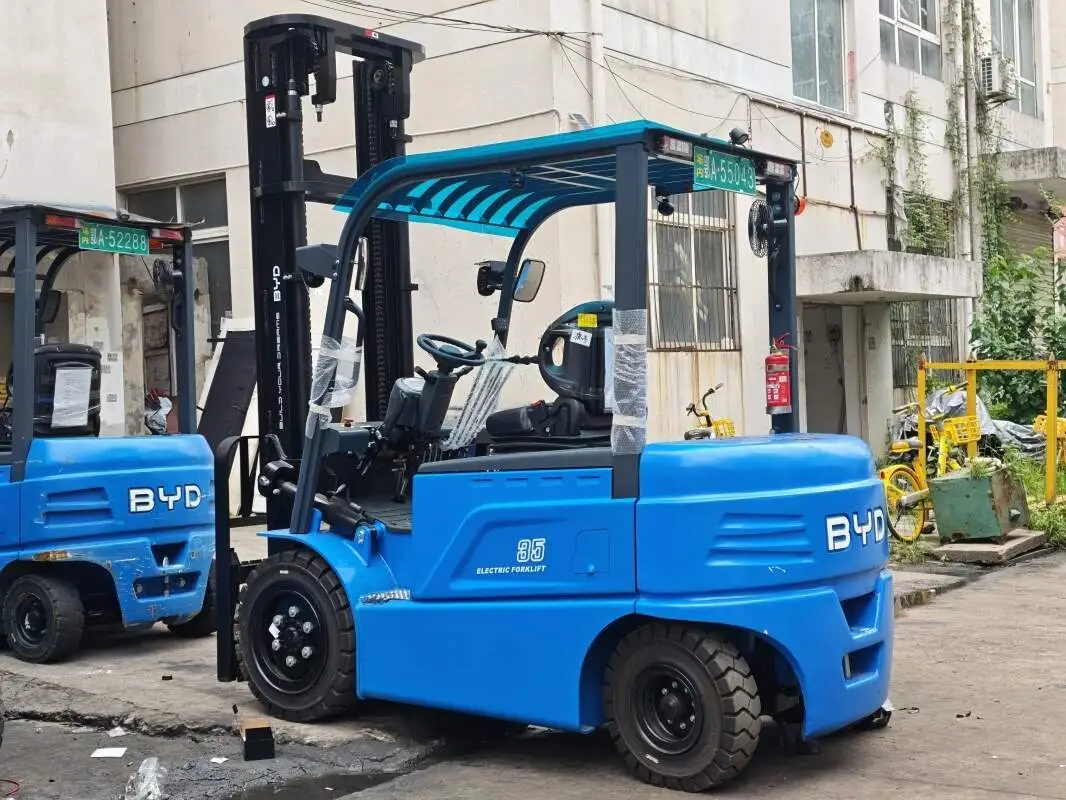
Fourth, when the aisle space in the warehouse is narrow, and the front end of the forklift has no enough turning space after unloading, you can choose to drive backwards to adjust the position flexibly, to avoid scraping the shelf or the surrounding placed goods.
It should be noted that driving backwards on a forklift is not a random operation, the operator needs to turn his head to observe the rear aisle state throughout the whole process, make full use of the rear view auxiliary system of the electric forklift, and turn on the reversing prompt device to remind the surrounding personnel to avoid in time. Standardized backward driving operation can effectively reduce the operation accident rate of electric forklifts, and create a safer and more orderly operation environment for the logistics warehouse. Jianshu New Energy will continue to share practical operation guidelines for new energy forklifts for the majority of enterprise users, and help all operators develop good daily operation habits.