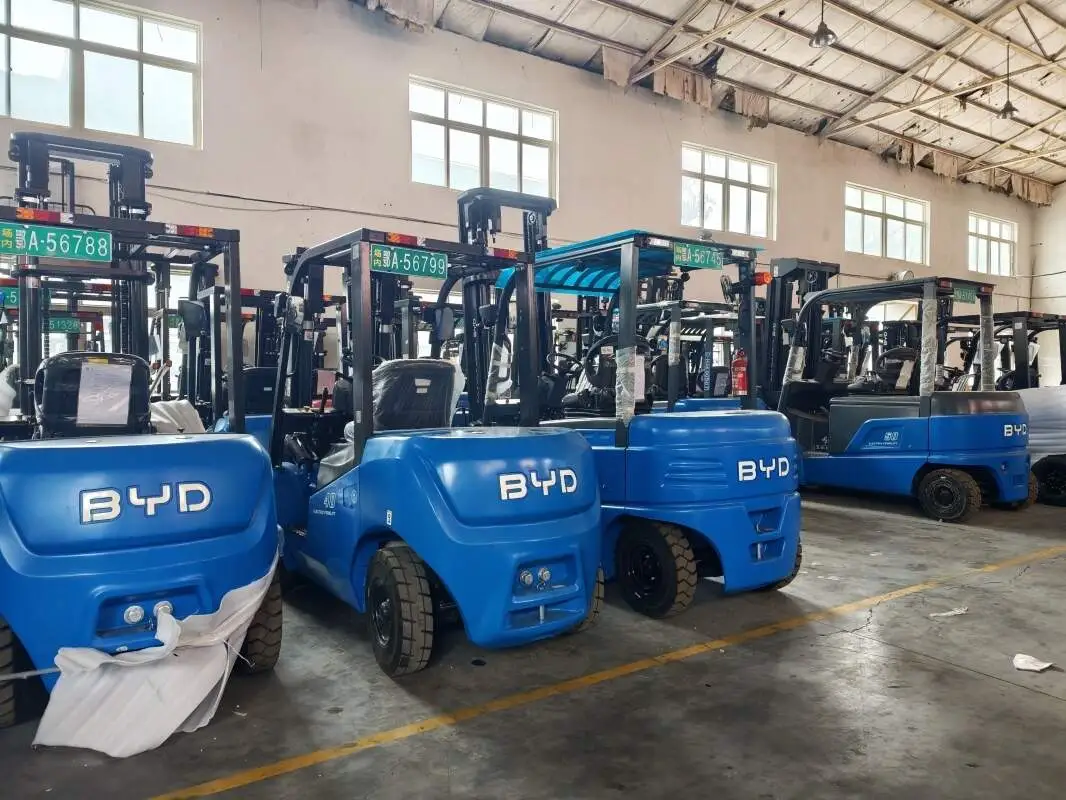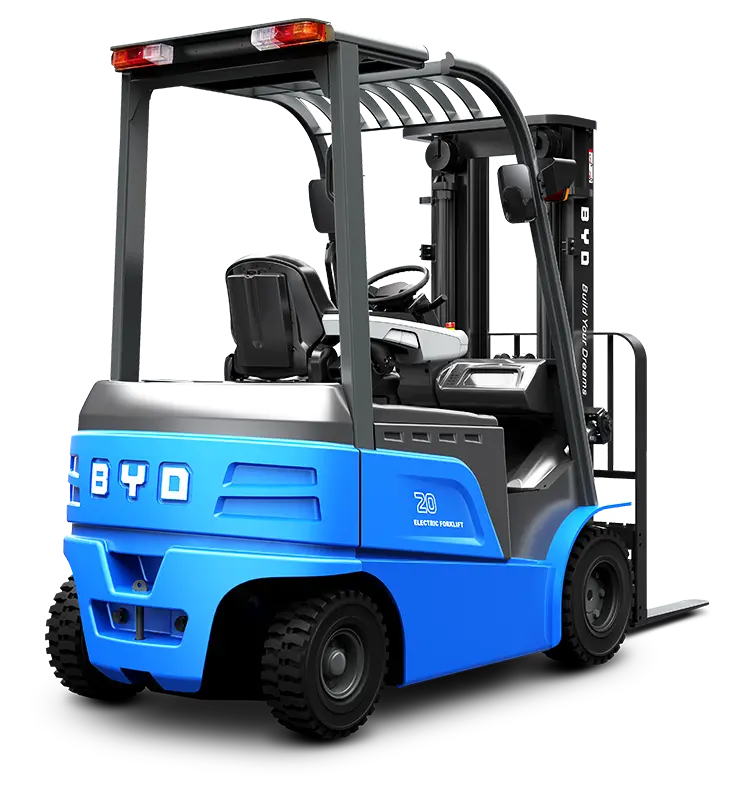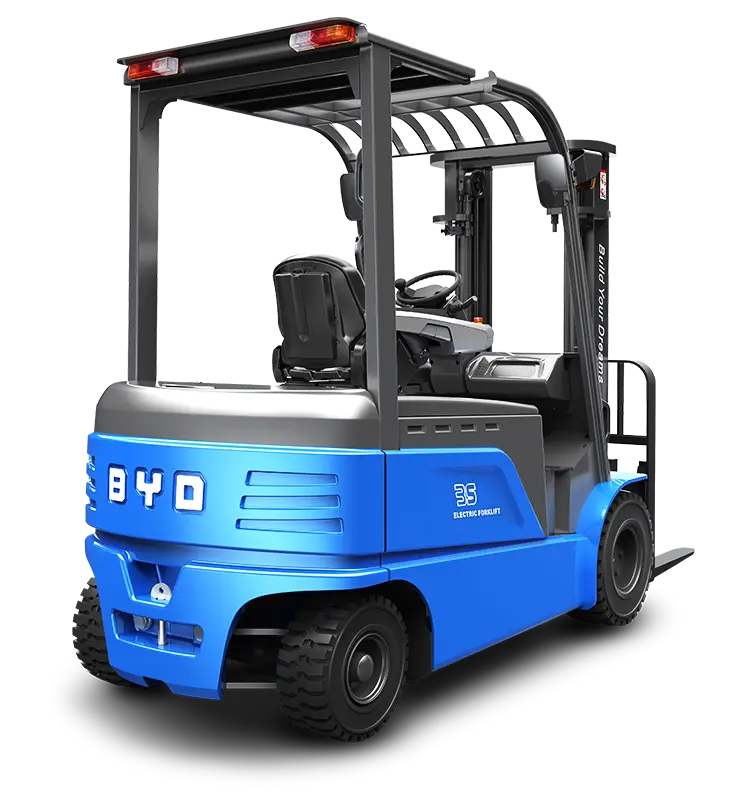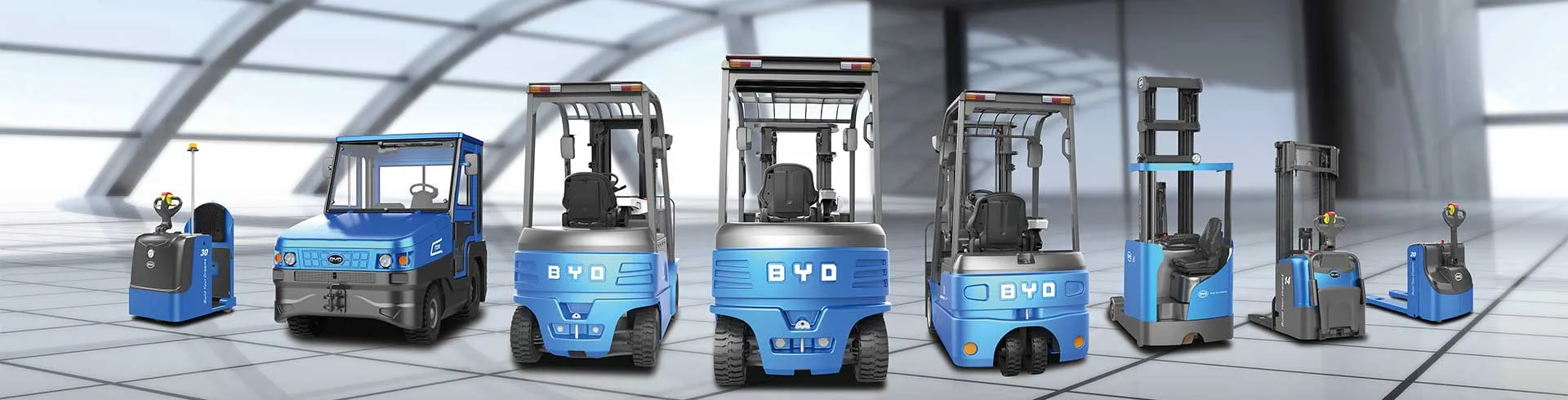
We are Jian Shu New Energy, a professional supplier specializing in BYD electric forklifts. We sort out this targeted question and answer content based on frontline operation feedback, to help all forklift operators and management personnel clearly identify the high-risk areas on the forklift that may cause injuries, and reduce the probability of safety accidents in daily work.
Q1: What is the most common area that causes pinching and crushing injuries?
A: The lifting mast and its matching moving parts including lifting chains, sprockets and fork carriage are the highest-risk areas that cause most pinching injuries. When the mast moves up and down or tilts back and forth, any gap between moving components may squeeze the extended limbs of personnel. Most of these injuries happen when operators stretch their hands out of the cab to adjust goods position without cutting off the power of the equipment, and mis Touch the operating lever by mistake.
Q2: Which area on the forklift may lead to impact or rolling injuries?
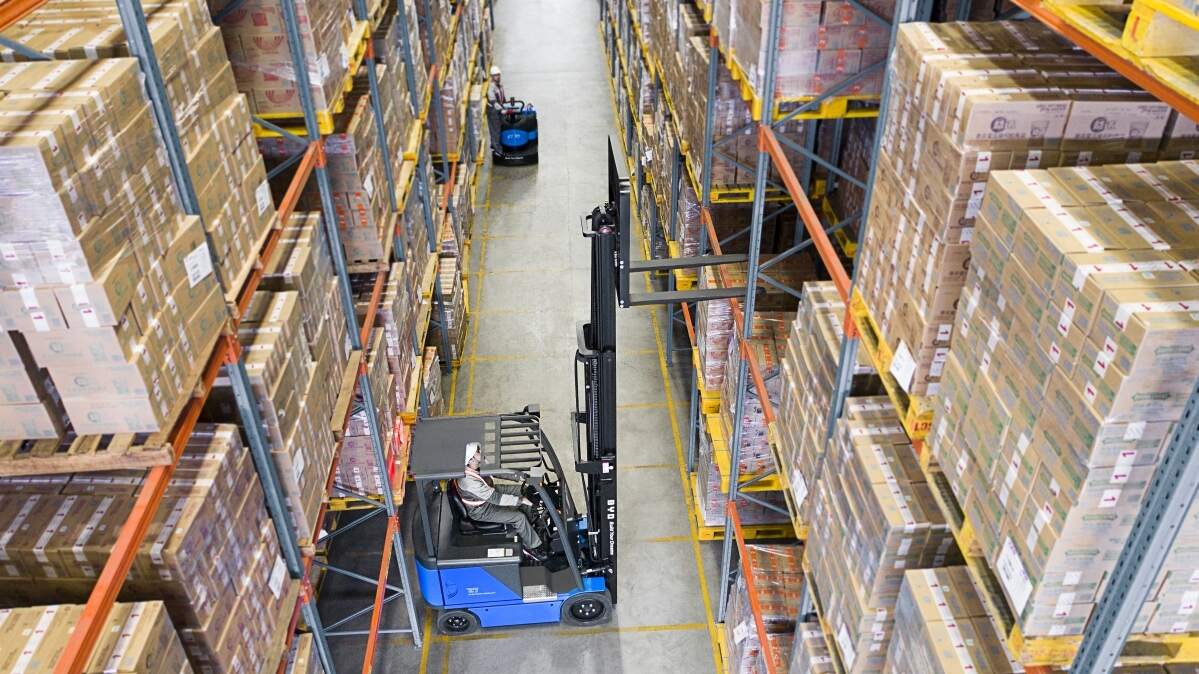
A: The traveling wheels and the surrounding edge area of the chassis belong to the second category of high-risk areas. Passing pedestrians who break into the operation range may be hit by running wheels, and if operators place their feet outside the safe cab outline by mistake, they may face rolling injury risks when the forklift starts or turns. Besides, the solid counterweight at the rear of the forklift has no buffer structure, any personnel staying in the rear steering radius will be easily hit when the forklift adjusts the direction.
Q3: Are there any hidden injury risks inside the cab?
A: The cab area also has potential hidden dangers that are easy to be ignored. The hard edge of the overhead guard, the gap between the control levers, and the position without the protection of safety belts may cause injuries. When the goods above fall and hit the overhead guard, operators with incorrect sitting posture may hit their head against the hard structure of the guard. Improper operation of control levers may also pinch fingers, and operators who do not fasten safety belts may be thrown out of the cab during sharp turns, causing more serious secondary injuries.
Q4: What effective measures can be taken to avoid these injuries?
A: First of all, all operators need to complete formal pre-job safety training, never stretch any limb out of the cab in the operation process, and set up obvious warning signs around the operation area to remind pedestrians to stay away from the moving and steering range of the forklift. Choosing high-quality electric forklifts with original complete safety protection design can also effectively reduce hidden risks, as a professional supplier specializing in BYD electric forklifts, we can provide you with products that have made standardized protection optimizations for all the above high-risk areas, to create a safer operation environment for your daily work.