


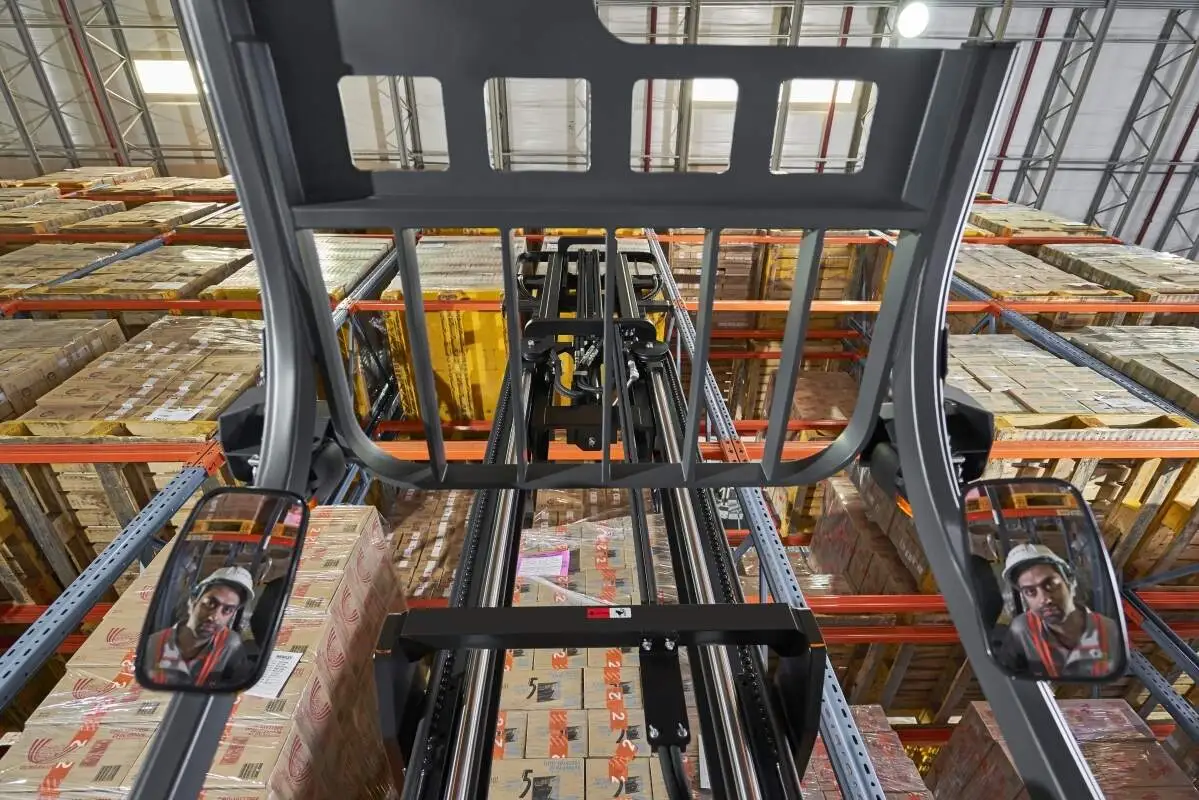
With the acceleration of the automation process in the warehousing and logistics industry, the lithium-ion unmanned stacker has gradually become one of the core equipment in warehousing operations due to its high efficiency and environmental protection. Among them, the battery configuration and battery life performance of the ANS25 lithium-ion unmanned stacker have attracted the attention of many industry users, and will be analyzed in detail from a professional perspective.
The battery configuration is the core link that determines the performance of the equipment, and the ANS25 lithium battery unmanned stacker has been specially designed in this regard. The first is the battery selection. The lithium iron phosphate battery used in the equipment has the characteristics of long cycle life and good thermal stability, which can adapt to the high-frequency operation requirements in the storage scene, reduce the frequency of battery replacement, and reduce the long-term use cost. Secondly, the battery capacity design, combined with the operation positioning and load capacity of the equipment, is equipped with the appropriate battery capacity, which can not only meet the energy requirements of daily operations, but also will not affect the flexibility of the equipment due to excessive increase in battery weight. In addition, the device is equipped with an intelligent battery management system, which can monitor the voltage, temperature, current and other key parameters of the battery in real time, and perform dynamic equalization adjustment to avoid overcharging and overdischarging of the battery, ensuring the safe operation of the battery and effectively prolonging the overall service life of the battery.
The battery life is an important indicator to measure the operation efficiency of the unmanned stacker. The battery life performance of the ANS25 lithium battery unmanned stacker is optimized based on the actual storage conditions. The evaluation of battery life data is based on the standard operation scenario, covering multiple parameters such as stacking height, load weight, and the number of operation cycles. The results obtained by simulating the actual scene test have strong reference. In the conventional light-load cycle operation scenario, the equipment can achieve long-term continuous operation, which can meet the single-day operation needs of most warehousing enterprises. In the scenario of heavy-load continuous operation, the battery life will be adjusted according to the operation intensity, and users can reasonably plan the charging time according to their own operation rhythm. At the same time, battery life performance will be affected by a variety of factors, such as high or low ambient temperature, which will affect battery activity. Frequent acceleration and deceleration will increase energy consumption. Through reasonable operation planning and environmental control, the best battery life of the equipment can be better realized.
Overall, the battery configuration and battery life of the ANS25 lithium-ion unmanned stacker are well matched, which not only takes into account the operating efficiency and battery safety of the equipment, but also controls the long-term use cost, providing reliable support for warehousing and logistics automation operations.

