


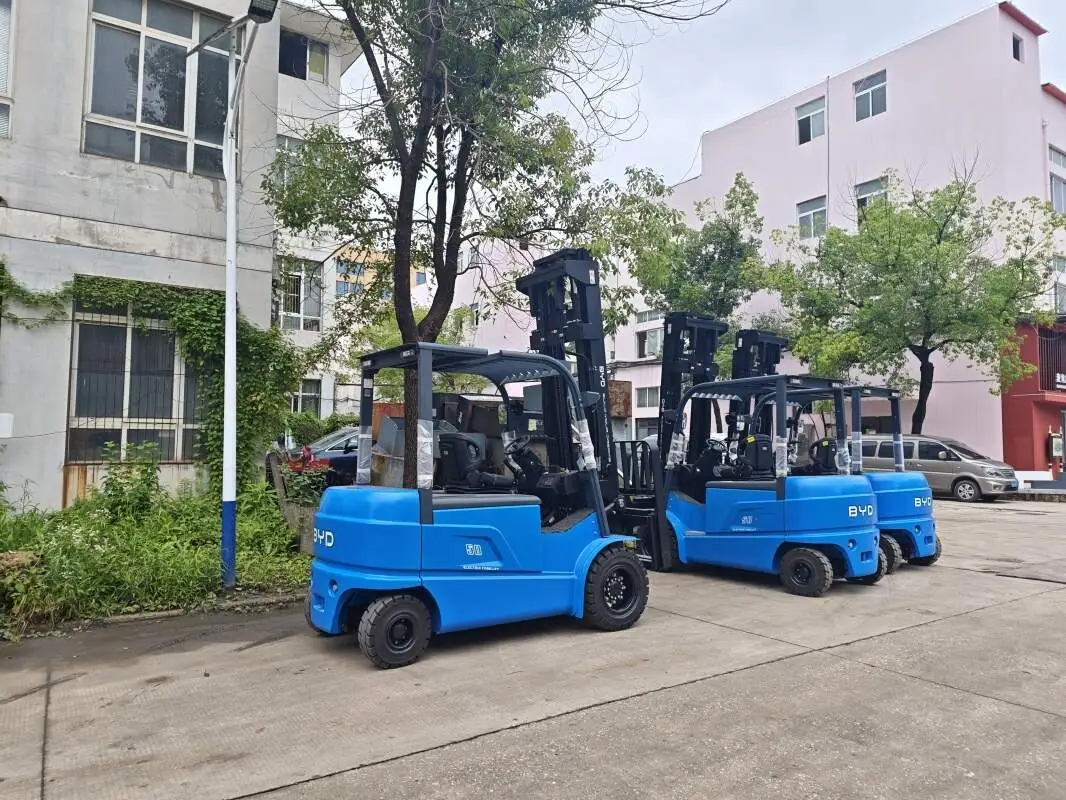
Preparation check before startup
Appearance and Parts Inspection
Before the novice operates the stacker, first do a good appearance inspection. Go around the car to see if the body is damaged by bumps, whether the tire pressure is normal, and whether there is wear or cracks. Focus on checking the forks to confirm that they are not deformed or cracked, and whether the forks are firm. At the same time pay attention to the tightness of the shelf chain to ensure that there is no fracture or rust.
Power and system confirmation
After entering the cab, first check the power display of the instrument panel to ensure that the power can support the needs of this operation. Then check various indicator lights to confirm that the fault light, power light, etc. are displayed normally. Gently step on the brake pedal to feel whether the brake feedback is sensitive and avoid brake failure problems during operation.
Basic driving operation
Start and idle adjustment
Insert the key and screw it to the starting position. After the instrument panel lights up normally, slowly release the brake pedal. At this time, the stacker car enters the idle state, and the idle speed can be adjusted through the operation lever to adapt to the starting needs of different operation scenarios. Pay attention to the fact that there are no people or obstacles around when starting to ensure a safe start.
Forward and backward operations
Find the forward and backward lever, push forward to move forward, and pull backward to move back. When operating, push slowly to avoid rapid acceleration causing the vehicle to lose control. Keep low speed during driving, especially when turning in narrow areas, slow down in advance, and observe the surrounding environment before completing the steering action.
Steering and brake control
The steering operation is completed through the steering wheel, and the rotation force is moderate to avoid hitting the direction. Braking is divided into foot brake and handbrake. The foot brake is used for normal driving, and the handbrake needs to be pulled when parking. In case of emergency, you can directly press the brake pedal to ensure that the vehicle stops quickly.
Cargo stacking operation
Fork pitch adjustment
According to the width of the goods, adjust the spacing of the forks so that the forks are evenly distributed under the goods to avoid partial loads. When adjusting, control the opening and closing of the forks through the operating rod to ensure that the spacing is appropriate and then slowly approach the goods.
Cargo lift and drop
After inserting the fork teeth into the bottom of the goods, slowly operate the lifting rod to make the goods rise smoothly. Pay attention to the condition of the goods during the lifting process to avoid shaking and falling. When descending, you should also operate slowly to ensure that the goods land smoothly and avoid damage to the goods or vehicles caused by impact.
Precautions for stacking goods
When stacking the goods, make sure that the ground where the goods are stacked is flat to avoid the vehicle tilting. After the goods are lifted to the target height, stop for a while and confirm that they are stable before moving the vehicle. After the stacking is completed, lower the forks to the lowest position in time to avoid collisions during driving.
Safe parking and finishing operations
Parking regulations
After the job is completed, park the vehicle in the designated area, pull up the handbrake, and turn off the power. Before removing the key, confirm again that the forks are lowered to the ground and the lever is in a neutral position.
closing inspection
After parking, check again whether the forks, chains and other components are normal, and clean up the debris on the surface of the body. If it is not used for a long time, it is recommended to disconnect the main power switch to avoid power loss.

