


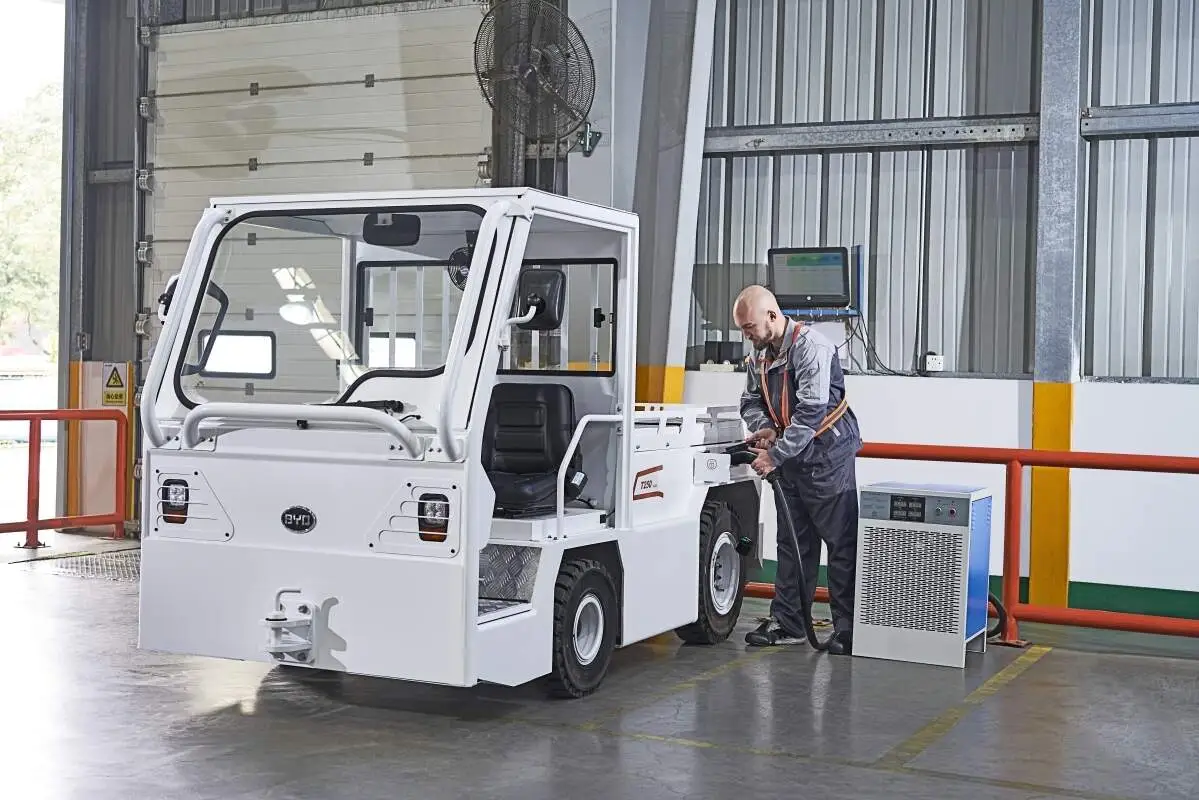
In the current popularity of lithium-ion logistics equipment, lithium-ion forklifts have become a common tool in warehousing and logistics scenarios due to their environmental protection and low consumption. AF series lithium-ion forklifts, as a representative product, have a direct impact on operating efficiency due to their battery life and gantry configuration, which is worth in-depth understanding.
In terms of battery life, the battery life of this series of forklifts is suitable for a variety of operating scenarios. In actual operation, the battery life is affected by factors such as battery capacity, operating conditions and operating habits. In the conventional storage scenario of indoor light load and short-distance transfer, it can meet the continuous operation needs of about 8 hours a day; if it is in the outdoor heavy load and frequent start and stop conditions, the battery life will be adjusted accordingly. In addition, a reasonable operation mode, such as smooth acceleration and avoidance of long-term idling, can also extend the battery life to a certain extent and ensure the continuity of the operation.
In terms of door frame configuration, this series provides a variety of door frame types for users to choose from. The standard door frame is suitable for low storage space, and the stacking height range meets the storage needs of basic goods; the second-level door frame is suitable for medium-height shelf stacking, taking into account operational flexibility and stacking capacity; the third-level door frame is aimed at high-level storage scenarios, which can achieve higher stacking height of goods and improve warehouse space utilization. Different door frames are designed with attention to the optimization of vision, which is convenient for operators to observe the status of goods. At the same time, the structural stability is optimized, and it can be adapted to the handling needs of different weights of goods.
Overall, the battery life and gantry configuration of AF series lithium-ion forklifts are designed around actual operation requirements, allowing users to choose the appropriate configuration scheme according to their own scenario characteristics to improve the overall efficiency of logistics operations.

