


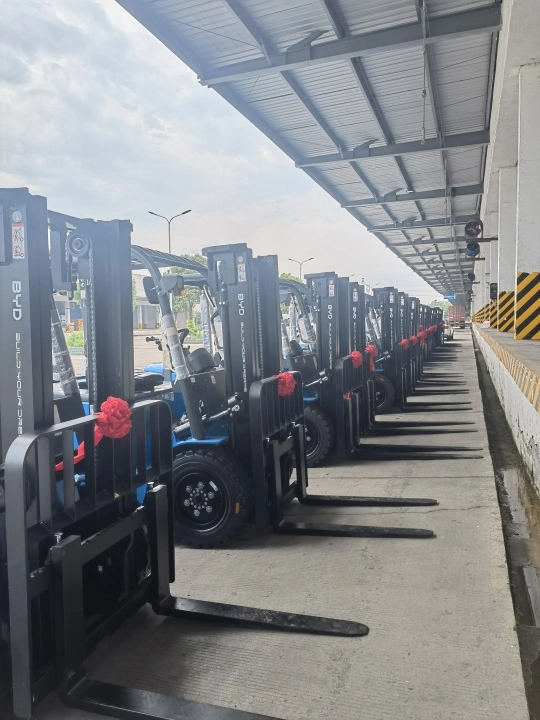
With the intelligent upgrade of warehousing and logistics, the efficient connection between the pallet unmanned vehicle and the warehouse management system (WMS) has become the key to improving the efficiency of the operation. With its flexible scheduling ability and collaborative connection with the WMS system, the AP25 pallet unmanned vehicle can realize the automatic closed-loop management of the warehousing process.
The first step is to initialize the configuration and docking stage. Both parties need to complete the synchronous calibration of basic information. The WMS system imports core data such as warehouse layout, storage code, and pallet specifications into the unmanned vehicle scheduling system to ensure that the information dimensions of the two are consistent and lay a solid foundation for subsequent operation collaboration. At the same time, set permissions and rules according to the needs of warehousing operations, clarify the operation scope, task priority, and path planning logic of the unmanned vehicle, avoid operation conflicts between different tasks, and ensure the orderly development of operations.
The second is the interaction mechanism of task instructions. When the WMS system generates tasks such as warehousing, outbound, and moving warehouses according to the order requirements, it will disassemble the tasks into standardized instructions, including cargo location information, pallet requirements, job time limit, etc., and send them to the unmanned vehicle scheduling system. The scheduling system combines real-time road conditions and vehicle idle status to assign the optimal tasks to the corresponding AP25 pallet unmanned vehicle. After the unmanned vehicle receives the command, it automatically plans the path to the designated cargo location. After completing the pallet pickup and drop operation, it immediately feeds back the task completion status to the WMS system to form a complete closed loop of instruction interaction.
Another is real-time data synchronization management. During the operation, the AP25 pallet unmanned vehicle will continue to upload its own location, operating status, and the goods information of the pallet it carries to the WMS system. The WMS system synchronously updates the inventory data and the operation progress ledger to ensure the accuracy and real-time performance of the warehousing data. Managers can monitor the operation track and status of the unmanned vehicle in real time through the visual interface of the WMS system, and fully grasp the overall situation of warehousing operations, which is convenient for timely adjustment of operation arrangements.
Finally, there is the collaborative processing of abnormal scenarios. When there are abnormal situations such as space occupation, temporary vehicle failure, and urgent task change, the AP25 pallet unmanned vehicle will immediately send abnormal signals to the WMS system. The WMS system automatically adjusts the task allocation plan according to the preset processing rules, such as rescheduling other idle vehicles, modifying the job path, or triggering manual intervention processes, ensuring that the job is not interrupted and improving the fault tolerance and response flexibility of the warehousing system.
Through this set of standardized docking solutions, the AP25 pallet unmanned vehicle and the WMS system form an efficient collaboration, which can not only reduce the amount of manual handling, improve the overall efficiency of warehousing operations, but also achieve accurate control of inventory data, reduce the risk of wrong delivery and leakage, and help warehousing and logistics to develop steadily in the direction of intelligence and refinement.

