


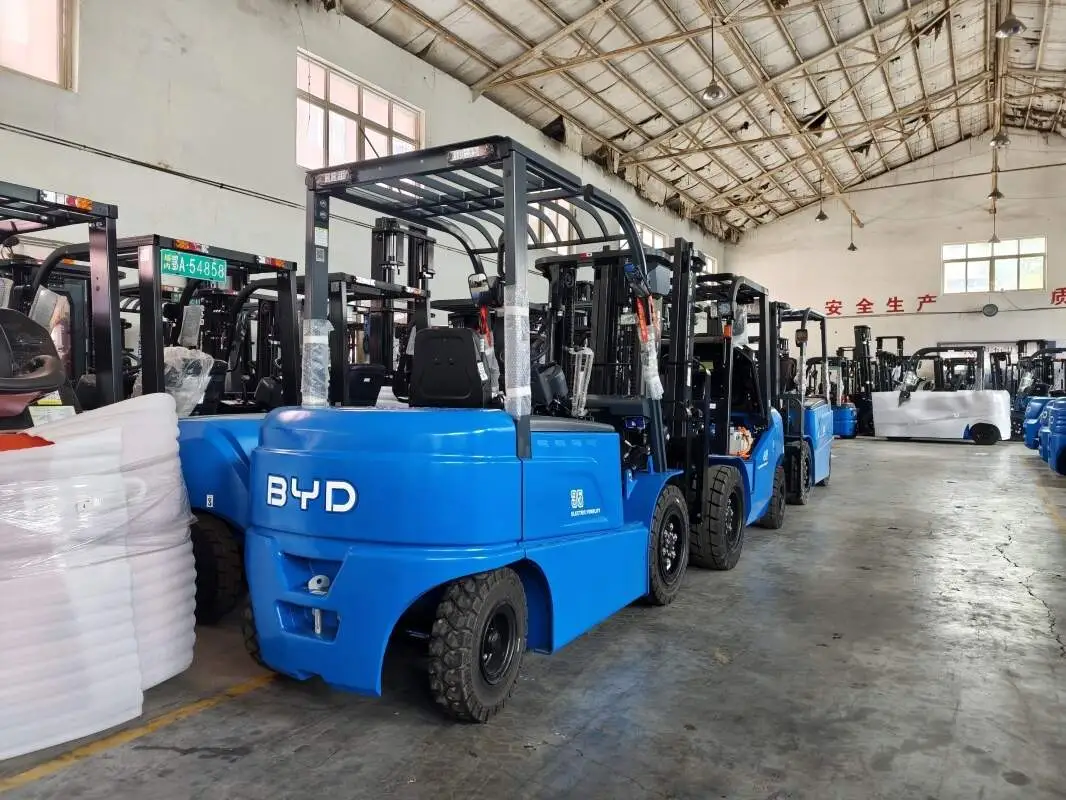
The after-sales maintenance process is the core link to ensure the stable operation of AR series forward AGVs. It is mainly divided into three parts: daily self-inspection and basic maintenance, regular professional maintenance services, and fault repair processing processes.
Daily self-inspection and basic maintenance need to be performed daily. Before starting the machine, check whether the battery voltage is in the normal range, whether the fork lifting and forward moving mechanism operates smoothly, and clean the dust and debris on the surface of the equipment to avoid foreign objects entering the gaps of the parts and affecting the operation. After the operation, park the equipment in the designated area, turn off the power supply and replenish the power to ensure normal start-up the next day.
Regular professional maintenance services need to be carried out according to a fixed cycle. Monthly maintenance focuses on checking the sealing of the hydraulic system, the insulation of electrical circuits, and fastening loose connectors in a timely manner. Quarterly maintenance requires battery capacity testing, drive wheel wear investigation, and replacement of seriously worn vulnerable parts. Annual maintenance requires comprehensive dismantling and maintenance of the core components of the equipment to check potential failure hazards and ensure that the equipment performance meets standards.
The fault repair process needs to strictly follow the specifications. After the equipment fails, the power supply should be shut down immediately to avoid the failure expanding. The operator can first conduct basic self-inspection, such as checking the power connection, switch status, etc. If it cannot be solved, it is necessary to contact the official after-sales department in time to accurately describe the fault phenomenon, equipment operation time and recent maintenance records. The after-sales staff will arrange remote guidance or on-site maintenance according to the situation.
The quality assurance description clarifies the scope and boundary of the after-sales guarantee of the equipment, mainly including the coverage of quality assurance, the definition of the quality assurance period, and the description of the non-quality assurance situation.
Quality assurance coverage For the core components and conventional parts that come with the equipment when it leaves the factory, the failure caused by the manufacturing process or material quality problems can enjoy free repair or replacement services.
The quality assurance period is distinguished by the type of parts, the quality assurance period of core drive components and control systems is 12 months, and the quality assurance period of vulnerable parts such as batteries and tires is 3 months. The specific quality assurance manual attached to the equipment factory shall prevail.
Non-quality assurance situations include parts damage caused by improper human operation, failures caused by self-modification of equipment, problems caused by failure to perform daily maintenance according to specifications, and equipment damage caused by force majeure factors such as natural disasters. Such situations are not within the scope of quality assurance services, and maintenance requires corresponding fees.

