


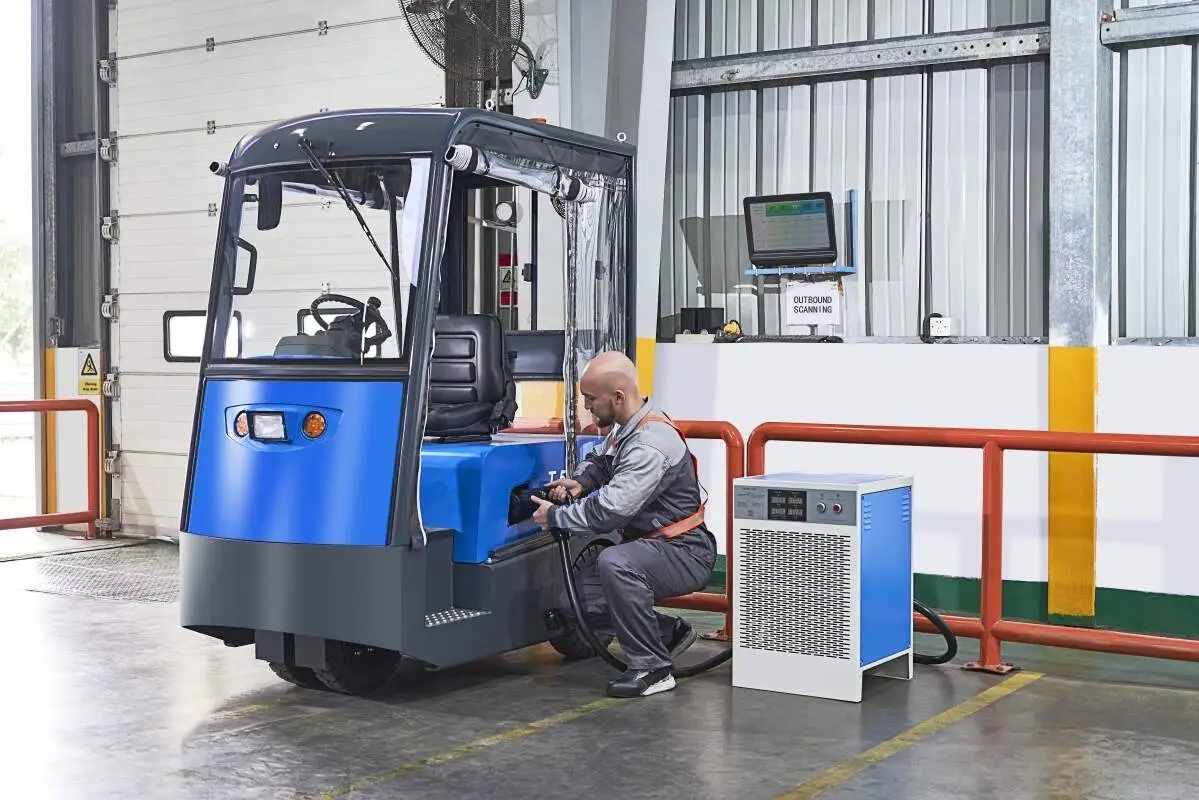
The driving wheel, load-bearing wheel and steering wheel of an electric forklift are the core components to ensure the stable operation of the equipment. They are prone to wear, aging, deformation and other problems in a high-intensity operating environment for a long time. Timely replacement of the adapter parts is the key to maintaining the performance of the forklift and prolonging the overall life of the equipment. Here is a practical reference guide for replacement parts.
The driving wheel bears the core function of power transmission and walking drive, which directly affects the driving efficiency and stability of the forklift. When it is found that the surface pattern depth of the driving wheel is less than 1 mm, the wheel body cracks or the rubber layer falls off, and abnormal shaking or skidding occurs during driving, it is necessary to replace the accessories in time. When selecting the driving wheel accessories, it is necessary to accurately match the rated load parameters of the forklift to ensure that the wear resistance of the wheel body material meets the needs of the operation scene. For example, when working on rough ground such as sand and gravel, cement, rubber wheel bodies with higher wear resistance coefficient can be preferred. At the same time, attention should be paid to the dimensional accuracy of the wheel shaft hole to avoid abnormal noises or component damage during operation due to excessive installation clearance.
The load-bearing wheel is mainly responsible for carrying the full weight of the forklift body and the goods, and bears continuous pressure and friction in daily operations. It is necessary to check the wear state of the load-bearing wheel regularly. If the wear of the wheel body is found to be uneven, deformed or rotated, the accessories should be replaced in time. When replacing, confirm that the diameter and width of the load-bearing wheel are exactly the same as the original parts to ensure the suitability with the forklift chassis; in addition, it is necessary to check the bearing capacity parameters of the accessories to ensure that they can withstand the maximum rated load of the forklift and avoid component breakage or equipment failure due to overload.
The steering wheel directly determines the steering flexibility and control accuracy of the forklift, which is related to the safety during the operation. When the steering is stuck, the swing amplitude of the wheel body is abnormal, and the rubber layer is seriously worn, the steering wheel accessories need to be replaced in time. When selecting accessories, focus on the smoothness of the steering bearing to ensure smooth and unobstructed steering operation; at the same time, it is necessary to strictly match the connection size of the steering mechanism to avoid improper installation affecting the steering accuracy and causing hidden dangers in operation safety.
Before replacing the parts, it is necessary to park the forklift on a flat and solid ground, pull up the handbrake, and take fixed measures to prevent the equipment from sliding accidentally. During the replacement process, it is necessary to strictly follow the operating specifications for disassembly and installation to avoid damage to the surrounding steering mechanism and chassis components. After the replacement is completed, a short-distance trial operation is required to check the running status of the wheel group and confirm that there are no abnormal situations such as abnormal noises, cards, and swings before it can be officially put into operation.

