


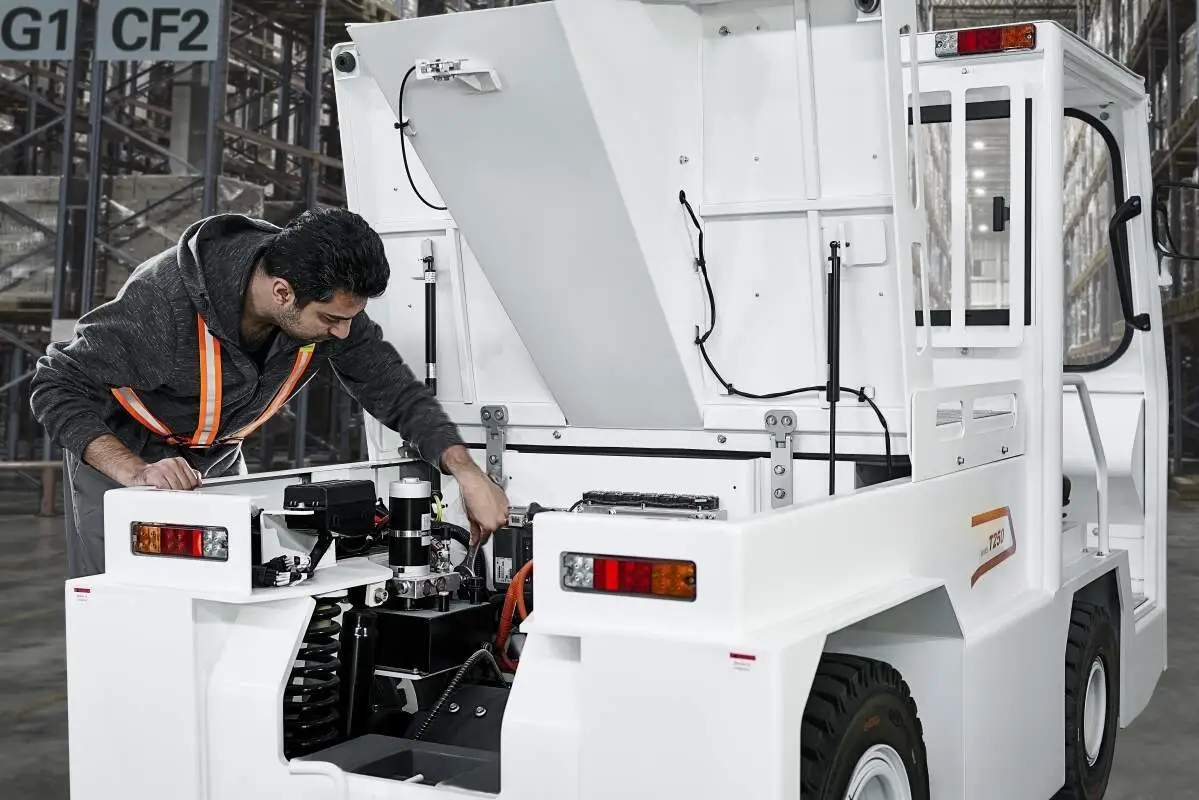
First, preliminary preparations
Before carrying out the installation, it is necessary to make sufficient preliminary preparations. First, prepare the corresponding specifications of tools, including torque wrenches, insulated screwdrivers, multimeters, etc., to ensure that the tools are in good condition and meet the operating requirements. Second, check the model and specifications of the original spare parts and the adaptation information of the electric forklift to confirm that the spare parts are intact and no parts are missing. At the same time, the operator needs to wear insulating gloves, safety shoes and other protective equipment, disconnect the total power supply of the forklift, avoid the risk of electric shock during the installation process, and create a safe working environment.
Component adaptation inspection
After completing the preliminary preparation, the adaptability of the spare parts to the forklift needs to be carefully checked. First, compare the size parameters of the spare parts with the original parts to confirm that the installation hole position and interface position are exactly matched to avoid failure to install or abnormal operation after installation due to dimensional deviation. Second, check the electrical interface specifications of the spare parts, including plug type, pin number and arrangement, to ensure full compatibility with the electrical system of the forklift. In addition, the basic electrical parameters of the spare parts can be detected through a multimeter to confirm that the parameters are within the normal range to ensure the electrical stability after subsequent installation.
III. Standardize the installation operation
After the fitting inspection is correct, the installation operation can be carried out. First, according to the guidelines of the forklift maintenance manual, gradually disassemble the original lithium battery-related components. During the disassembly process, pay attention to marking the connection position and line direction of each component to avoid line confusion during installation. Next, align the original spare parts according to the marked position and slowly place them in the installation area to ensure that the parts fit tightly with the installation base. Then, use a torque wrench to tighten the installation bolts according to the specified torque value to avoid loosening or damage to the parts due to loose or tight bolts. Finally, follow the marked line to connect the electrical interface to ensure that the line connection is firm and there is no loose or virtual connection phenomenon.
IV. Post-installation debugging and verification
After the installation is completed, it is necessary to carry out debugging and verification work to ensure the normal operation of the equipment. First, re-connect the total power supply of the forklift, observe whether the instrument display is normal, and whether there is a fault code prompt. Secondly, start the forklift, test the power supply stability of the lithium battery system, and check whether the basic functions such as starting, driving, lifting, etc. of the forklift are operating normally. In addition, a short time of practice running can be carried out to observe the temperature, noise and other states of the spare parts during operation to confirm that there is no abnormal situation. If abnormal operation is found, it is necessary to disconnect the power supply in time, check whether there are omissions in the installation process, troubleshoot the problem and properly
During the entire installation and adaptation process, it is necessary to strictly follow the original operating specifications to avoid equipment damage or safety hazards caused by illegal operations. After the installation is completed, it is recommended to keep a record of the installation of spare parts to facilitate subsequent maintenance and repair work and ensure the long-term stable operation of the electric forklift.

