


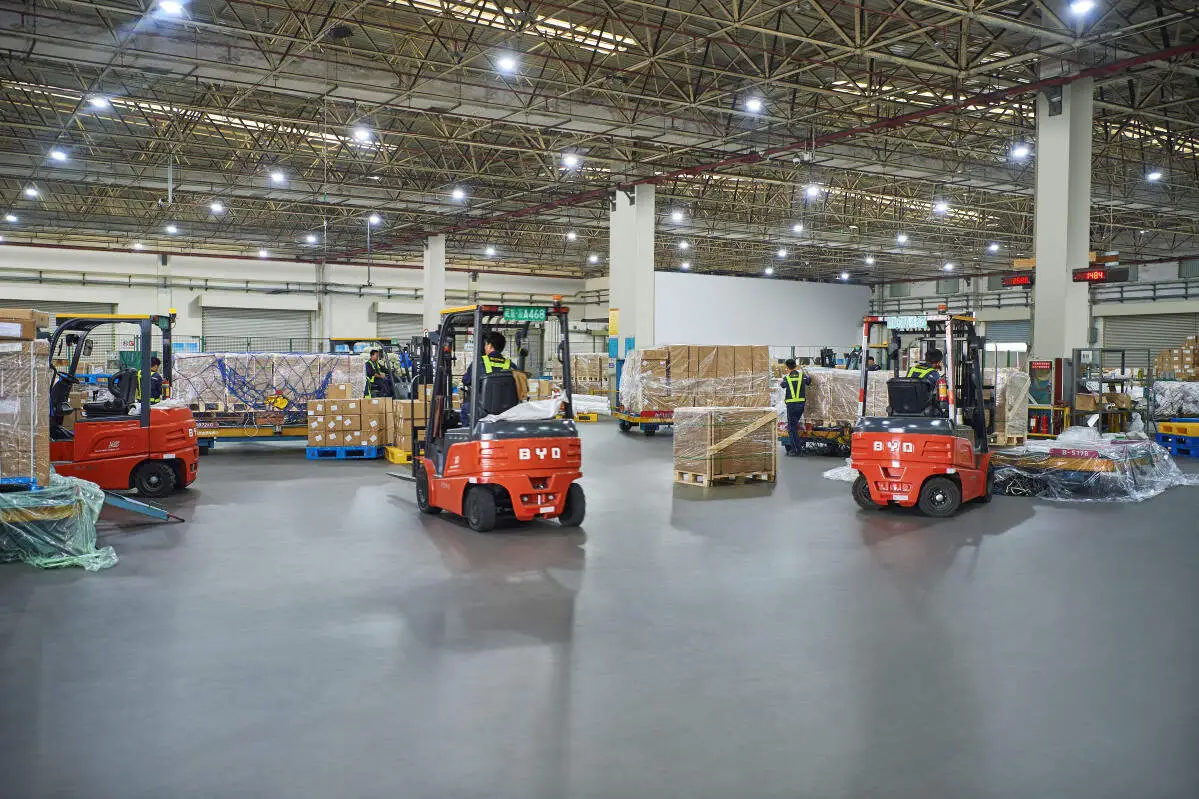
The chassis of an electric forklift is the core component that supports the weight of the whole vehicle and ensures the stability of operation. The wear state of its various accessories is directly related to the operation safety and operation efficiency of the forklift. In daily use, if the wear monitoring and timely replacement of the chassis accessories are ignored, it will not only increase the operation and maintenance costs, but also may cause safety hazards. The following will introduce in detail the wear rules of key chassis accessories, the method of judging the replacement cycle, and practical skills for parts selection.
The wear and tear replacement cycle of the core chassis accessories needs to be flexibly judged in combination with the operation scene:
As a part that directly contacts the ground, the wear of tires is greatly affected by road conditions and load frequency. During frequent heavy-duty, gravel or concave and convex road operations, the depth of tire pattern wear to the lower limit specified by the original factory (usually 1.6mm) needs to be replaced in time, with an approximate cycle of 6-12 months; if it is working on a flat road surface with light loads, the replacement cycle can be extended to 18-24 months. If abnormal damage such as tread cracking and bulging occurs, it needs to be replaced immediately regardless of the length of use.
The steering rod bushing mainly plays the role of cushioning and shock absorption. It will age and crack under the influence of steering stress and vibration for a long time. When there are obvious gaps or abnormal noises during steering, or the bushing is found to be deformed and damaged during inspection, it needs to be replaced in time. The general replacement cycle is 12-24 months, depending on the work intensity.
The failure of the shock absorber will cause the bumps of the forklift to increase, which will affect the handling stability. If there is an oil leak or abnormal increase in vibration during driving, the shock absorber needs to be replaced. The replacement cycle under normal use is about 24-36 months.
Brake shoe wear directly affects braking performance. When the shoe thickness is worn to the original wear limit (usually 2mm), it must be replaced. The replacement cycle is 6-12 months in high-frequency operation scenarios, and can be extended to 18-24 months in low-frequency operation.
When selecting chassis accessories, you need to master the following practical skills:
Pay attention to material adaptation. Different parts have different requirements for material performance. For example, tires need to be made of wear-resistant and tear-resistant rubber, and brake shoes need to be made of materials with good heat resistance and stable friction coefficient to meet the requirements of forklift operation scenarios.
To confirm the fit of the specifications, it is necessary to strictly match the forklift model, load class and other parameters when purchasing accessories to avoid installation difficulties or operation failures due to inconsistent specifications. It is recommended to refer to the parts specifications in the original forklift technical manual.
Check the process details, high-quality parts usually have a regular appearance, fine processing technology, such as smooth surface of the bushing without burrs, strong welding of the shock absorber without cracks, these details are directly related to the service life of the parts.
Taking into account cost-effectiveness, there is no need to blindly pursue high-priced accessories. You can choose suitable products according to your own operating intensity. For long-term high-frequency forklifts, you can choose mid-to-high-end accessories with better durability, and for low-frequency operations, you can choose more cost-effective conventional accessories to balance cost and service life.
Overall, the maintenance and replacement of electric forklift chassis parts requires regular wear testing, a reasonable replacement cycle, and scientific parts selection skills in order to effectively extend the service life of the forklift and ensure the safety and efficiency of the operation.

