


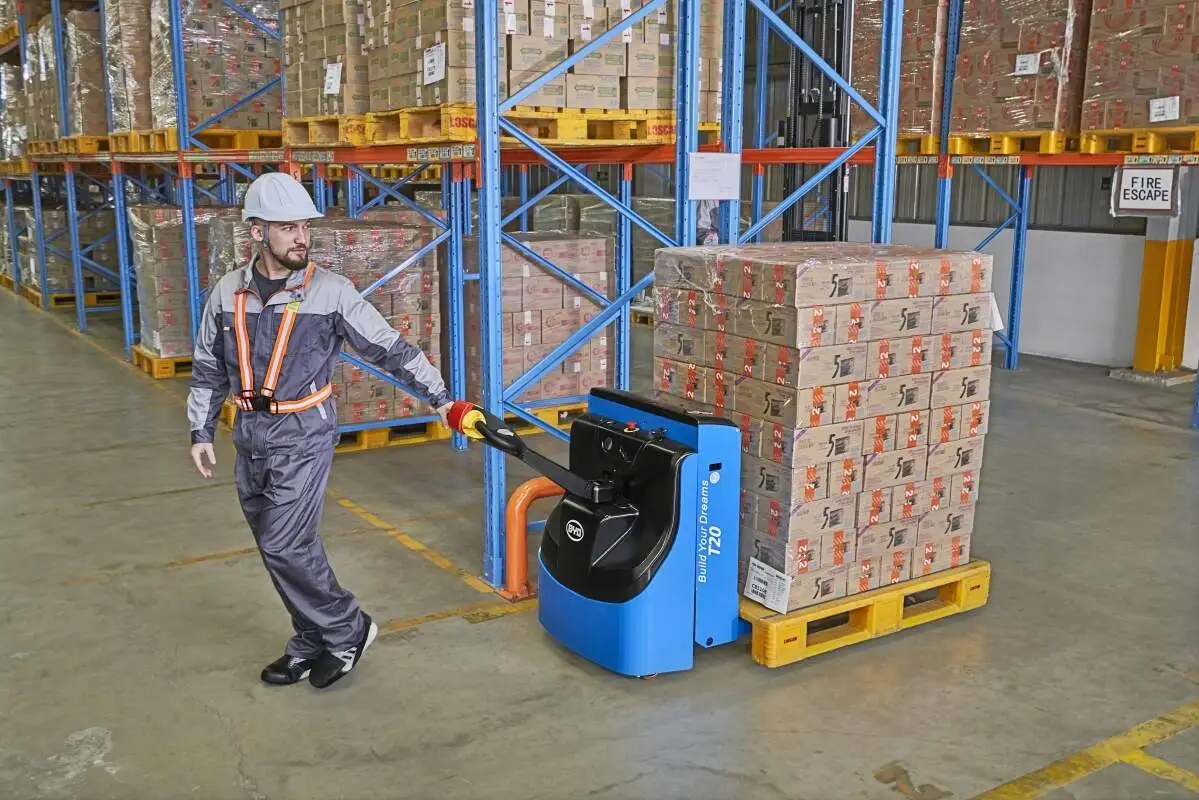
In the daily operation and maintenance of electric forklifts, many operators and maintenance personnel will encounter such questions: Can the operating handle parts be used universally for electric forklifts of different tonnages? This issue is directly related to the efficiency of parts procurement, maintenance costs, and equipment operation safety. It needs to be objectively analyzed by combining the design logic of the handle with the tonnage characteristics of the forklift.
The core function design of the operating handle is closely related to the tonnage of the forklift. The operating handle of an electric forklift mainly undertakes key control functions such as lifting, leaning forward and leaning backward, and walking steering. However, there are obvious differences in the load capacity, hydraulic system parameters, and walking power configuration of forklifts of different tonnages. For example, the hydraulic system pressure of a large-tonnage forklift is higher, and the specifications and stroke design of the corresponding handle control valve will be different from that of a small-tonnage forklift, so as to match the greater load control requirements and ensure the accuracy and stability of the operation. Therefore, from the perspective of core function adaptation, in most cases, the handle accessories of different tonnages are not completely universal.
The detailed differences in the specifications of the parts are also a key factor affecting the versatility. In addition to the differences in functional logic, there are also many differences in the physical specifications of the handle parts, including the size of the mounting interface of the handle, the definition of the pins of the control wiring harness, and the adjustment of the control damping. The handle of a large-tonnage forklift often requires a more stable installation structure to cope with the stability requirements under high-frequency and high-load operation; while the handle of a small-tonnage forklift may be designed to be lighter and the interface size is smaller. These differences in details determine that the random replacement of the handle parts across tonnages may not be installed, the signal transmission is abnormal, and even the control fails.
Of course, there are also some compatibility possibilities in special scenarios. For example, for electric forklifts of the same series and similar tonnage, some handle accessories may adopt a modular design, and the core control module has a certain commonality. But even so, before replacing, you need to carefully check the parts model, interface parameters and original standards to avoid operating failures due to subtle differences and affect the normal operation of the equipment.
When it is necessary to replace the operating handle accessories, it is recommended to give priority to the corresponding accessories that match the tonnage and model of the forklift. If there are procurement difficulties, it is necessary to consult a professional maintenance staff to confirm the specification parameters and function matching of the accessories before replacing them. Do not blindly try to use them across tonnage, so as to avoid planting safety hazards and affecting the operation performance and service life of the forklift.
Overall, the operating handle accessories of electric forklifts of different tonnages are not universal. They need to be comprehensively judged in combination with various factors such as functional design, specification parameters, and forklift model, and follow professional selection recommendations to ensure the stable and safe operation of the equipment.

