


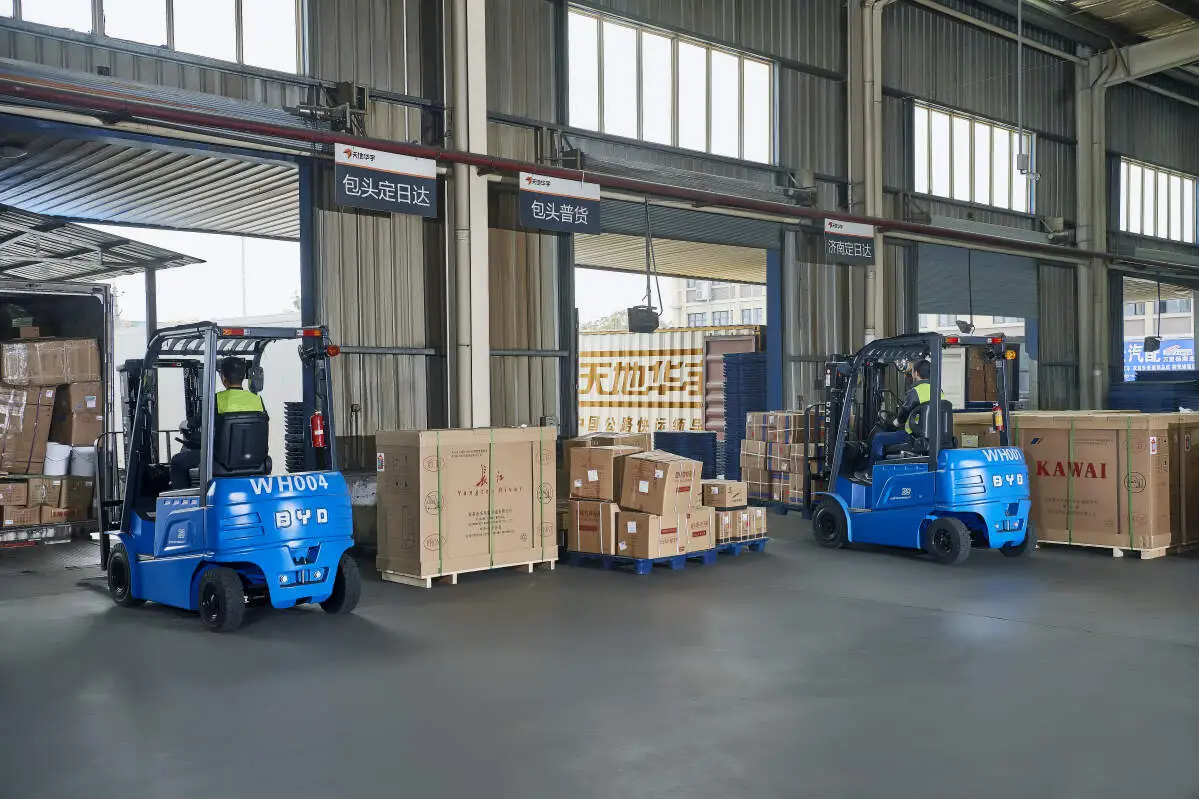
In the field of warehousing and logistics, the choice of material handling equipment directly affects operational efficiency and operating costs. As two common types of equipment, traditional forklifts and AR intelligent AGVs have many differences in usage scenarios and actual performance.
Key differences in operating modes
The traditional forklift relies on manual operation, and the operator needs professional training to be familiar with vehicle control, cargo loading and unloading and the site environment. During the operation, it is necessary to always pay attention to the surrounding conditions and deal with various emergencies. The AR intelligent AGV is equipped with AR navigation and intelligent dispatching system, which does not require manual real-time control. It can complete material handling operations through preset paths or dynamic scheduling, and can automatically identify obstacles and adjust routes, reducing dependence on labor.
Practical comparison of operational efficiency
The operation efficiency of traditional forward forklifts is greatly affected by the skills and status of the operator. Long-term operation is prone to fatigue, resulting in a decrease in efficiency, and manual coordination is required during multi-task scheduling, which is prone to waiting or conflicts. AR intelligent AGV can achieve 24-hour uninterrupted operation, standardized operation process, scheduling system can reasonably allocate tasks, reduce invalid waiting, and perform more stable efficiency in batch and repetitive handling tasks.
Clear distinction between applicable scenarios
Traditional forward forklifts are more flexible and suitable for scenarios with complex site environments, diverse types of goods, and frequent adjustment of operation content, such as small warehouses, temporary handling tasks, etc., to cope with unconventional loading and unloading needs. AR intelligent AGVs are more suitable for standardized and large-scale operation scenarios, such as large-scale e-commerce warehouses, automated production workshops, etc. In such scenarios, the handling path is fixed, the task repetition is high, and the equipment can play the advantages of intelligent scheduling.
Differences in operation and maintenance and cost considerations
The operation and maintenance of traditional forward forklifts mainly focuses on mechanical parts maintenance and fault repair, and labor costs account for a relatively high proportion. In long-term operation, personnel training and management costs need to be continuously invested. The operation and maintenance of AR intelligent AGVs focuses on system software maintenance and sensor calibration, and the initial investment is relatively high, but in the long run, it can reduce labor costs and reduce losses caused by human operation errors.
Overall, both types of equipment have their own advantages and disadvantages. Enterprises need to choose appropriate material handling equipment based on their own storage scale, operational needs, and budget to improve overall operational efficiency.

