


Basic Adaptation Principles of Shelf Channels
Correlation between Fundamental Parameters and Channel of Stacker
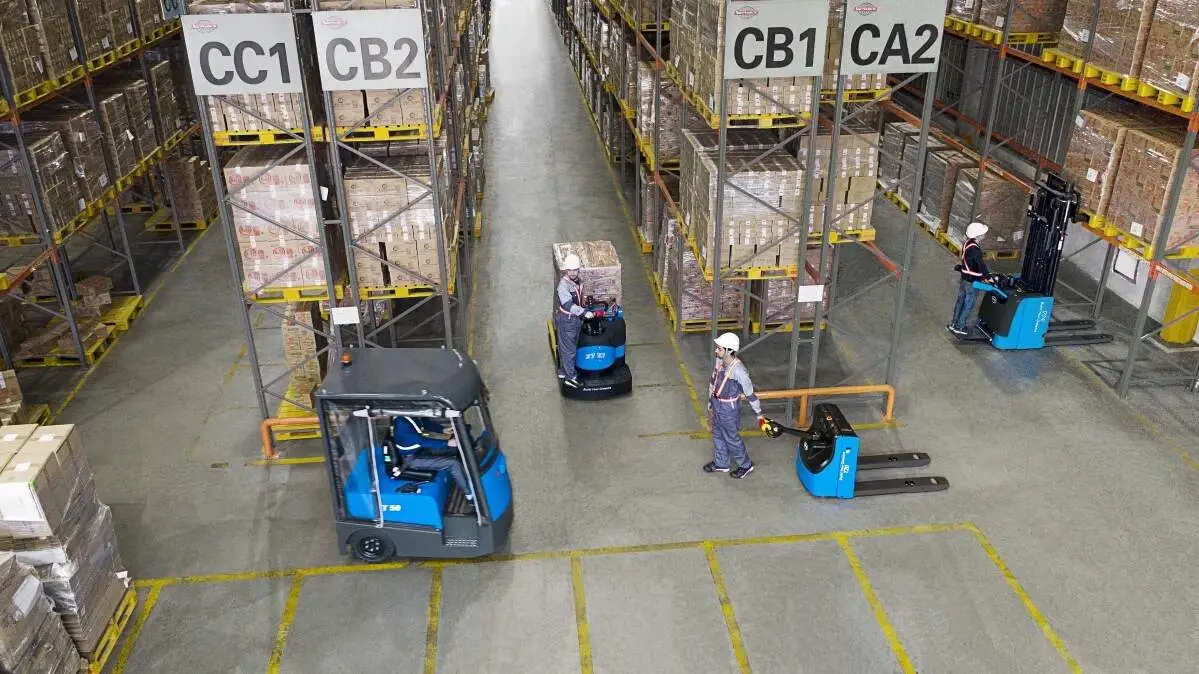
Parameters such as the body size and minimum turning radius of the 1.5-ton AGV stacker are the core basis for determining the width of the shelf channel. When planning the channel, it is necessary to fully consider the space requirements of the vehicle when turning and turning, and reserve enough safety margin to avoid scratches between the vehicle and the shelf. Generally speaking, the channel width should be greater than the minimum turning radius of the stacker and the width of the body, and at the same time take into account the operating space when accessing the goods to ensure that the vehicle can complete various operations smoothly.
Channel width requirements for different shelf types
Beam type shelf channel standard
Beam-type shelves are a widely used type of shelves in storage scenarios. To adapt to the channel width of a 1.5-ton AGV stacker, it is necessary to combine the actual operating requirements of the vehicle. Under normal circumstances, the channel width should ensure that there is a sufficient safety distance between the body of the stacker and the shelf columns and beams during the forward and turning process to avoid collisions caused by operation errors when accessing goods. At the same time, the space requirements during cargo loading and unloading should also be considered.
Drive-in Shelf Aisle Standard
The channel of the drive-in rack has both storage and operation functions. When adapting to a 1.5-ton AGV stacker, the channel width needs to meet the smoothness of the vehicle entering and exiting. Since the goods of the drive-in rack are placed directly on both sides of the channel, the channel width should not only adapt to the size of the vehicle, but also consider the prominence of the goods, avoid the edge of the goods from contacting the vehicle, and ensure the safety of the vehicle's passage and operation in the channel.
Additional factors affecting channel width
The impact of storage environment and operation accuracy
The flatness of the storage floor will affect the demand for channel width. If there is a slight unevenness or slope in the ground, the channel width needs to be appropriately widened to avoid vehicle turbulence causing offset and scratching the shelves. In addition, the operation accuracy of the AGV stacker will also affect the planning of the channel width. Equipment with higher precision can appropriately reduce the channel width, but still need to retain the necessary safety margin.
Adaptation adjustment of cargo specifications
When the size of the stored goods exceeds the conventional pallet size, the channel width needs to be adjusted accordingly. For example, when the width of the goods is large or the height is high, the stacker truck needs more operating space to align the goods when accessing the goods. At this time, the channel width needs to be appropriately increased to ensure that the vehicle can smoothly complete the access operation of the goods and avoid collisions between the goods and the shelves and vehicles.

