


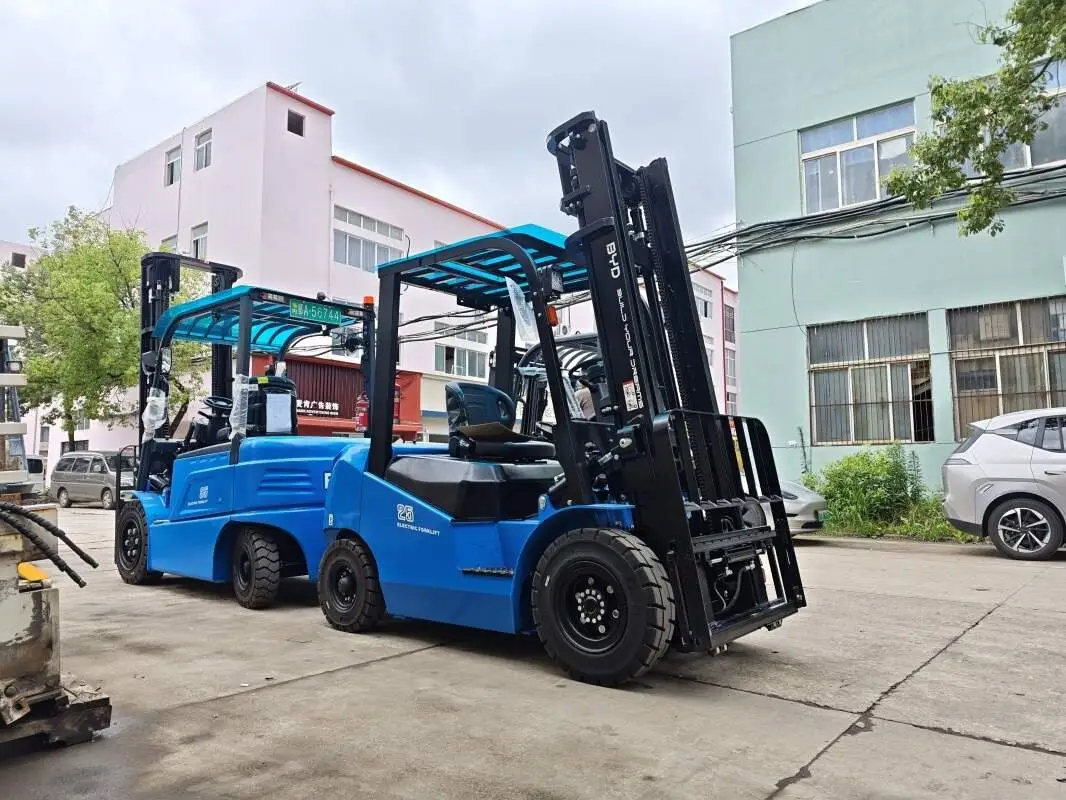
In the electronic raw material storage scenario, high shelf storage can maximize the use of space, but the operation accuracy and flexibility of forklifts are extremely high. RTR series three-way forklifts have become a practical choice for such scenarios due to their narrow channel operation capabilities. The following are the key points in practical operation to share.
Preparation for homework
Equipment basic inspection
Before starting the forklift, it is necessary to check whether the power meets the operation requirements one by one, confirm that the fork lifting, steering and three-way movement functions are normal, and check the tire wear and braking system sensitivity to avoid malfunctions during operation.
Operating environment confirmation
Clean up the debris in the working channel in advance, confirm the stability of the high-level shelves, check whether the channel width meets the forklift operation requirements, and confirm that the lighting conditions in the storage area are good to ensure a clear view of the operation.
Core skills of practical operation of high shelves
Standardized operation of forking electronic raw materials
When approaching the storage space, control the forklift to drive at a low speed. After aligning with the shelf space, slowly extend the fork to ensure that the fork is completely inserted under the raw material tray to avoid scratching the raw materials or shelves. Keep a uniform speed when lifting the fork. After reaching the specified floor height, fine-tune the forklift position to smoothly send the tray into the shelf. After confirming that it is firmly placed, take back the fork.
Precise control of shelf alignment
Due to the limited space of the high shelf, it is necessary to use the precise positioning function of the forklift during operation. By observing the alignment marks between the fork and the shelf and fine-tuning the steering wheel, the horizontal alignment of the fork and the cargo space is guaranteed. At the same time, pay attention to the side distance between the forklift and the shelf to avoid the body scratching the shelf column.
Finishing and daily maintenance after operation
Equipment placement points
After the operation, park the forklift in the designated area, lower the fork to the lowest position, turn off the power supply and pull the handbrake. At the same time, clean up the sundries on the fork to avoid the residual raw material debris affecting the subsequent operation.
Daily maintenance matters
Regularly lubricate the three-way moving mechanism and lifting system of the forklift, check the charging status of the battery, and clean the dust on the surface of the battery in time. In addition, it is necessary to record the operation of the equipment for each operation, and report for repair in time if any abnormalities are found.

