


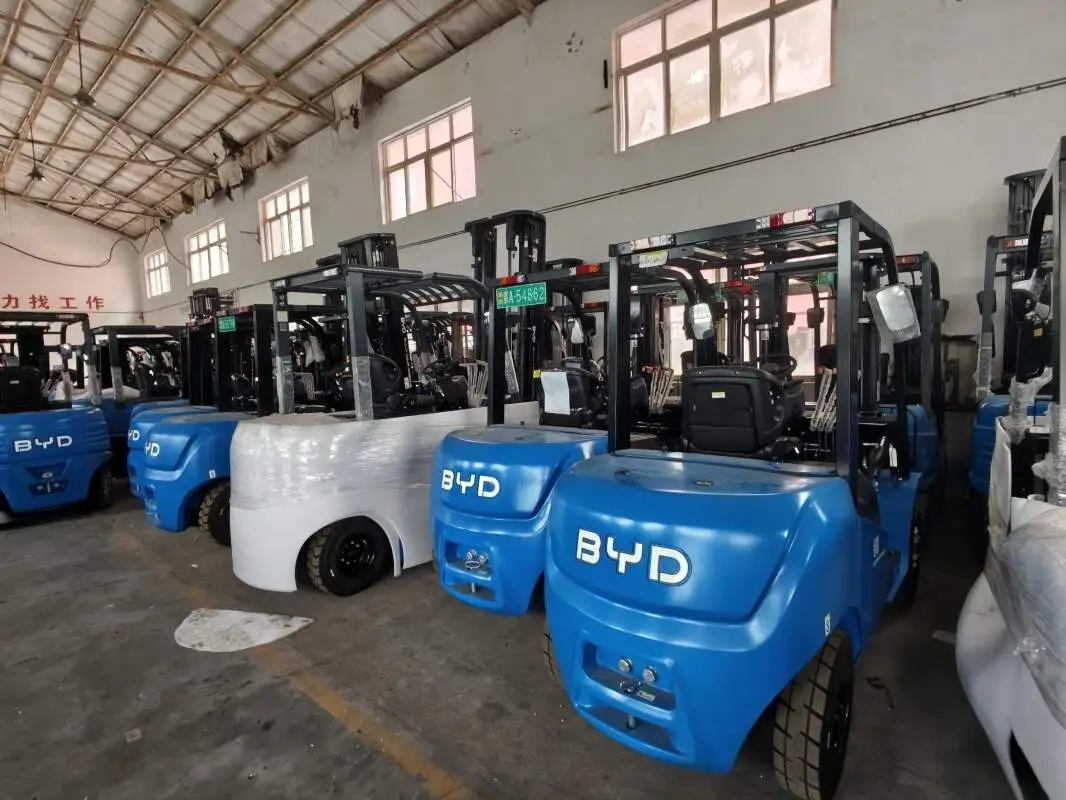
The lifting and tilting cylinders of electric forklifts are the core components to ensure the operation of forklifts. Long-term frequent operation or environmental impact makes them prone to oil leakage problems, which not only reduce the efficiency of forklift operations, but also may cause safety hazards due to the loss of hydraulic oil. Timely treatment is required.
The first step in dealing with oil leakage from the cylinder is to accurately locate the oil leakage point. Before operation, park the forklift in a flat and safe area, turn off the power supply and relieve pressure to avoid pressure operation of the hydraulic system. Carefully check the outer wall of the cylinder, the surface of the piston rod, the connection of the sealing cover and other parts to determine whether the oil leakage is caused by the wear of the seal, the scratching of the cylinder or the loosening of the joint, to provide a basis for subsequent treatment.
If it is confirmed that the oil leakage is caused by the aging or damage of the seal, it needs to be replaced with the help of the matching oil seal repair kit. This kind of repair kit usually includes the main oil seal, dust ring, guide sleeve seal, O-ring and other components suitable for the cylinder model, which can fully cover the wearing parts of the cylinder sealing system. Before replacement, thoroughly clean the inside of the cylinder and the surface of the parts to remove oil stains and impurities, and prevent the seals from wearing again after installation. Pay attention to the orientation of the seals during installation to avoid distortion. A small amount of clean hydraulic oil can be applied to assist in installation to ensure that the seals fit closely with the cylinder and piston rod.
After the replacement of the seal is completed, the cylinder needs to be assembled according to the specifications and debugged. Reinstall the cylinder to the forklift, fill it with hydraulic oil that meets the specifications, start the forklift to test the lifting and tilting functions, observe whether the cylinder still has oil leakage, and check whether the action is smooth. If the debugging is normal, the operation can be resumed; if there is still oil leakage, check the installation status of the seal again or whether the cylinder barrel and piston rod are damaged.
In daily maintenance, regular inspection of the oil seal status can also effectively prevent oil leakage problems. Avoid forklifts from operating in harsh environments for a long time, clean the dust and debris on the surface of the cylinder in time, and prevent impurities from entering the sealing system. In addition, replace the hydraulic oil according to the requirements of the forklift maintenance manual to keep the hydraulic system clean, which can prolong the service life of the oil seal and the cylinder and reduce the occurrence of oil leakage failures.

