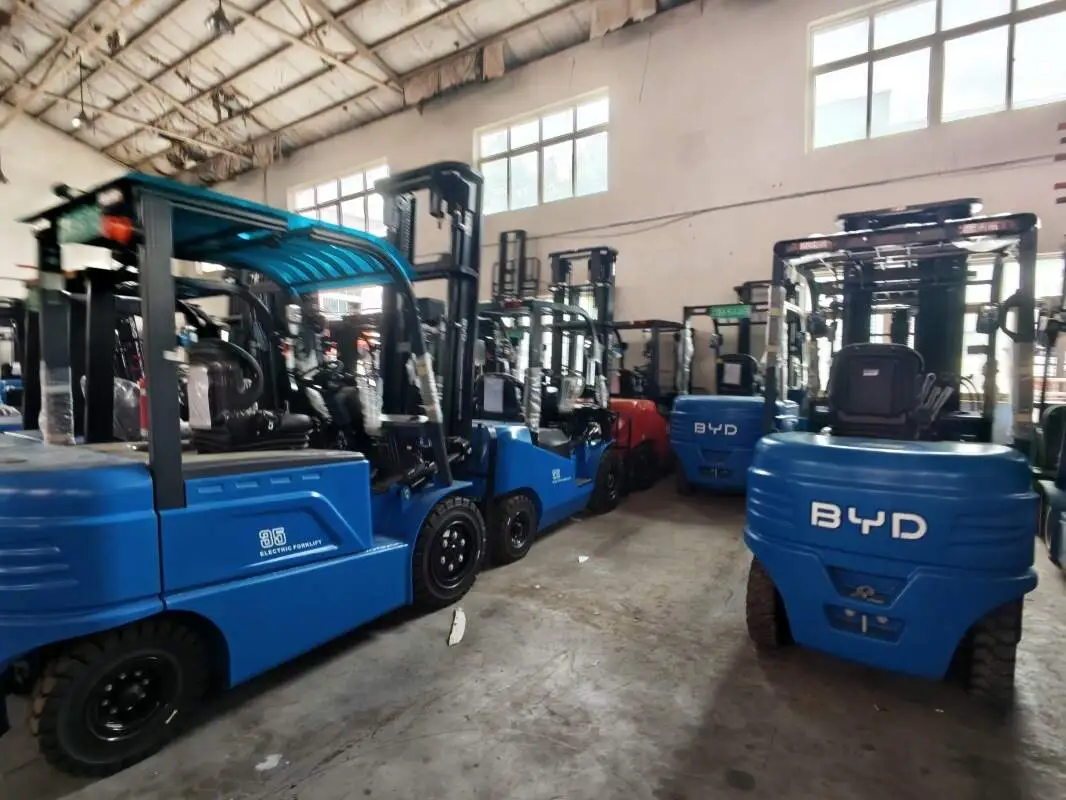
When it comes to forklift operations, choosing the right tyre type is crucial for ensuring efficiency, safety, and long-term cost-effectiveness. Forklifts operate in a wide range of environments, from smooth indoor warehouses to rugged outdoor construction sites, each demanding specific tyre features to perform optimally. Understanding the different forklift tyre types and their price ranges can help you make a well-informed decision tailored to your working scenario.
For indoor working scenarios such as warehouses, distribution centers, and retail stores, the primary concerns are floor protection, low noise, and resistance to flat spots. Solid rubber tyres are a popular choice here. Made from dense rubber compounds, these tyres are highly resistant to punctures and wear, eliminating the risk of sudden deflation that could disrupt operations. They also produce minimal noise, creating a more comfortable working environment for staff. Additionally, solid tyres maintain consistent pressure, ensuring stable handling on smooth concrete floors. The price of solid forklift tyres varies depending on size and rubber quality. For small to medium-sized forklifts, solid tyres typically range from $200 to $500 per tyre. Larger models designed for heavy-duty indoor use can cost between $500 and $1,000 per tyre.
Another suitable option for indoor environments is non-marking tyres. These tyres are formulated with special rubber compounds that leave no black marks on polished floors, making them ideal for facilities with strict cleanliness requirements, such as food processing plants or high-end retail spaces. While they offer similar durability to standard solid tyres, their specialized formulation makes them slightly more expensive. Non-marking tyres for small forklifts usually start at $250, with larger variants costing up to $1,200 per tyre.
Outdoor working scenarios, including construction sites, lumber yards, and port terminals, require tyres that can handle uneven terrain, rough surfaces, and heavy loads. Pneumatic tyres, similar to those on trucks, are a common choice. They feature an air-filled cavity that provides excellent shock absorption, reducing vibration and improving comfort for operators when navigating bumpy ground. The deep tread patterns on pneumatic tyres offer superior traction, even on muddy or gravelly surfaces. However, they are more prone to punctures compared to solid tyres, so they may require regular maintenance. The price of pneumatic forklift tyres starts around $300 for small models, while heavy-duty pneumatic tyres for large forklifts can cost between $800 and $1,800 per tyre.
For outdoor operations that need a balance of durability and shock absorption, solid pneumatic tyres are an excellent middle ground. These tyres combine the puncture resistance of solid rubber with the cushioning of air-filled tyres. They feature a solid rubber core surrounded by a thin air-filled layer, providing reliable performance on both rough outdoor terrain and smooth indoor surfaces if needed. Solid pneumatic tyres are slightly more expensive than standard pneumatic tyres, with prices ranging from $400 to $1,500 for small forklifts and $1,000 to $2,200 for large heavy-duty models.
When considering forklift tyre prices, it’s important to note that several factors influence the cost beyond size and type. The quality of rubber compounds, tread design complexity, and load capacity ratings all play a role in determining the final price. Additionally, purchasing tyres in bulk may offer cost savings, though this depends on the supplier. It’s advisable to evaluate the total cost of ownership rather than just the upfront price. For example, solid tyres may have a higher initial cost but require less maintenance and last longer in indoor environments, making them more cost-effective over time. Conversely, pneumatic tyres may need more frequent replacements due to punctures but offer better performance in outdoor settings.
In conclusion, selecting the right forklift tyre type depends on your specific working environment. Indoor operations benefit from solid or non-marking tyres for their durability and floor-friendly features, while outdoor scenarios require pneumatic or solid pneumatic tyres for traction and shock absorption. By understanding the characteristics and price ranges of each tyre type, you can choose a solution that balances performance, safety, and budget, ensuring your forklifts operate efficiently and reliably in any setting.