


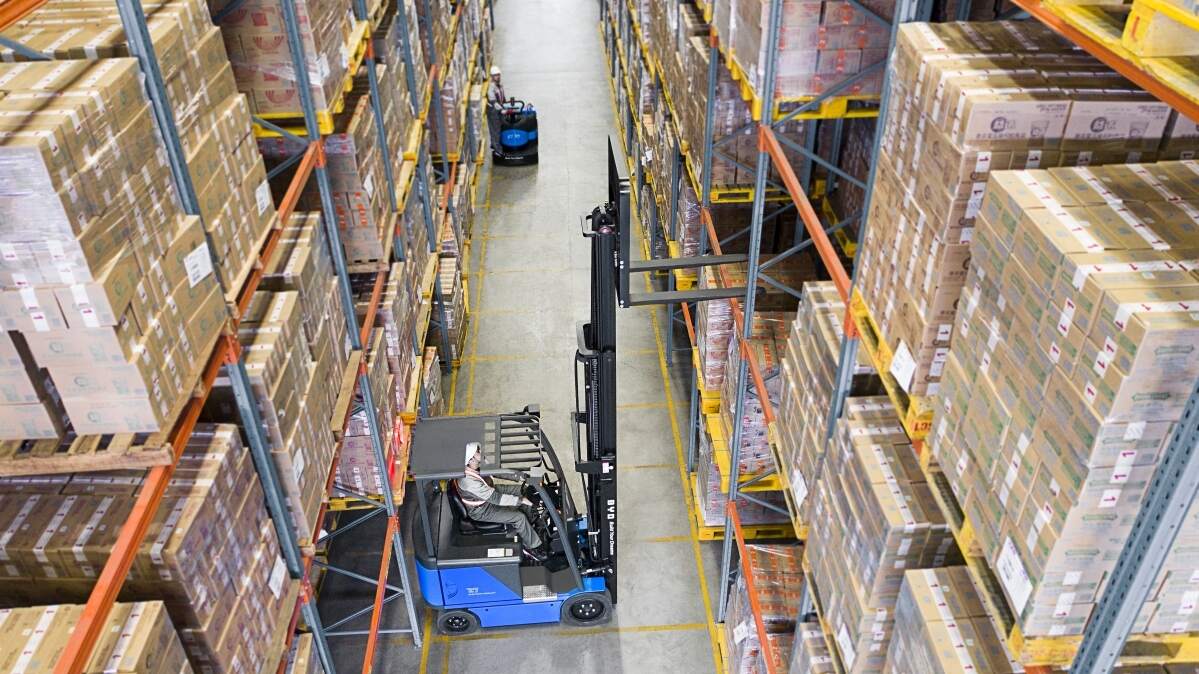
Narrow channel storage has become a common mode of modern storage due to its high space utilization rate, but the compact operating environment has put forward special requirements for the tonnage selection of electric forklifts. Only by selecting the right tonnage can we take into account both operational efficiency and space adaptability.
The Core Factors Affecting Tonnage Selection
The first is the storage scale and the weight of the goods. Small narrow-aisle warehouses such as e-commerce retail warehouses and spare parts warehouses, with a single weight of more than 1 ton and a small daily handling volume, give priority to small-tonnage forklifts; medium-sized warehouses often involve palletized goods, with a single pallet weight of more than 1-2 tons, which need to be adapted to medium-tonnage forklifts; if there are a small amount of heavy goods in the warehouse, such as small industrial spare parts and auto parts, with a single weight of up to 2-3 tons, forklifts of the corresponding tonnage are required, but it is necessary to ensure that the channel width can meet their operational needs.
Secondly, the width of the channel is limited. The width of the narrow channel is usually about 2-3 meters, and the larger the tonnage of the forklift, the larger the steering radius. The too wide body can easily cause channel congestion or even collision shelves. Therefore, the extremely narrow channel is more suitable for forklifts with small tonnage and small steering radius.
Application scenarios of electric forklifts of different tonnages
1-1.5-ton electric forklift: This type of forklift is small in size, flexible in steering, and can operate freely in a narrow channel of about 2 meters. It is suitable for high-frequency handling of small goods, such as e-commerce order picking and spare parts sorting. It can meet the load demand and will not affect the space utilization due to the large body.
1.5-2 ton electric forklift: both load capacity and flexibility, suitable for medium-sized narrow channel storage, can cope with the handling of most palletized goods, channel width of more than 2.5 meters can operate smoothly, balancing efficiency and space adaptability.
2-3 ton electric forklift: only suitable for narrow storage scenarios with a channel width of about 3 meters, mainly for handling heavy goods. During operation, sufficient steering and operation space should be reserved to avoid affecting other operation processes.
Additional considerations for selection
In addition to tonnage, it is also necessary to pay attention to the steering system of the forklift. Forklifts with in-situ steering function are more suitable for narrow passages; at the same time, choose the appropriate battery life configuration based on the operating time to ensure that the average daily operating needs are met; operation convenience is also very important. Convenient control can improve the safety and efficiency of operations in narrow passages.

