


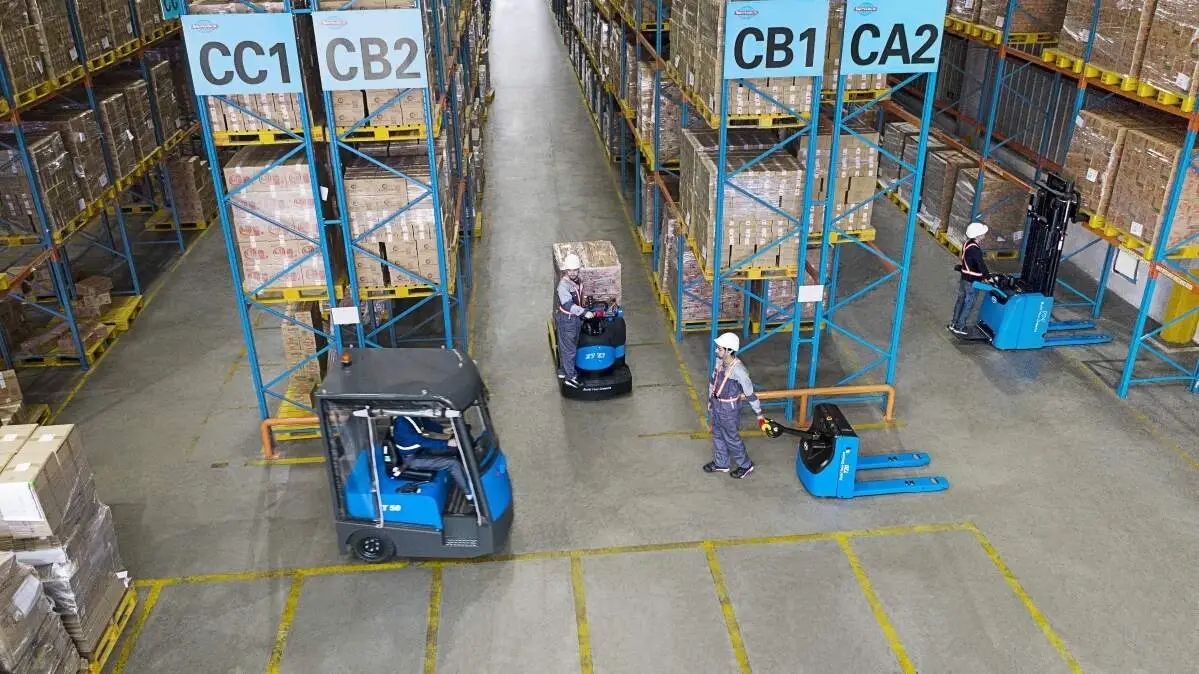
Low-temperature storage environments are often accompanied by low temperatures of minus tens of degrees Celsius, high humidity, and frequent hot and cold alternation. Such special working conditions place strict requirements on the performance and stability of forklifts, making it difficult to adapt to ordinary forklifts. Therefore, special lithium-electric forklifts for cold storage need to be selected specifically.
The core challenge of low temperature operating conditions
The low temperature environment will greatly affect the battery activity, resulting in a sudden drop in battery life. At the same time, high humidity can easily cause parts to rust. The viscosity of hydraulic oil increases at low temperatures, which will reduce the handling sensitivity and even affect the stability of lifting operations. In addition, frequent hot and cold alternation in and out of the cold storage may also cause the electrical components to appear condensation short circuit risk, further affecting the service life of the forklift.
Core Selection Points for Adapting Cold Storage lithium battery forklifts
First of all, we should pay attention to the low temperature adaptability of the battery, and prioritize the lithium battery configuration that can still maintain stable discharge efficiency in a low temperature environment to ensure that the battery life meets the needs of daily operations, and at the same time, it has good low temperature charging performance, reducing charging waiting time.
Secondly, the body and parts materials need to be made of materials that are resistant to low temperatures and corrosion to avoid embrittlement and cracking of materials at low temperatures, and at the same time to deal with the problem of rust in high humidity environments to prolong the service life of parts.
Furthermore, the hydraulic system needs to be adapted to low-temperature working conditions, and low-temperature resistant hydraulic oil and seals are selected to ensure that the hydraulic system can still operate smoothly at low temperatures, with accurate and reliable operations such as lifting and steering.
Finally, the control system also needs to consider low-temperature adaptation, such as the use of cold-resistant control components to avoid getting stuck at low temperatures and ensure that the operator can operate the forklift smoothly.
Daily maintenance tips after selection
Even if a suitable cold storage lithium battery forklift is selected, daily maintenance cannot be ignored. Regularly check the battery status, keep the battery clean and dry, and take thermal insulation measures if necessary; regularly replace the low-temperature hydraulic oil to check whether the seals are in good condition; at the same time, pay attention to the parking of the forklift in an alternating hot and cold environment to avoid condensation causing damage to electrical components.

