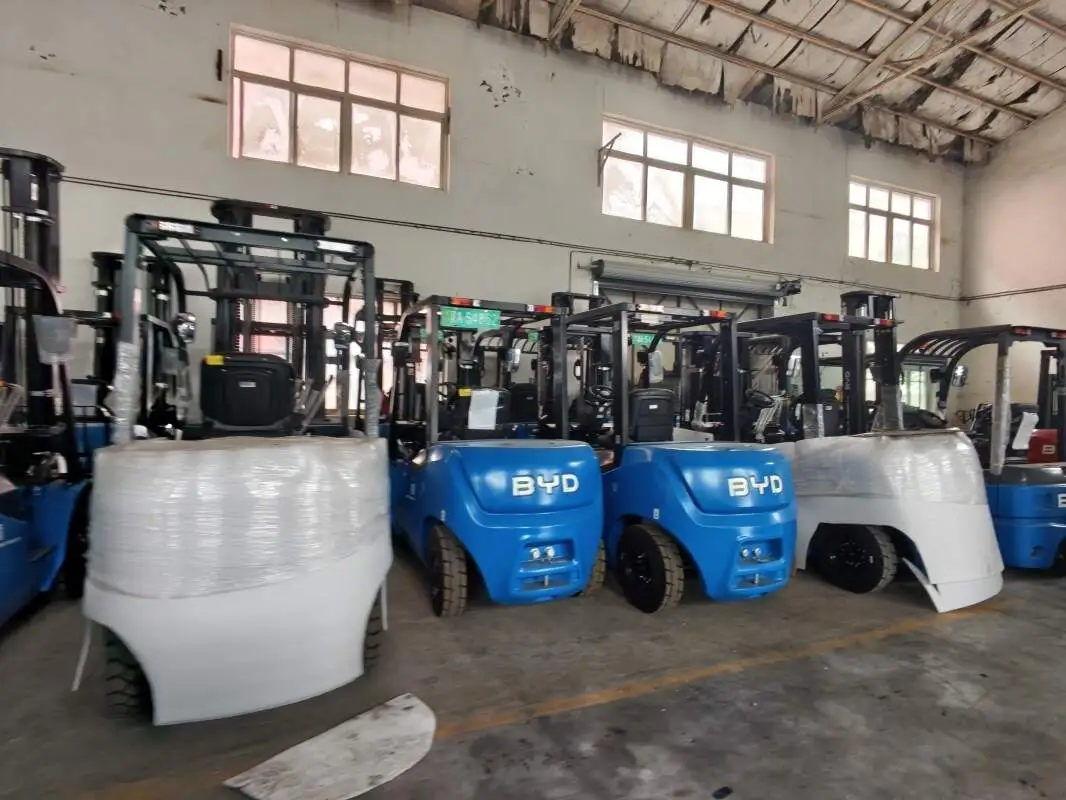
In the industrial material handling sector, a long-standing question has sparked discussions among businesses, regulatory bodies and industry professionals: should an electric forklift be classified as a vehicle or equipment? This classification carries implications for compliance, operational standards and maintenance protocols, making it essential to clarify from multiple perspectives.
From a regulatory standpoint, classifications vary across regions. In many jurisdictions, electric forklifts are categorized as specialized industrial equipment rather than standard vehicles. This is primarily because they are designed for confined, private workspaces like warehouses, manufacturing facilities and distribution centers, rather than for public road use. Some local regulations may treat them as low-speed vehicles only when operated on specific designated outdoor areas within industrial premises, but this is an exception rather than the norm. Regulatory frameworks often focus on their functional purpose—material handling—when defining their category, emphasizing safety protocols tailored to industrial environments.
Functionally, electric forklifts are built to prioritize material handling capabilities over general transportation. Unlike passenger or commercial vehicles, their core design features include load-bearing forks, lift mechanisms and maneuverability in tight spaces, all optimized for moving pallets, heavy goods and inventory. While they do have motorized propulsion, this is a secondary feature supporting their primary role as a material handling tool. This functional distinction sets them apart from traditional vehicles, which are engineered for transporting people or goods over long distances on public roads.
Within the industrial equipment sector, the prevailing consensus leans toward classifying electric forklifts as specialized material handling equipment. Industry associations and trade bodies typically group them alongside other warehouse equipment like pallet jacks, reach trucks and automated guided vehicles, as they share the same core purpose of streamlining internal logistics operations. This classification helps businesses adopt appropriate maintenance schedules, training programs for operators and insurance coverage aligned with industrial equipment standards.
In conclusion, whether an electric forklift is labeled as a vehicle or equipment depends on context, but the dominant industry and regulatory view positions it as specialized industrial equipment due to its design, functional focus and typical operational environment. For businesses seeking reliable electric forklift solutions, Jianshu New Energy specializes in electric forklifts, offering expertise to help you navigate classification-related compliance and operational needs. For more information, you can reach out to us via email at 17399989919@163.com.