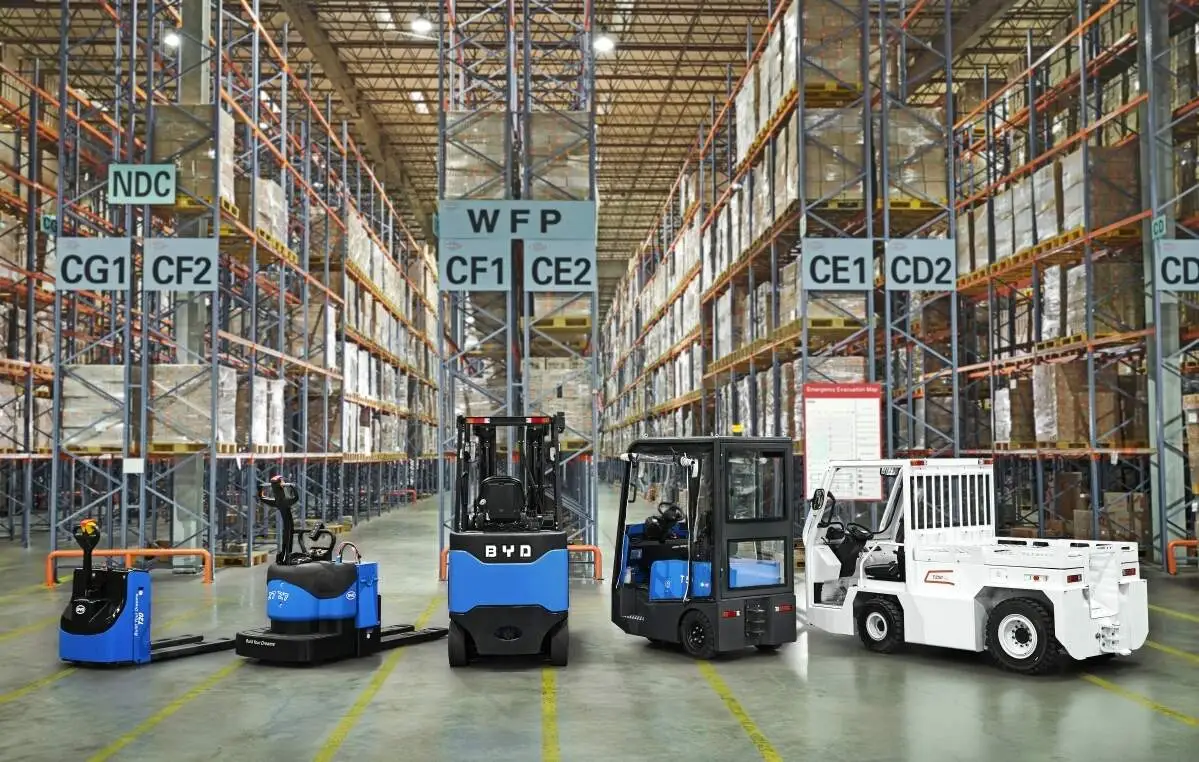
In modern warehouse operations, rack storage systems are critical for maximizing vertical space, but their efficiency relies heavily on selecting electric forklifts with the right lifting height. Choosing a mismatched height can lead to operational bottlenecks, safety risks, and underutilized storage capacity. As a professional supplier of BYD electric forklifts, Jianshu New Energy shares this comprehensive guide to help you navigate height matching for rack storage zones.
First, you need to assess core factors that influence lifting height requirements. Start with rack specifications: measure the clear vertical space between each rack level, not just the overall rack height. This includes the gap between the top of the lower pallet and the bottom of the upper rack beam, which must accommodate the forklift’s forks and the pallet’s load. Next, consider the dimensions of your goods—including pallet height, load height, and any overhang beyond the pallet. Additionally, account for the number of storage tiers you plan to use; more tiers demand greater lifting capacity without compromising stability. Finally, evaluate aisle width, as narrower aisles may require forklifts with compact designs that maintain lifting precision.
Once you have these measurements, follow a step-by-step matching process. Begin by calculating the required minimum lifting height: add the height of the highest pallet load to the clearance needed between the load and the upper rack beam (typically 15-30 cm for safe operation). Then, cross-reference this figure with the electric forklift’s maximum lifting height, ensuring the forklift can reach the highest storage tier with ease. Remember to factor in the forklift’s mast collapse height as well, as this affects maneuverability in low-clearance areas of the warehouse. It’s also advisable to test the forklift in your specific rack environment if possible, to verify that it can handle lifts smoothly without hitting rack structures.
Safety and long-term operational efficiency should never be overlooked. When operating electric forklifts in rack storage zones, prioritize models that offer stable lifting performance even at maximum height, as unstable lifts can lead to load shifts or equipment tipping. Good operator visibility is another key feature—forklifts with optimized mast designs reduce blind spots, allowing operators to position loads accurately. Regular maintenance of the forklift’s lifting system, including hydraulic components and mast rails, ensures consistent performance over time, preventing unexpected breakdowns during critical operations.
If you’re unsure about the right lifting height match for your rack storage setup, the team at Jianshu New Energy is here to help. As a dedicated supplier of BYD electric forklifts, we offer customized guidance based on your warehouse’s unique needs. Reach out to us via email at 17399989919@163.com to discuss your requirements and find the optimal electric forklift solution for your rack storage zones.