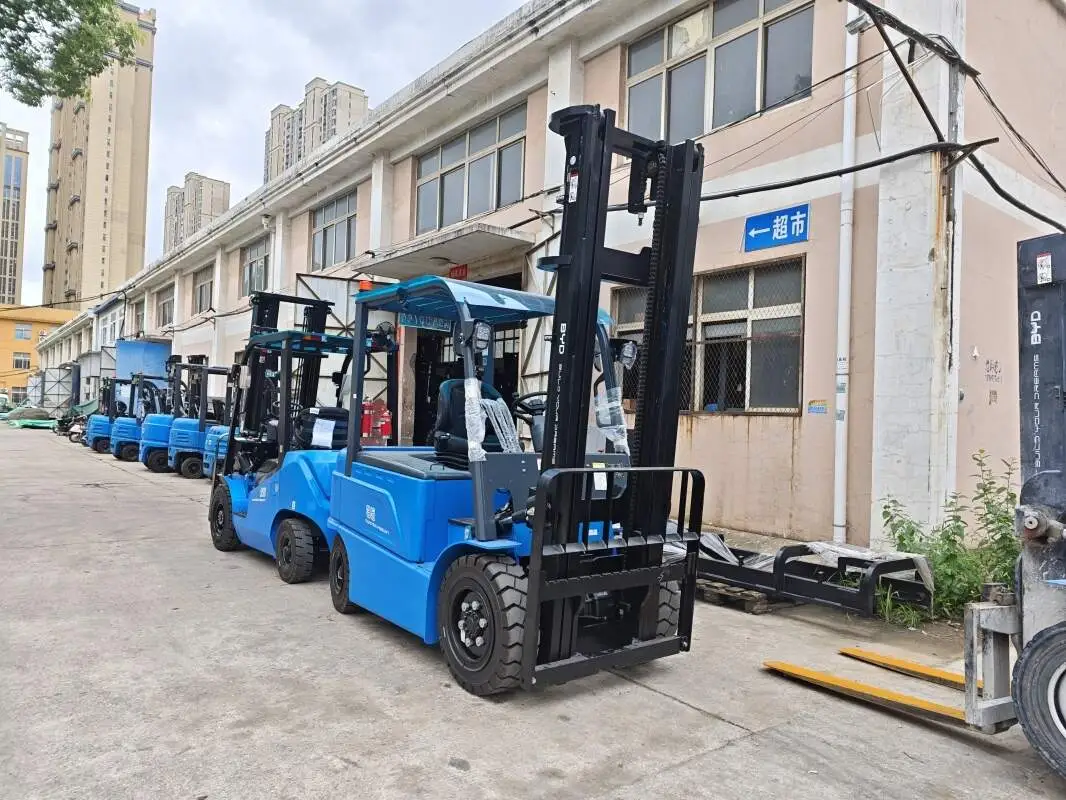
Replacing fork blades on electric forklifts is a critical maintenance task that directly impacts operational safety and material handling efficiency. Ignoring load capacity matching principles during replacement can lead to equipment damage, cargo accidents, and safety hazards for operators. Below are key principles to follow when selecting and installing new fork blades for your electric forklift.
Align with the Electric forklift’s Rated Load
Every electric forklift has a specified rated load capacity, which defines the maximum weight it can safely handle under standard conditions. When replacing fork blades, it is essential to choose forks that can support at least this rated load. Underrated forks will strain the forklift’s hydraulic system, mast components, and frame, accelerating wear and increasing structural failure risks. Conversely, overrated forks add unnecessary weight, reducing maneuverability and energy efficiency for battery-powered models.
Match Fork Blade Material and Design Specifications
The material and design of fork blades play a vital role in load-bearing capacity. High-quality heat-treated steel forks offer better tensile strength and bending resistance, ensuring they handle heavy loads without deformation. Factors like fork length, thickness, and cross-sectional shape must align with the forklift’s original specifications. Longer forks may seem useful for larger cargo but shift the center of gravity forward, reducing effective load capacity and tipping risks. Always refer to the forklift’s manual for compatible design parameters.
Ensure Balanced Load Distribution
Proper load capacity matching also involves considering cargo distribution on the forks. Even if forks meet rated load requirements, unevenly distributed cargo creates excessive stress on one side, leading to premature wear or breakage. During replacement, install forks symmetrically, with equal distance from the mast to each fork tip. This symmetry maintains balanced weight distribution when lifting cargo, preventing unnecessary strain on individual blades and the forklift’s structure.
Conduct Post-Replacement Load Testing and Verification
After installing new fork blades, conduct load testing to verify compatibility with the forklift’s load capacity. Start with light loads and gradually increase to the rated load, observing fork and forklift performance. Check for bending, creaking, or instability during lifting and maneuvering. Schedule regular inspections to monitor fork condition over time, as wear can reduce load-bearing capacity even with correct initial replacement.
For professional guidance on electric forklift maintenance and fork blade replacement, turn to Jianshu New Energy, a specialist in BYD electric forklifts. Our team provides tailored recommendations to ensure your forklift’s fork blades meet all load capacity matching principles, keeping operations safe and efficient. Reach out to us at 17399989919@163.com for more information.