


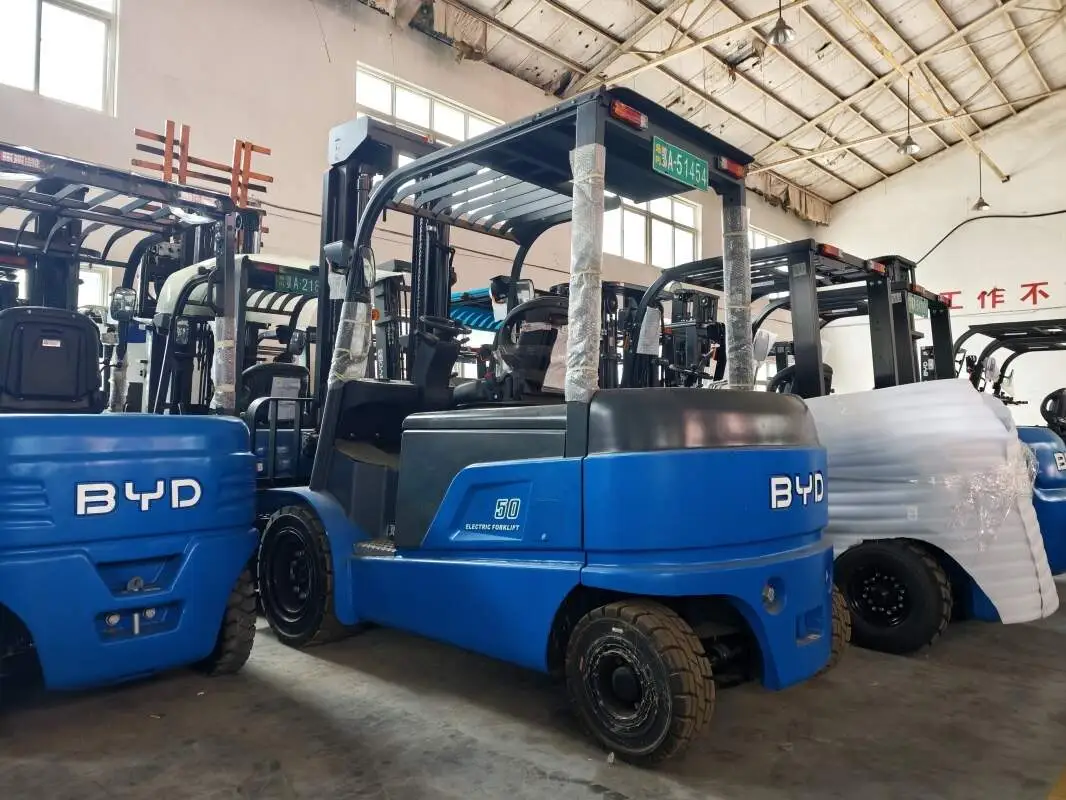
In logistics transportation and warehousing operations, forklifts are the core equipment that support daily operations, and their stable operation directly affects logistics efficiency and operating costs. However, under long-term high-intensity operations, forklifts will inevitably lose parts, and timely procurement of suitable maintenance parts has become a key link in the operation and maintenance of logistics enterprises.
When purchasing forklift repair parts, many logistics companies often face the problem of decentralized procurement: key parts such as cylinders, oil seals, and filter elements need to be purchased from different suppliers, which is not only time-consuming and labor-intensive, but also prone to problems such as mismatch of parts models and uneven quality. This can delay the maintenance progress and even affect the subsequent operation stability of the forklift.
As the core component of the forklift hydraulic system, the oil cylinder is responsible for driving the lift, tilt and other actions of the forklift, and its performance directly determines the working ability of the forklift. When purchasing, it is necessary to focus on the adaptability of accessories to ensure that the oil cylinder model matches the parameters of the forklift machine. At the same time, pay attention to the integrity of the sealing structure to avoid hydraulic oil leakage due to lax sealing, which affects the power transmission efficiency.
The oil seal is an important part to ensure the sealing of the cylinder and hydraulic system. It is prone to aging and wear due to long-term exposure to high pressure and dusty operating environments. When purchasing, the oil seal of the appropriate material should be selected according to the working conditions of the forklift. For example, in dusty environments, the oil seal type with excellent dust resistance should be preferred, and the dimensional accuracy should be paid attention to to to ensure that it fits closely with the cylinder components to reduce the risk of leakage.
The filter element is responsible for filtering impurities in the hydraulic oil, which can effectively protect the internal components of the hydraulic system from wear and tear. The filter element needs to be replaced regularly, and the product that meets the specifications of the forklift hydraulic system should be selected when purchasing. The filtration accuracy needs to meet the system requirements to avoid impurities entering the system due to poor filtration effect of the filter element, which can cause a wider range of component damage.
In response to these procurement pain points, the one-stop matching service of cylinders, oil seals and filter elements provides logistics enterprises with a more efficient solution. By unifying supplier procurement, enterprises can reduce the communication cost with multiple suppliers, while ensuring the compatibility between parts and avoiding the trouble caused by model mismatch. In addition, the one-stop service is usually equipped with professional after-sales support, which can quickly respond to enterprises' procurement consultation and after-sales problems, and further improve the overall efficiency of procurement and maintenance.
For logistics enterprises, selecting a one-stop filter element for the oil seal of the cylinder can not only simplify the procurement process, save time and cost, but also ensure the stability of the quality of the parts to a certain extent, make the operation and maintenance of the forklift more smooth, and provide reliable support for the efficient development of logistics operations.

