


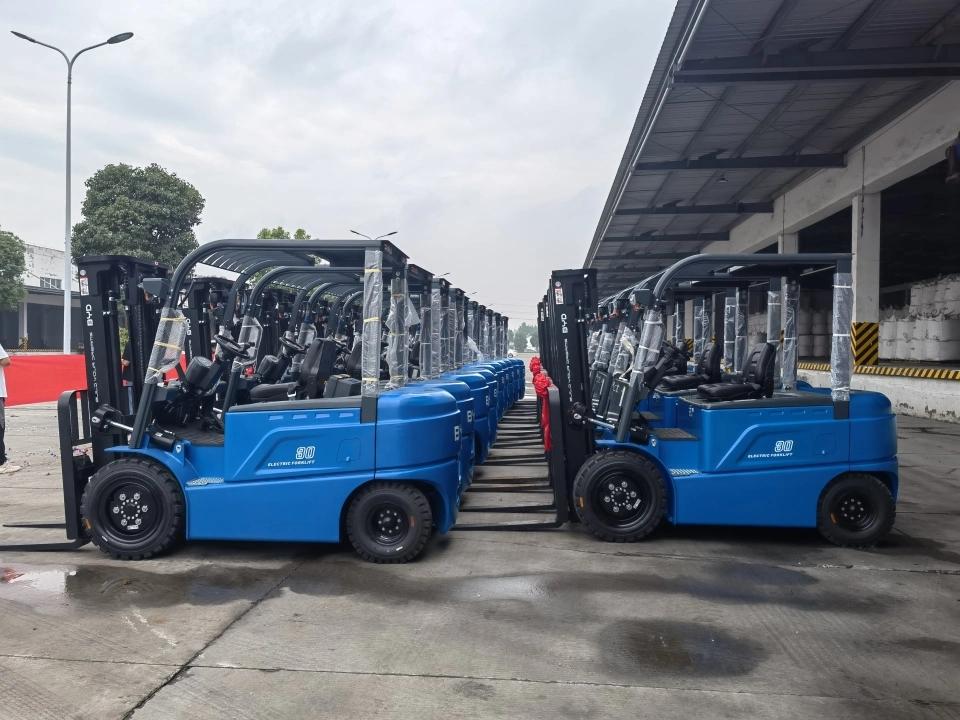
Material transfer in the manufacturing workshop is a key link in the production process. Different types of materials, complex operation scenarios and limited space layout all put forward diverse requirements for transfer equipment. A set of adaptable forklift configuration plans can effectively improve the efficiency of material transfer and support the orderly progress of production.
Forklift configurations for different material types
For the common heavy parts and light small materials in the workshop, it is necessary to match forklifts of different specifications. For heavy-duty materials such as heavy molds and large parts, a counterbalanced electric forklift with a large load capacity can be selected. Its stable body structure and strong power can easily complete long-distance heavy material transfer, and the electric drive mode can reduce noise and exhaust emissions in the workshop. For light materials such as small parts and packaging parts, electric pallet trucks are a better choice. Its small and flexible body can shuttle between stations to quickly complete the pick-and-place and short-distance transfer of small materials, and improve the material supply efficiency between stations.
Matching configuration for workshop operation scenes
The operation scenarios in the workshop are diverse, and the forklift configuration needs to be adjusted according to the characteristics of the space. When operating in narrow passages and dense shelf areas, the advantages of the forward-moving electric forklift are highlighted. Its door frame can be extended forward, and the storage of high-level materials on the shelf can be completed without major turns, effectively improving space utilization. For batch material transfer across workshops and regions, the combination of electric tractors and pallet trailers is more efficient. One tractor can trailer multiple pallets to complete the transfer of large quantities of materials at one time, reducing the number of round trips and improving the overall transfer efficiency.
Optimal configuration of supporting facilities
The complete package of forklifts not only includes the core equipment, but also needs to be equipped with relevant auxiliary facilities to ensure smooth operation. According to the frequency of use and battery life needs of the forklift, the charging facilities are rationally laid out, and charging piles are set up in the idle area of the workshop to ensure that the forklift can be replenished in time during the operation gap to avoid affecting the production progress due to insufficient battery life. At the same time, combined with the working height and pick and place method of the forklift, the design and layout of the shelves in the workshop are optimized, so that the height of the shelves matches the lifting capacity of the forklift, and the convenience of material storage is further improved.
This complete set of BYD forklift configuration plan can accurately adapt to the material transfer needs of the manufacturing workshop by combining the comprehensive consideration of material types, operation scenarios and auxiliary facilities, and help enterprises optimize the production process, improve the transfer efficiency and reduce operating costs. When it is implemented, it is recommended to conduct a comprehensive assessment of the workshop site first, clarify the material type, operation route and space restrictions, and then select the configuration plan in a targeted manner. At the same time, the skills training of operators and regular maintenance of equipment are done to ensure the maximum effectiveness of the plan.

