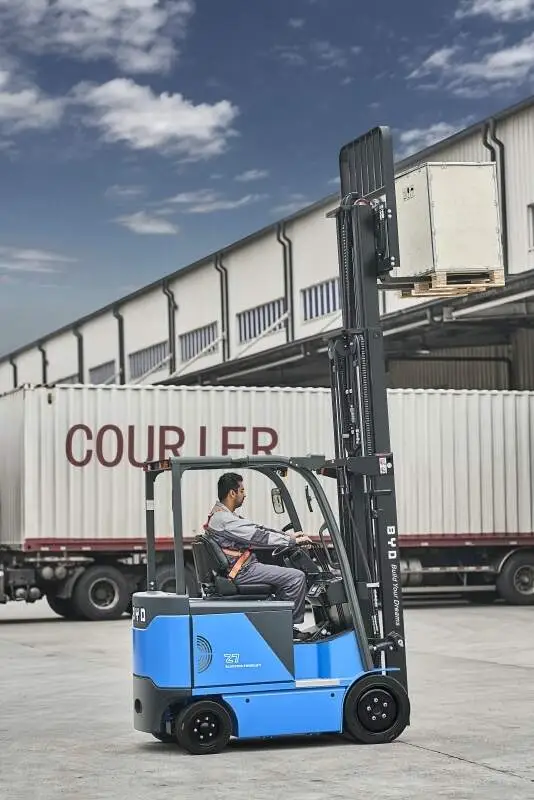
In today’s dynamic logistics and material handling landscape, forklifts are the backbone of daily operations, moving heavy goods across warehouses, distribution centers, and manufacturing plants. Traditional fleet management relies on manual logs and scheduled maintenance, risking unplanned downtime and missing critical performance insights. Multi-functional forklift apps transform this by enabling real-time equipment status monitoring and comprehensive operation data tracking.
At the core of these apps is real-time status monitoring, offering instant visibility into key components like battery charge, engine temperature, hydraulic pressure, and brake performance. If a battery drops below a predefined threshold, the app sends an immediate alert to the operator, allowing them to schedule a recharge before the equipment dies mid-operation. Abnormal rises in engine temperature trigger notifications too, prompting early inspection to prevent overheating and potential breakdowns. This proactive monitoring eliminates the guesswork associated with manual checks, ensuring that equipment issues are identified and resolved before they escalate into costly, operation-disrupting problems.
Beyond real-time updates, multi-functional forklift apps excel at tracking detailed operation data, including daily travel distance, total operating hours, number of load lifts, and fuel or battery consumption rates. Over time, this accumulated data paints a clear picture of fleet utilization patterns, helping managers identify underused equipment or overloaded forklifts that may be at risk of premature wear. For instance, if a specific forklift consistently operates 12-hour shifts without adequate rest periods, the app’s data analytics can highlight this trend, prompting managers to adjust schedules to extend the equipment’s lifespan. Additionally, tracking operator behavior—such as sudden stops, sharp turns, or speed violations—allows supervisors to address unsafe practices, reducing the risk of workplace accidents and ensuring compliance with safety protocols.
Another key benefit of these apps is their predictive maintenance capabilities, powered by the analysis of historical and real-time data. By identifying patterns in equipment performance, the app can forecast potential failures and recommend preventive maintenance actions. For example, if data shows that a forklift’s brake pads tend to wear out after 500 hours of operation, the app will send a timely reminder to replace them when the forklift approaches that threshold. This proactive approach reduces unplanned downtime by up to 30% in many cases, as maintenance is scheduled during off-peak hours rather than during critical operational periods. Predictive maintenance also lowers long-term repair costs, as small issues are fixed before they develop into major mechanical failures that require extensive repairs or replacement parts.
In addition to enhancing equipment management, multi-functional forklift apps contribute significantly to improved workplace safety. By monitoring operator behavior in real time, the app can flag risky actions such as speeding in pedestrian zones or carrying loads that exceed the forklift’s weight capacity. Supervisors can use this data to provide targeted training to operators, ensuring they adhere to safety guidelines. Moreover, the app’s real-time alerts help operators respond quickly to equipment malfunctions, reducing the risk of accidents caused by faulty machinery. For warehouses and distribution centers, this translates to fewer workplace incidents, lower workers’ compensation costs, and a safer overall environment for all employees.
As the logistics industry continues to embrace digital transformation, multi-functional forklift apps are expected to evolve further, integrating advanced technologies such as artificial intelligence (AI) and the Internet of Things (IoT). AI-powered analytics will enable even more accurate predictive maintenance, while IoT sensors will expand the range of data that can be monitored, including tire pressure and load stability. These advancements will not only improve fleet efficiency but also create new opportunities for optimizing supply chain operations, from inventory management to order fulfillment.
In conclusion, multi-functional forklift apps represent a significant leap forward in equipment management and operation data tracking. By providing real-time visibility into equipment status, detailed operation metrics, predictive maintenance alerts, and safety monitoring, these apps help businesses reduce downtime, lower operational costs, and enhance workplace safety. For organizations looking to stay competitive in the fast-paced logistics sector, adopting a multi-functional forklift app is a strategic investment that delivers tangible, long-term benefits.