


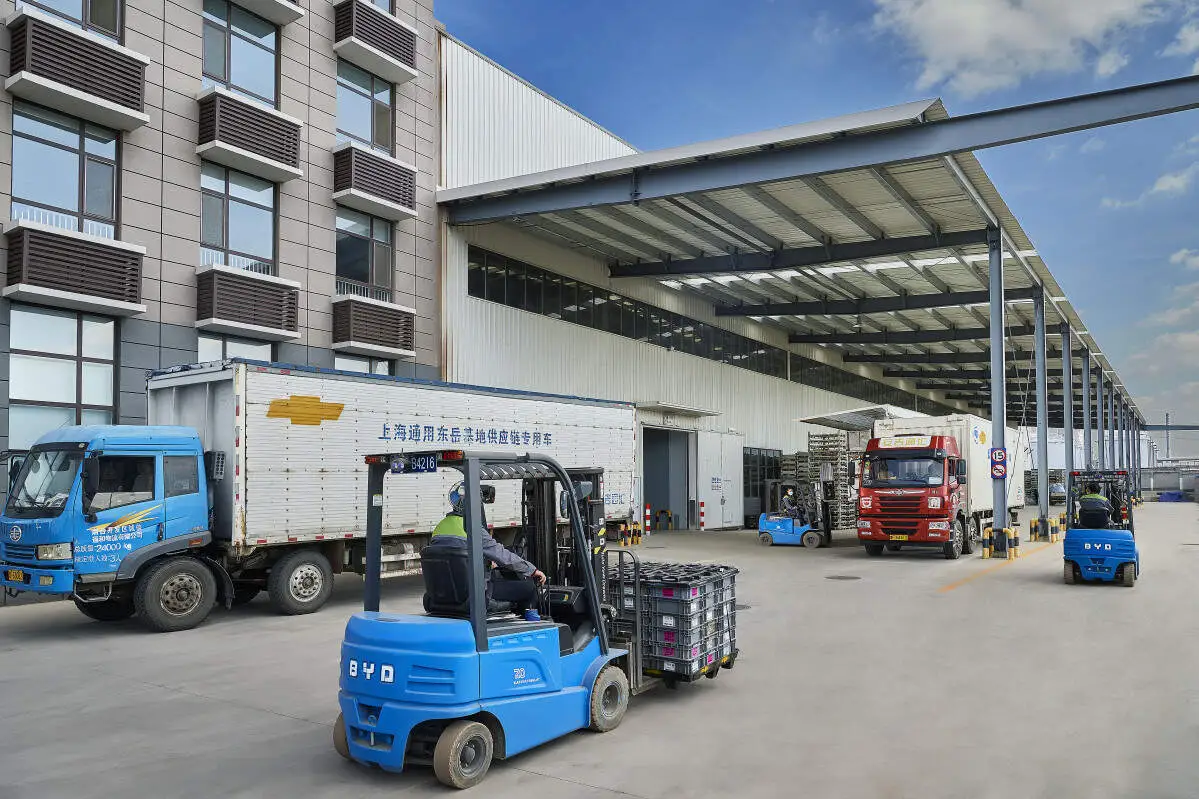
In warehousing operations, narrow passages are a common problem faced by many enterprises - traditional manual forklift operations require a wide operating space, resulting in limited shelf layout and difficult to improve space utilization. At the same time, manual operations are prone to collision risks in narrow passages, and operation efficiency is also restricted. For such scenarios, channel transformation and deployment combined with the characteristics of unmanned AGV forklifts can effectively solve pain points.
The core of channel transformation lies in adapting to the operational requirements of unmanned AGV forklifts. First, it is necessary to conduct a detailed survey of the existing storage space, clarify the parameters such as channel width, shelf spacing, and corner size, and optimize the shelf layout on this basis. For example, adjust the shelf arrangement, reserve the minimum spacing for AGV safe passage, and remove redundant obstacles in the channel to ensure smooth passage. Compared with manual forklifts, unmanned AGV forklifts have higher steering flexibility. Some models support in-situ steering, so the channel width can be appropriately reduced to further free up storage space.
The deployment of unmanned AGV forklifts needs to pay attention to system adaptation and path planning. First, choose the appropriate navigation method according to the channel characteristics. Laser navigation or visual navigation can achieve high-precision positioning in narrow channels. With obstacle avoidance sensors, shelves, goods and other obstacles can be identified in real time to ensure operation safety. Secondly, it is necessary to combine the warehousing operation process to plan the optimal operation path, such as realizing the closed-loop moving line of pickup, delivery and return to reduce invalid driving. At the same time, the AGV system is integrated with the warehouse management system to achieve real-time synchronization of order information, inventory data and AGV operation instructions, and improve overall operational efficiency.
After the transformation and deployment are completed, the utilization rate of storage space can be significantly improved. At the same time, the uninterrupted operation of unmanned AGV forklifts can effectively improve the operation efficiency and reduce the safety risk of manual operation. In addition, the operation data of AGV can be uploaded and analyzed in real time, which is convenient for managers to grasp the operation status of warehousing and continuously optimize the operation process.

