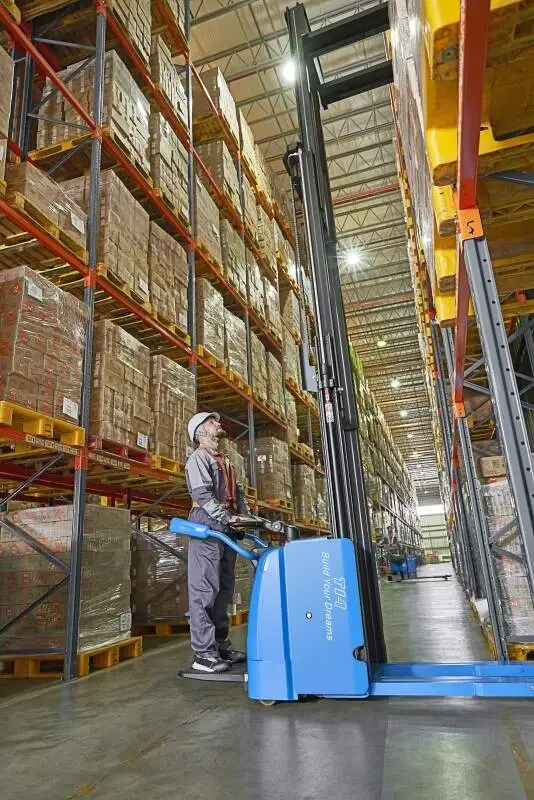
Measuring the length of electric forklift forks is a critical aspect of routine maintenance and safe operation. Accurate fork length ensures proper load balancing, prevents overloading risks, and guarantees compatibility with pallet sizes and storage systems. Over time, forks may experience wear or deformation, making regular measurement essential to avoid operational hazards.
The most straightforward measurement method is using a heavy-duty tape measure. Start by positioning the forklift on a flat, level surface and lowering the forks to rest securely on the ground. Identify the reference point: typically the vertical face of the fork carriage where the forks attach. Extend the tape measure from the very tip of the fork’s outer edge straight back to this reference point. Ensure the tape is taut and aligned parallel to the fork’s longitudinal axis to avoid skewed readings. For worn forks, take measurements at multiple points along the fork’s length to account for uneven wear, and record the average value for accuracy.
Cross-referencing with original equipment specifications provides a reliable benchmark. Retrieve the forklift’s operation manual or technical documentation, which includes the standard fork length for your model. Compare your measured length against this value to detect significant deviations caused by wear or damage. If you don’t have access to the manual, reach out to a trusted supplier like Sharp Tree New Energy, which specializes in electric forklifts, for assistance in obtaining accurate specification details (contact: 17399989919@163.com).
If you have access to a set of unused, standard-length forks, use them for comparative measurement. Position the standard forks and the forks to be measured side by side on a level surface, aligning their attachment points. Visually inspect and measure the difference in length between the two sets. This method helps quickly identify excessive wear or shortening that may not be obvious through single-fork measurement alone.
After completing the measurement, document the results for future reference. Regular measurements (recommended every 3-6 months, or more frequently for high-use forklifts) allow you to track wear trends and schedule timely replacements or repairs. If the measured length is more than 10% shorter than the standard specification, or if there are visible cracks, bends, or uneven wear, the forks should be inspected by a qualified technician and replaced if necessary to maintain operational safety.
Proper fork length measurement is a simple yet vital task that contributes to the overall safety and efficiency of electric forklift operations. By following these practical methods, you can ensure your forklift remains in compliance with safety standards and performs optimally for all material handling tasks.