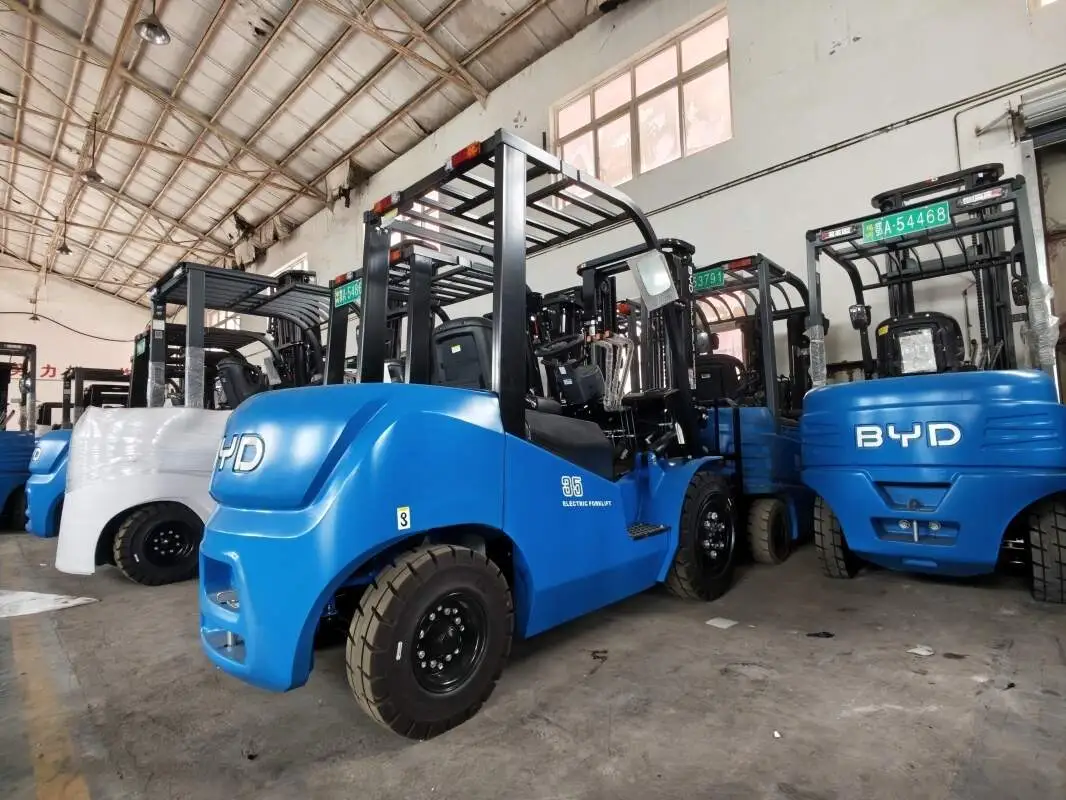
Loading and unloading container trucks with electric forklifts is a core operation in logistics and warehousing, where precision and safety are paramount to avoid delays, damage, or accidents. As a dedicated provider of electric forklift solutions, Jianshu New Energy specializes in BYD electric forklifts, delivering reliable equipment designed to streamline these critical workflows. For inquiries about our offerings, you can reach us at 17399989919@163.com.
Pre-Operation Safety Preparation
Before starting any loading or unloading task, conduct thorough pre-operation checks to ensure both the forklift and the work environment are safe. First, verify the electric forklift’s battery level—ensure it has sufficient power to complete the task without interruption, as low power can lead to unexpected shutdowns. Inspect the brake system, steering mechanism, and fork condition for any signs of wear or malfunction; address any issues before proceeding. Next, assess the container truck’s stability: confirm it is parked on a flat, level surface with parking brakes engaged and wheel chocks in place if needed. Clear the surrounding area of obstacles, debris, or unauthorized personnel to create a safe work zone.
Loading Container Trucks: Efficient and Safe Practices
When loading goods onto a container truck, start by aligning the forklift with the pallet of goods. Adjust the fork height to match the pallet’s entry points, ensuring the forks slide fully into the pallet without damaging the load. Lift the pallet slowly, keeping it close to the ground during initial movement to maintain stability. Once the pallet is at a safe height, drive the forklift toward the container truck, maintaining a slow, steady speed to avoid sudden stops or turns. When approaching the truck bed, align the pallet precisely with the designated loading area. Lower the pallet gradually, ensuring it rests securely on the truck bed before retracting the forks. After placing each load, check that it is positioned correctly and will not shift during transport; use appropriate securing tools if required.
Unloading Container Trucks: Key Operational Steps
For unloading, begin by inspecting the container’s interior to ensure there are no loose items or structural hazards that could pose a risk. Enter the container slowly, keeping the forklift’s forks raised slightly to avoid scraping the floor. Locate the pallet and adjust the fork height to fit its entry points, ensuring the forks are fully inserted. Lift the pallet carefully, avoiding sudden movements that could cause the load to shift. Back out of the container slowly, maintaining clear visibility of the path ahead. Once outside, drive to the designated unloading area and lower the pallet gently onto the ground or storage rack. After unloading, confirm the container is clear of any remaining goods or debris before closing the doors.
Post-Operation Guidelines
After completing the loading or unloading task, park the electric forklift in a designated, well-ventilated area. Turn off the power, engage the parking brake, and lower the forks to the ground. If the battery is low, connect it to the charging station following proper procedures. Document any issues or unusual occurrences during the operation, such as equipment malfunctions or load damage, and report them to the relevant supervisor. Regular maintenance of your electric forklift, as recommended by the manufacturer, will help ensure consistent performance and extend its service life.