


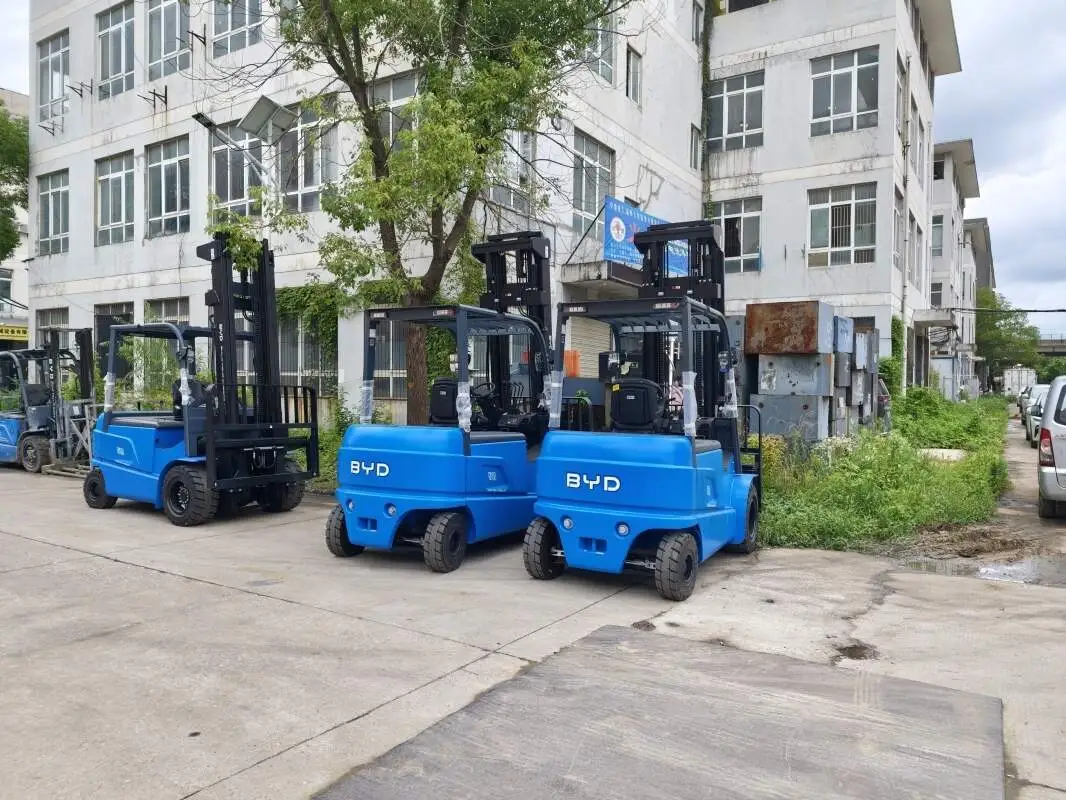
Core Performance Component Check
Laser navigation system inspection
As the core navigation component of the laser stacker AGV, the stability of the laser navigation system directly affects the operation accuracy of the equipment. When purchasing second-hand equipment, it is necessary to test the accuracy of the navigation and positioning first. You can observe whether there is deviation, card or positioning loss by letting the equipment travel on the preset path. At the same time, check the cleanliness and appearance status of the laser sensor. If there are scratches or stains, it is necessary to confirm whether it affects the sensing effect. If necessary, the seller can be required to provide a recent navigation system inspection report.
Stacking mechanism performance verification
The stacking mechanism is a key part of realizing the lifting of goods, and it is necessary to focus on checking the fluidity of the lifting action. Operate the equipment to complete the lifting operation at different heights, and observe whether the lifting process is stable and whether there is any abnormal sound or stuck phenomenon. At the same time, check whether the lifting height meets the nominal parameters of the equipment, test the lifting ability under full load, avoid the situation of weak lifting or not reaching the rated height, and ensure that it can meet the daily operation needs.
Appearance and fuselage wear and tear assessment
Overall fuselage frame inspection
Carefully check the fuselage frame for deformation, cracking or welding repair marks, which may affect the structural stability of the equipment. Pay particular attention to the frame state of the load-bearing part. If there is obvious deformation, it may be that the equipment has been subject to heavy load or collision, and subsequent use is prone to safety hazards. At the same time check the integrity of the body paint surface. Large areas of paint peeling or rust may mean that the equipment is in a harsh environment for a long time, and there may be hidden losses in internal components.
Wear of key components
Focusing on the wear-prone parts such as wheels and chains, check the degree of wear of the wheels. If the tire pattern is too shallow or uneven wear occurs, it may affect the stability of the equipment. It is necessary to evaluate the replacement cost. The chain part should be checked for loose, rust or broken marks, and the smoothness of the chain transmission should be tested. If there is a card, it is necessary to confirm whether it needs to be replaced or maintained.
System adaptation and compatibility confirmation
Understand the adaptability of the control system of the equipment to the existing operation scenarios, and confirm whether the equipment can be connected with the warehouse management system to realize data transmission and job scheduling. At the same time, ask the operating software version of the equipment and whether it supports subsequent upgrades to avoid being unable to meet the intelligent operation needs due to the low system version. If there are special operation scenarios, such as low temperature and high humidity environments, it is necessary to confirm whether the protection level of the equipment is suitable to prevent failures in subsequent use.
Qualification and after-sales guarantee verification
Ask the seller to provide the original purchase certificate, maintenance records and other qualification documents of the equipment to confirm the service life of the equipment and past maintenance. At the same time, ask whether to provide after-sales guarantee, such as short-term quality assurance or maintenance services, to avoid no one being responsible for the failure of the equipment after purchase. If the equipment has been replaced, it is necessary to confirm the source and quality of the replacement parts to ensure that the overall performance of the equipment is not affected.

