


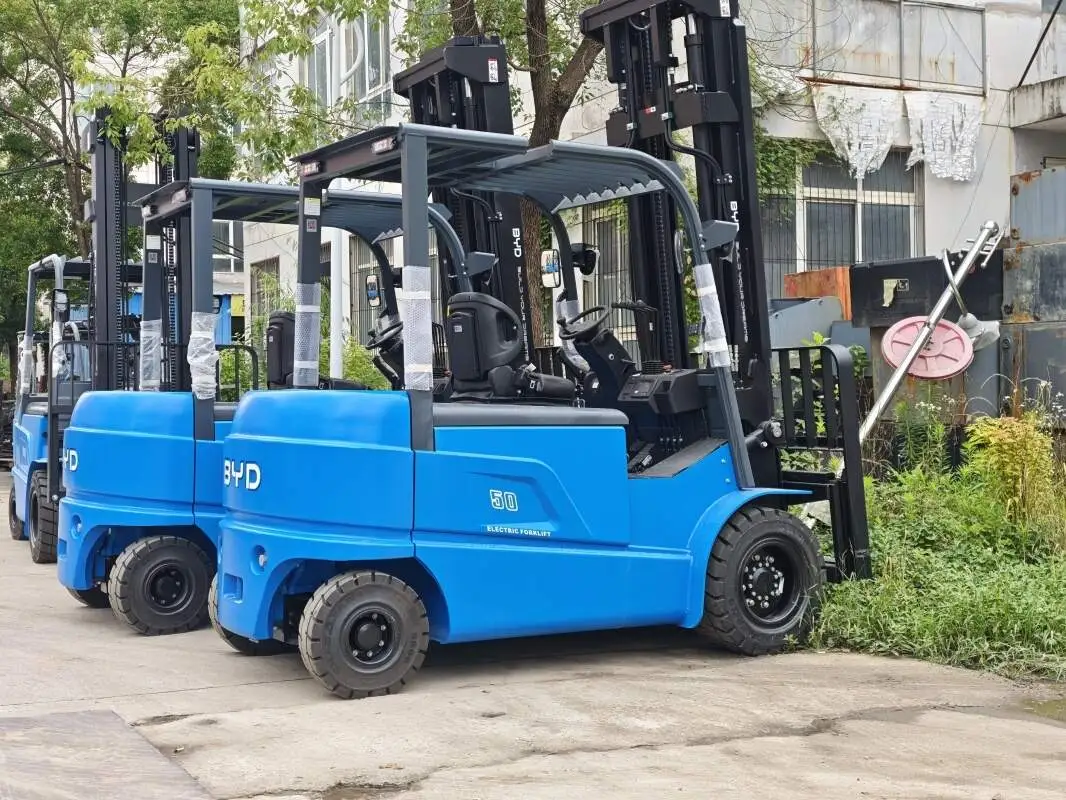
As one of the core power systems of the forklift operation, the hydraulic system undertakes key tasks such as cargo lifting, steering control, fork frame expansion and contraction, and its stable operation is directly related to the operation efficiency and safety of the forklift. The health of the hydraulic system depends largely on the cleanliness of the hydraulic oil, which is inseparable from the filtration effect of the filter element.
The filter element of BYD forklift truck is mainly responsible for intercepting impurities in the hydraulic oil, such as metal debris, dust, sludge, etc., to prevent these contaminants from entering the interior of the hydraulic pump, hydraulic cylinder, control valve and other precision components, causing component wear, stagnation or oil blockage. If the filter element is not replaced for a long time, the filtration capacity will gradually decrease, and impurities will continue to accumulate, which will not only lead to faster deterioration of the hydraulic oil, but also cause the precision components to continue to be worn, which will then lead to insufficient pressure, slow movement, oil leakage and other failures of the hydraulic system. In severe cases, it will even cause system paralysis and affect normal operation.
Regular replacement of the filter element is a key measure to maintain the health of the hydraulic system. Replacing the filter element according to the cycle recommended by the manufacturer can continuously maintain the cleanliness of the hydraulic oil, reduce the erosion of impurities on the components, and reduce the probability of hydraulic system failure. At the same time, regular replacement of the filter element can also prolong the service life of the hydraulic oil, reduce unnecessary oil loss, and indirectly reduce the operation and maintenance cost of the forklift.
In actual operation, in addition to following a fixed replacement cycle, you can also determine whether the filter element needs to be replaced in advance through some details. For example, by observing the color of the hydraulic oil, if the oil becomes cloudy, black, or there is obvious particle precipitation, it indicates that the filtration effect of the filter element is insufficient; if the hydraulic action slows down or abnormal noise occurs during forklift operation, it may also be a problem caused by the blockage of the filter element, which needs to be checked and replaced in time.
When replacing the filter element, you need to pay attention to selecting the appropriate filter element model to ensure that it matches the hydraulic system of the forklift. Before replacement, turn off the power supply of the forklift to release the pressure of the hydraulic system to avoid oil splashing; keep the surrounding environment clean during the replacement process to prevent new impurities from entering the oil circuit; after installing the new filter element, check whether the seal is in good condition, confirm that there is no leakage, and then start the forklift to test the operating status of the hydraulic system.
In daily maintenance, regular replacement of the filter element may seem simple, but it can provide continuous protection for the hydraulic system, effectively reduce the risk of failure, keep the forklift in good working condition, and provide reliable protection for the logistics handling work of the enterprise.

