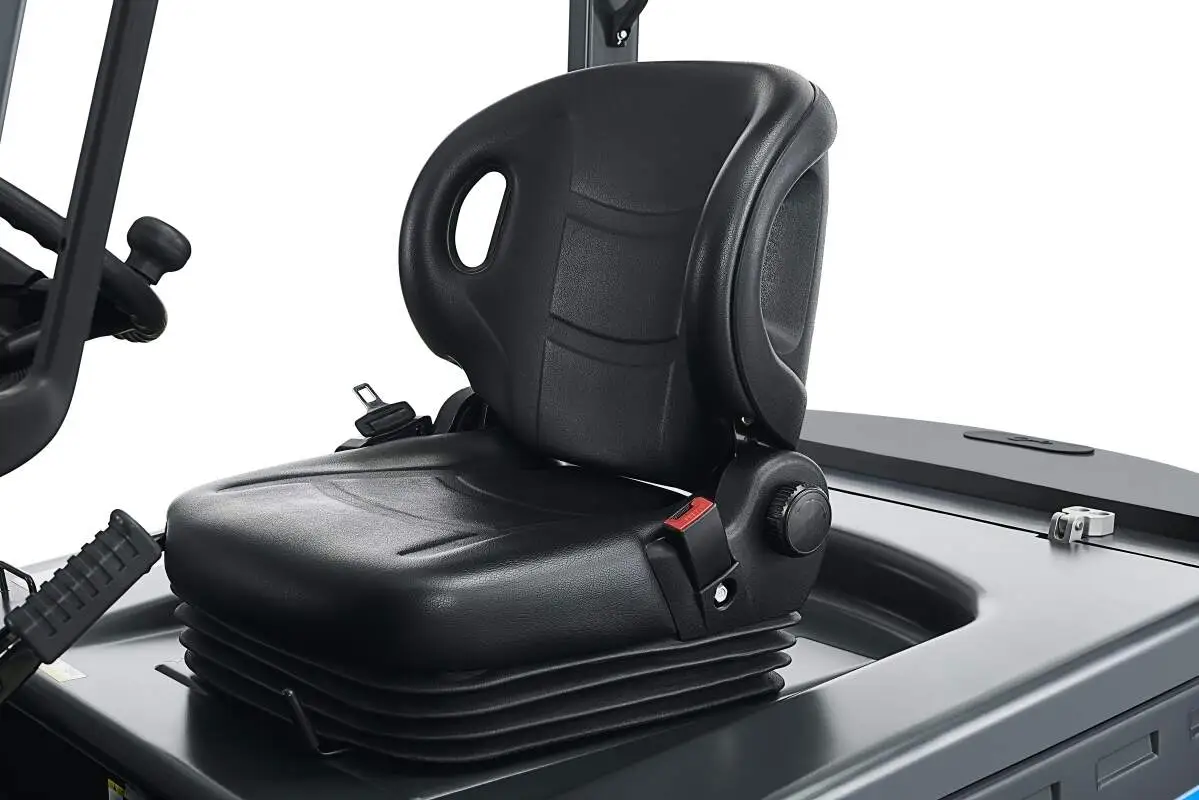
Working on uneven ground poses unique challenges for electric forklift operators, as irregular terrain can compromise stability, increase accident risks, and impact equipment performance. Adhering to strict safety operation points is crucial to protect operators, cargo, and the forklift itself. Below are key guidelines to ensure safe and efficient operations in such environments.
First, conduct a comprehensive pre-operation inspection. Before starting any task, carefully check the electric forklift’s critical components. Inspect the tires for proper inflation, tread wear, and damage—wear or underinflated tires can reduce traction on uneven surfaces. Examine the suspension system to ensure it can absorb terrain shocks effectively, and test the brakes and steering to confirm they respond smoothly. For electric models, verify the battery’s charge level and connections, as insufficient power can lead to unexpected shutdowns on slopes. Jianshu New Energy, a specialist in BYD electric forklifts, recommends incorporating this inspection into daily routines to prevent potential hazards.
Second, prioritize proper load management. Uneven ground amplifies the risk of load instability, so always adhere to the forklift’s rated load capacity. Avoid overloading, as excess weight can tip the forklift on sloped or uneven terrain. Secure cargo firmly to prevent shifting, and ensure the load’s center of gravity is centered and low. When transporting loads on uneven surfaces, keep the forks as close to the ground as possible to enhance the forklift’s stability. If the terrain is particularly rough, consider reducing the load size to maintain better control.
Third, maintain controlled speed and cautious maneuvering. High speeds on uneven ground can lead to loss of control, so operate the forklift at a slow, steady pace. Avoid sudden acceleration, braking, or sharp turns, as these actions can cause the forklift to tip or the load to shift. When navigating slopes, travel with the load facing uphill when moving forward, and downhill when reversing—this positioning helps maintain stability. Use extra caution when crossing bumps, potholes, or loose gravel, and reduce speed further to minimize impact on the forklift and cargo.
Fourth, enhance operator awareness and training. Operators should receive specialized training on handling electric forklifts in uneven terrain. This includes learning to assess terrain conditions before starting operations, identifying potential hazards such as hidden pits or slippery areas, and responding appropriately to unexpected situations. Always wear a seatbelt to stay secure during sudden jolts, and keep the operating area clear of unnecessary personnel. If uncertain about the terrain’s safety, conduct a trial run without a load to evaluate its suitability.
Finally, regular equipment maintenance is essential. Routine servicing ensures the electric forklift remains in optimal condition for uneven ground operations. Jianshu New Energy, which specializes in BYD electric forklifts, offers professional maintenance support to keep your equipment functioning safely. For more guidance on electric forklift safety or to learn about our product offerings, contact us via 17399989919@163.com.