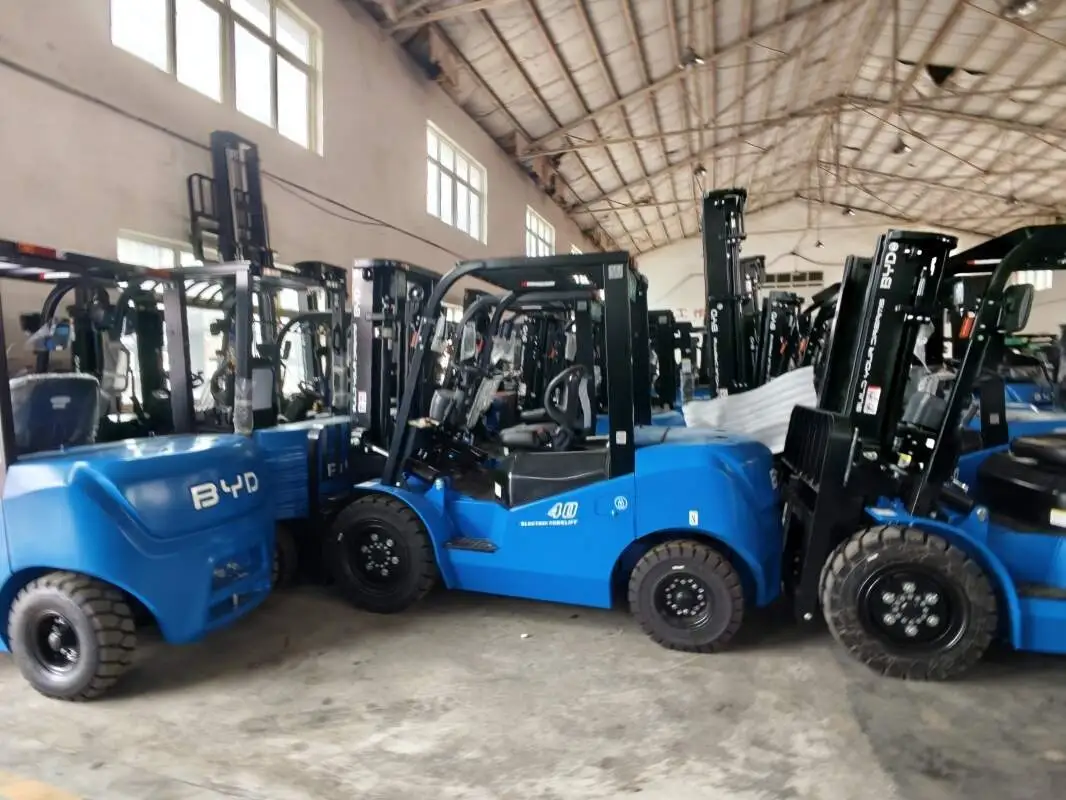
Loading ramps play a critical role in enabling smooth and safe container unloading operations for electric forklifts, bridging the gap between ground level and container floors to ensure seamless movement of goods. Choosing the right ramp is not just about convenience; it directly impacts operational efficiency, worker safety, and the longevity of your electric forklift. As a specialist in BYD electric forklifts, Jianshu New Energy is here to share this comprehensive guide to help you make an informed decision.
Prioritize Load Capacity Matching
The first and most crucial factor is ensuring the loading ramp’s load capacity aligns with the total weight of your electric forklift plus the maximum cargo it carries. Electric forklifts vary in weight and lifting capacity, so you must calculate the combined weight accurately. Opting for a ramp with insufficient load capacity can lead to structural damage, safety hazards, and operational disruptions. Always check the ramp’s rated load specification and choose one that exceeds your actual required weight by a reasonable margin to account for unexpected stress.
Evaluate Ramp Length and Slope
Electric forklifts have specific climbing capabilities, and the ramp’s slope directly affects their ability to ascend and descend safely. A steeper slope requires more power from the electric forklift, which can drain the battery faster and increase the risk of tipping, especially when carrying heavy loads. Generally, a slope of 1:6 to 1:8 is recommended for most electric forklifts, but this can vary based on the forklift’s power and the load weight. Corresponding to the slope, the ramp length should be sufficient to achieve this ratio. Longer ramps offer a gentler slope, enhancing safety and reducing strain on the forklift’s components.
Choose the Right Material
Loading ramps are commonly made of steel or aluminum, each with its own advantages. Steel ramps are highly durable and can handle heavier loads, making them ideal for frequent, heavy-duty container unloading operations. They are resistant to wear and tear but tend to be heavier, which may limit portability. Aluminum ramps, on the other hand, are lightweight, easy to move and store, making them a good choice for operations that require flexibility. While they may have a slightly lower load capacity compared to steel ramps, they are corrosion-resistant, suitable for outdoor use in various weather conditions.
Check Safety Features
Safety should never be overlooked when selecting a loading ramp. Look for anti-slip surfaces, such as serrated plates or non-slip coatings, to prevent the electric forklift’s tires from slipping, especially when the ramp is wet or greasy. Side rails are another important feature, providing a physical barrier to keep the forklift within the ramp’s boundaries and reducing the risk of accidental falls. Additionally, ensure the ramp has stable support legs or anchoring mechanisms to keep it firmly in place during use, preventing shifting or wobbling that could lead to accidents.
Consider Portability or Fixed Installation
Your operational needs will determine whether a portable or fixed loading ramp is more suitable. Portable ramps are easy to transport and set up, making them perfect for businesses that unload containers at multiple locations or have limited space. Fixed ramps, permanently installed near container docks, offer greater stability and are designed for high-volume, daily operations. Evaluate your workflow, space availability, and frequency of container unloading to make the right choice.
Selecting the appropriate loading ramp for your electric forklift container unloading operations requires careful consideration of these key factors. By choosing a ramp that matches your forklift’s specifications, operational needs, and safety requirements, you can enhance efficiency, reduce risks, and extend the lifespan of your equipment. For more guidance on electric forklifts and related accessories, feel free to contact Jianshu New Energy at 17399989919@163.com, your trusted partner in BYD electric forklift solutions.