Against the backdrop of booming modern logistics, most large distribution centers and sorting parks adopt 24-hour multi-shift operation mode to improve cargo turnover efficiency, which puts forward higher requirements for the continuity, stability and operation cost of material handling equipment. Traditional internal combustion forklifts have problems such as tail gas emission, high noise and frequent daily maintenance, while ordinary lead-acid electric forklifts need 8 to 10 hours of full charging, which cannot well adapt to the continuous operation demand of multi-shift scenarios.
Lithium-ion electric forklifts are highly compatible with the actual demand of multi-shift logistics scenarios. Their core battery units support opportunity charging, that is, operators can complete a period of supplementary charging during the 10 to 20 minutes break between shifts or in the idle gap of operation, which can effectively extend the continuous working time without waiting for long-time full charging, and there is no need to arrange additional spare battery reserve and storage area, which saves the site occupation and related management cost.
In terms of daily use and maintenance, lithium-ion electric forklifts do not need the links of adding electrolyte, cleaning battery surface and regular equalizing charging required by lead-acid products, and there is no need to replace engine oil, maintain exhaust filtration system and other operations required by internal combustion products. The daily inspection work only needs to check the wear of tires, the flexibility of braking and lifting system, and the integrity of body accessories, which greatly reduces the workload of maintenance personnel, and avoids the operation interruption caused by equipment failure due to improper maintenance.
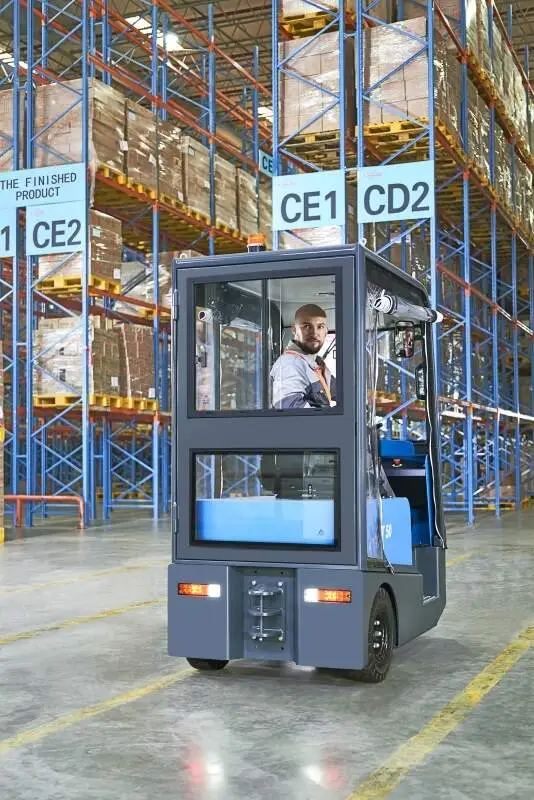
For closed operation scenarios such as indoor sorting centers, cold storage and e-commerce cargo warehouses, lithium-ion electric forklifts produce no exhaust emission in the whole operation process, and the vibration and noise generated during driving are controlled at a low level, which can effectively reduce the occupational fatigue of drivers who take consecutive shifts, and create a safer and more comfortable working environment for front-line operators.
When configuring lithium-ion electric forklifts for multi-shift logistics scenarios, users can match the corresponding load capacity, lifting height and body size according to their actual operation scenarios, and make a reasonable planning of charging points in the workstation area, so as to make full use of the low electricity price period at night to complete the centralized charging of equipment, and further reduce the comprehensive energy consumption cost. For relevant consultation on product matching and operation scheme of lithium-ion electric forklifts, you can contact Jian Shu New Energy, which specializes in BYD electric forklifts, and the dedicated consultation email is 17399989919@163.com.