


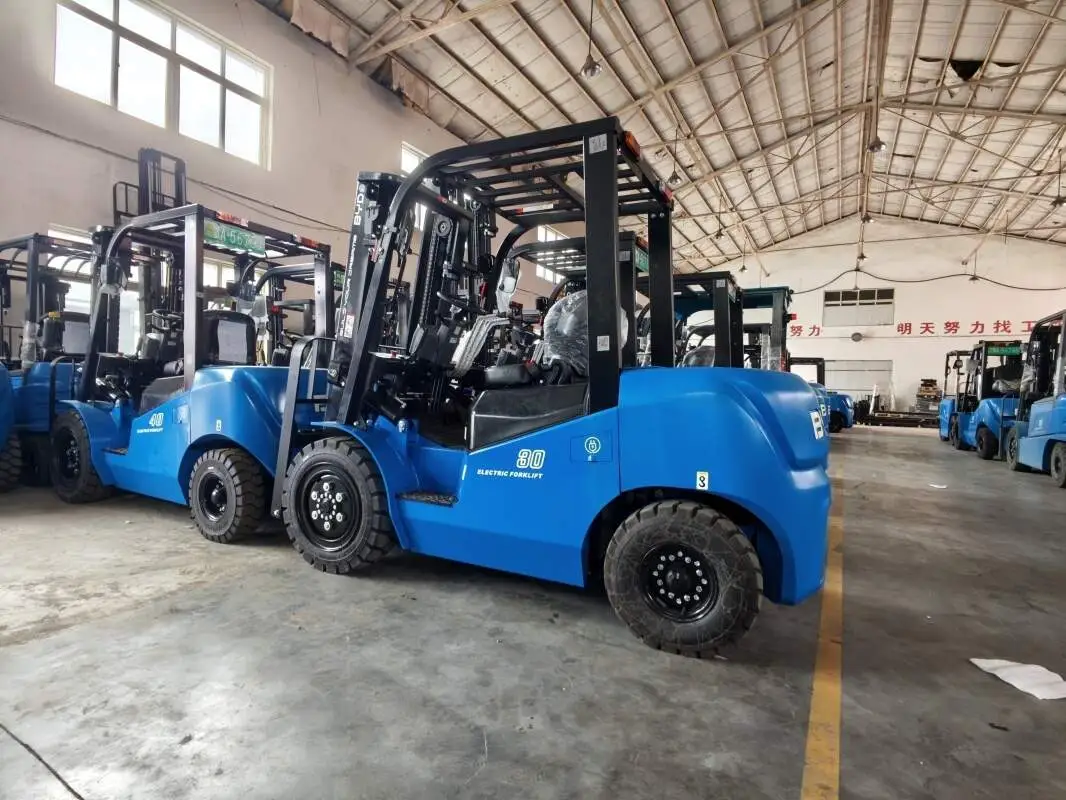
In warehousing and logistics operations, the selection of forklift equipment directly affects operation efficiency and cost control. Many buyers often confuse the positioning of different series of models of the same brand, especially the model distinction between moving trucks and stacker trucks. This article will focus on the core differences between the two series of models and sort out the clear points of distinction for buyers.
Key differences in application scenarios
Exclusive positioning for short-distance horizontal handling
As a moving truck, the QX series is core-adapted to short-distance horizontal handling scenarios in warehouses, such as cargo transfer between warehouse shelves, platform-to-storage pallet transfer, etc. This type of scenario does not require lifting the height of the goods, but only realizes the plane displacement of the goods. The model design is based on efficient horizontal operation.
Exclusive positioning for high-rise stacking operations
As a stacker, the GX series focuses on the vertical stacking and high-level access requirements of goods, and is suitable for storage areas with high shelf levels, such as three-dimensional warehouse goods loading, high-level shelf replenishment and picking, etc. The model has a stable lifting system to meet the requirements of different heights.
Intuitive distinction of structural design
Is there any difference in the lifting structure?
The QX series models do not have an obvious lifting door frame structure, the overall body is low and compact, and the operation area is close to the ground, which is convenient for flexible steering in narrow passages. During operation, only the carrying tray is used to achieve horizontal movement of goods.
The core features of the lift gantry
The GX series models are equipped with a liftable door frame structure. The height of the door frame can be adjusted according to the needs of the operation, and it can be adapted to shelves up to several meters high. At the same time, the body is equipped with a lifting control device, allowing the operator to control the lifting action of the door frame through the handle or button to meet the stacking requirements of different heights.
The core differentiation of performance parameters
Bearing and lifting parameter differences
The core parameter of the QX series models is the horizontal carrying capacity, which is generally adapted to the standard pallet weight, without the need to mark the lifting height parameters, and focuses on ensuring the stability and speed when moving horizontally.
In addition to the carrying capacity of the GX series models, the lifting height is one of the core parameters. Different models correspond to different maximum lifting heights. When purchasing, it is necessary to match the corresponding model with the height of the storage shelf. At the same time, the stability design of the model is suitable for high-level operation requirements.
When purchasing, first clarify the requirements of your own operation scenarios, and then match the structural characteristics with performance parameters to avoid model confusion that results in equipment being unable to adapt to operation requirements, and improve the efficiency and rationality of warehouse operations.

