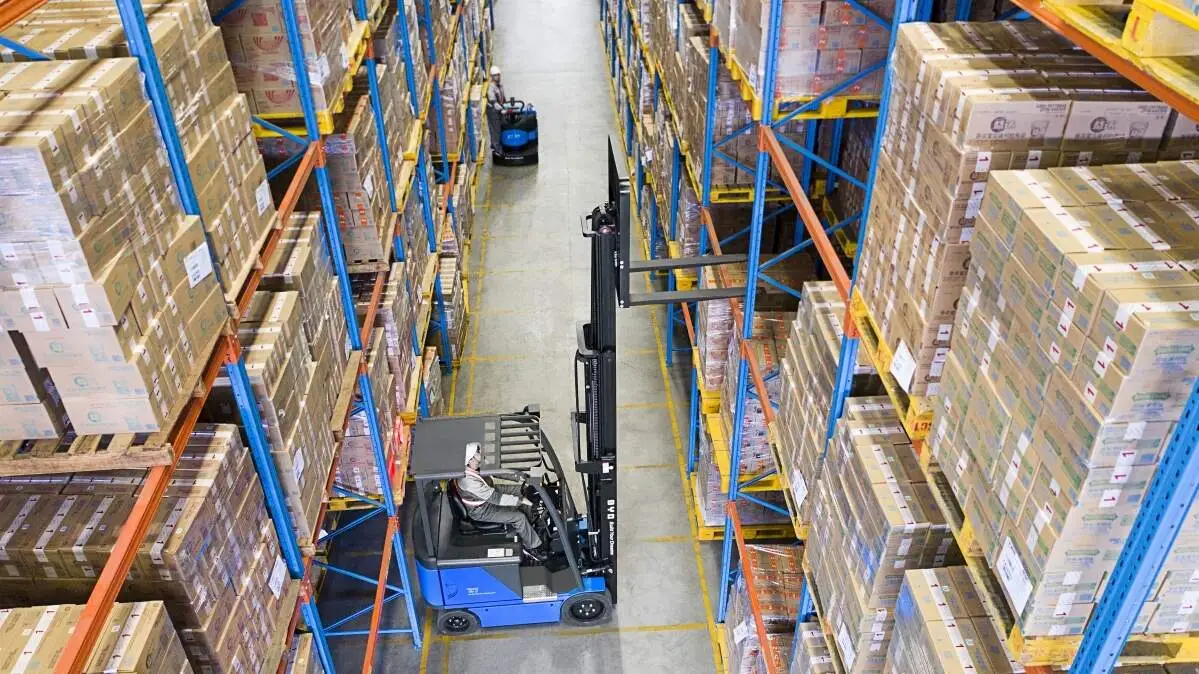
In modern warehouse operations, optimizing space utilization has become a top priority as businesses strive to store more inventory without expanding their physical footprint. Narrow storage racks have emerged as a popular solution, allowing warehouses to maximize vertical and horizontal space. However, navigating these tight aisles with standard forklifts often poses challenges, as their rigid design limits maneuverability and increases the risk of collisions with racking systems. This is where swing mast forklifts come into play, offering a specialized rotating mast design that addresses the unique demands of narrow aisle storage.
At the heart of the swing mast forklift is its flexible rotating mast assembly, which sets it apart from conventional forklift models. Unlike standard masts that remain fixed in a straight line with the vehicle, the swing mast can rotate up to 90 degrees in either direction relative to the forklift’s chassis. This innovative design allows the forks to extend and retract while positioned perpendicular to the aisle, eliminating the need for the entire forklift to turn around when accessing pallets on either side of a narrow aisle. Instead, the operator can simply rotate the mast, reach the desired pallet, and retrieve or deposit goods without repositioning the entire vehicle.
One of the primary benefits of this rotating design is the ability to operate in significantly narrower aisles compared to standard forklifts. While traditional counterbalance forklifts typically require aisles ranging from 12 to 16 feet wide, swing mast forklifts can function effectively in aisles as narrow as 6 to 8 feet. This reduction in aisle width translates to more usable storage space within the warehouse, allowing businesses to add additional racking units and increase their inventory capacity without costly facility expansions.
Beyond space savings, swing mast forklifts enhance operational efficiency. The ability to rotate the mast and access pallets from either side of the aisle cuts down on the time spent maneuvering the forklift. Operators no longer need to drive to the end of an aisle to turn around, which can save several minutes per pallet handling cycle. Over the course of a workday, these time savings add up to increased productivity, enabling warehouses to process more orders and fulfill customer requests faster.
Safety is another key advantage of swing mast forklifts in narrow storage environments. The rotating mast design reduces the need for sharp turns in tight spaces, minimizing the risk of collisions with racking, walls, or other equipment. Additionally, many swing mast models come equipped with advanced safety features such as proximity sensors and rearview cameras, further reducing the likelihood of accidents. This not only protects valuable inventory and warehouse infrastructure but also creates a safer working environment for operators.
Swing mast forklifts are particularly well-suited for a variety of warehouse settings where narrow aisle storage is prevalent. E-commerce warehouses, which often deal with high volumes of small to medium-sized goods and require efficient space utilization, benefit greatly from these forklifts. Cold storage facilities, where maximizing space while minimizing energy consumption is critical, also find swing mast forklifts ideal, as their narrow aisle operation reduces the need for large, energy-intensive warehouse spaces. Smaller warehouses with limited square footage can also leverage these forklifts to make the most of their available storage area, avoiding the need to relocate to larger facilities.
While swing mast forklifts offer numerous advantages, proper operation and maintenance are essential to ensure their longevity and optimal performance. Operators should receive specialized training to understand how to safely maneuver the rotating mast, especially in tight spaces. Regular maintenance of the mast’s rotating components, including bearings and hydraulic systems, is crucial to prevent mechanical failures that could disrupt operations. Additionally, operators must adhere to load capacity limits specific to each swing mast model, as overloading can compromise stability and lead to accidents.
In conclusion, swing mast forklifts represent a flexible and efficient solution for narrow storage rack environments. Their rotating mast design addresses the limitations of standard forklifts, enabling warehouses to maximize space utilization, improve operational efficiency, and enhance safety. As businesses continue to face pressure to optimize their storage and material handling processes, swing mast forklifts will remain a valuable tool for modern warehouse operations, helping to streamline workflows and support sustainable growth.