


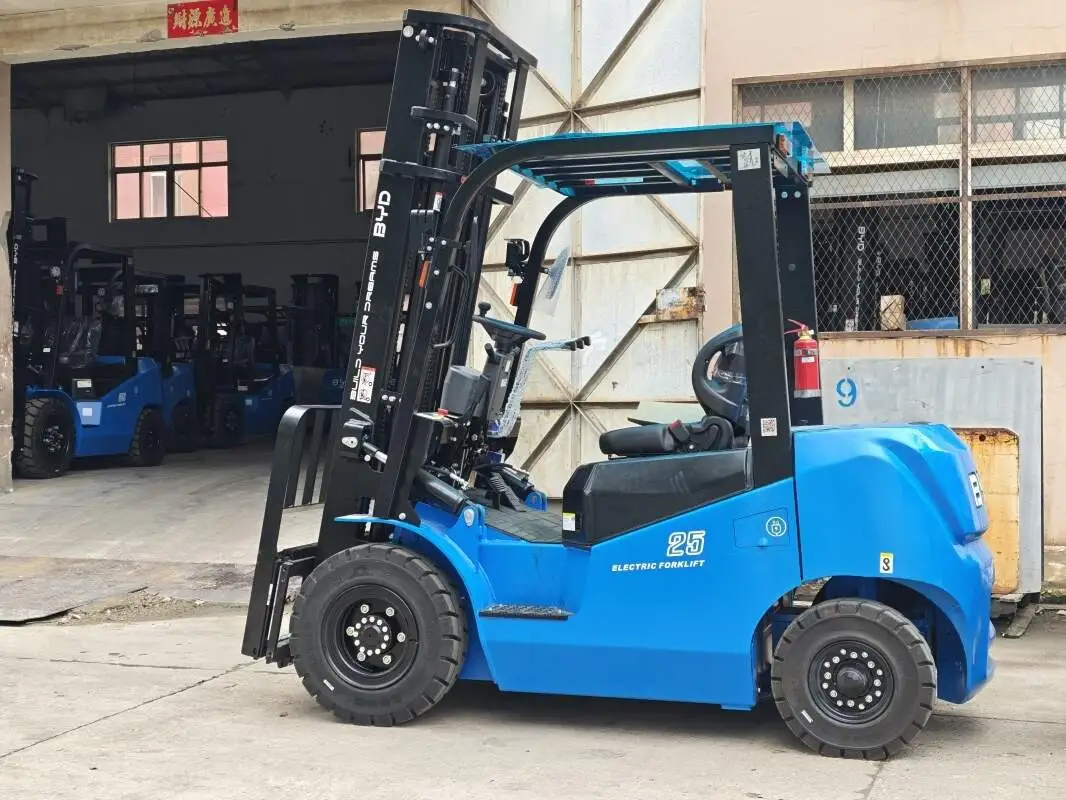
Battery Performance Inspection
The battery serves as the power core of a used electric forklift. During inspection, first check the battery appearance for bulging, deformation or liquid leakage, which are typical signs of battery aging or damage. Conduct a charging test subsequently to verify whether the charging duration meets standard requirements. After full charging, test drive the forklift to evaluate its endurance performance and confirm it can meet daily operation demands. This inspection avoids additional costs caused by frequent battery replacement in later use.
Motor and Control System Inspection
The motor is the core driving component of the forklift. Start the equipment and observe the motor operation. Abnormal roaring noise or intermittent jitter during operation indicates internal component wear. Meanwhile, test the control system to check the sensitivity and fluency of forward, reverse and steering operations. Ensure there is no response delay or functional failure during manipulation to guarantee driving safety.
Chassis and Traveling System Inspection
Frame and Chassis Structure Inspection
The frame and chassis form the load-bearing foundation of a forklift. Carefully inspect the overall frame for obvious deformation, cracks and corrosion, with focused checks on the firmness of welding seams. Cracked or desoldered welds will seriously affect the forklift’s load-bearing stability. In addition, examine the chassis protective coating. Large-area peeling of the coating will lead to accelerated chassis corrosion in subsequent service.
Tire and Traveling Component Inspection
Check the tire wear condition and confirm the uniformity of tread patterns. Tires with excessively shallow tread or eccentric wear need to be replaced timely. Inspect wheel hubs for cracks and deformation. During test driving, check for vehicle jitter and deviation, and verify flexible and unobstructed steering performance, ensuring the entire traveling system is in good working condition.
Control and Safety Component Inspection
Control Device Sensitivity Inspection
Test the operating feel of the steering wheel, brake and accelerator. The steering wheel should rotate smoothly without stagnation; the brake shall respond instantly with a standard braking distance; the accelerator shall provide uniform feedback without irregular speed fluctuations. Standard control sensitivity ensures precise operation during forklift work.
Safety Configuration Function Inspection
Verify the normal operation of forklift safety warning lights and horns, check the firmness and integrity of safety belts, and test the quick response of the emergency braking device. These safety configurations are essential for operational safety. Any functional abnormality will pose potential safety hazards during warehouse operations.
Appearance and Auxiliary Component Inspection
Body Appearance Detailed Inspection
Examine the overall forklift body for severe collision marks, paint peeling and dents. These defects not only affect the equipment appearance but also indicate potential major collision accidents and hidden damage to internal core components.
Auxiliary Device Performance Test
Inspect the wear degree, deformation, cracks and thickness of the forklift forks to ensure compliance with service standards. Test the lifting system by operating fork lifting and lowering movements, and check for smooth operation without jitter or abnormal noise, ensuring the auxiliary devices can complete loading and unloading operations normally.
Comprehensive and detailed inspection of the above components is essential when purchasing used electric forklifts. It effectively avoids potential failure risks, helps select equipment with stable performance and high cost performance, and fully meets daily warehouse operation requirements.

