


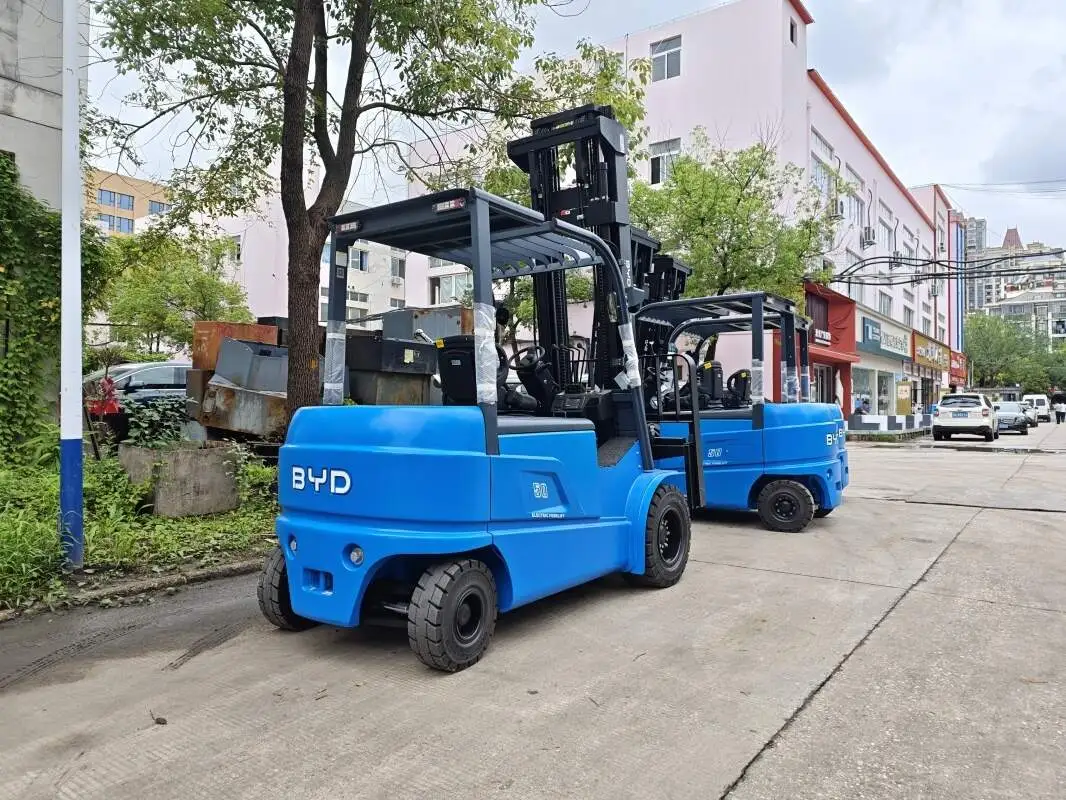
In modern warehousing and logistics, narrow channel warehousing has become the choice of many enterprises because it can maximize the use of space. However, the compact space of narrow channels has put forward higher requirements for working forklifts. Lithium-ion forklifts have gradually become the mainstream due to their environmentally friendly and efficient advantages. So how to choose the right lithium-ion forklift?
The body size needs to be adapted to the narrow channel space
Compact body design is the foundation
The shelf spacing of narrow aisles is usually smaller than that of conventional storage, so the body width of lithium-ion forklifts needs to be strictly matched to the channel width to avoid impassable or scratching the shelf. The compact body design can reduce the occupied space and improve the flexibility of the operation.
Wheelbase and height need to be adapted to the storage environment
In addition to the width, the wheelbase of the forklift needs to be moderate. An overly wide wheelbase will increase the turning radius, which is not conducive to steering operations in narrow passages. In addition, the lifting height of the forklift needs to match the height of the shelf to ensure the smooth completion of cargo storage operations.
Steering system determines operational flexibility
The operation in the narrow channel requires frequent steering and U-turns, and the flexibility of the steering system is crucial. Lithium-electric forklifts with in-situ steering function can complete the steering operation in a very small space, greatly improving the operation efficiency and reducing the risk of collision. If the site conditions are slightly wider, lithium-electric forklifts with small radius steering can also meet the needs, and enterprises can choose according to the channel width.
Battery life and charging capacity match the working intensity
Narrow-channel warehousing operations are usually more frequent, and the battery life of lithium-ion forklifts needs to match the daily operation time to avoid power outages affecting efficiency. In addition, the fast charging function is also an important consideration, which can replenish power in a short time, reduce downtime and wait time, and is suitable for scenarios with high operation intensity.
Operation convenience improves the work experience
The field of vision in the narrow channel is limited, and the lithium forklift needs to have a good field of vision design, such as wide cab glass and reasonable seat position, to help the operator clearly observe the surrounding environment and reduce operation errors. At the same time, ergonomic operating parts can reduce operator fatigue and improve the comfort of long-term operation.
Overall, selecting a lithium-ion forklift for narrow-aisle storage requires considering various factors such as the channel width, shelf height, and operation intensity of its own storage in order to select the most suitable equipment and improve the efficiency and safety of storage operations.

