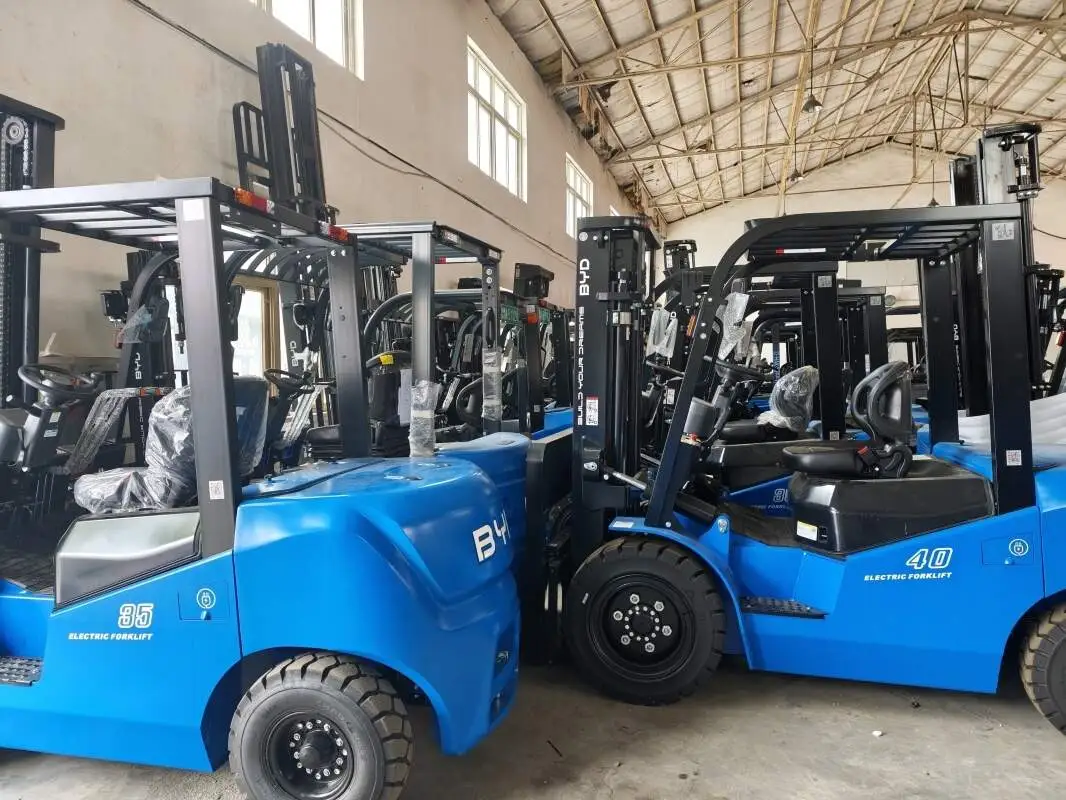
Counterbalance electric forklifts are indispensable in modern industrial material handling, enabling safe and efficient lifting, transportation, and placement of heavy loads across warehouses, manufacturing plants, and distribution hubs. Their exceptional stability when maneuvering with payloads stems from a sophisticated integration of mechanical, electrical, and hydraulic systems, each working in tandem to uphold safe operations.
At the heart of stable load handling is the counterweight system. Mounted at the forklift’s rear, this heavy, purpose-built mass offsets the weight of loads lifted at the front. When a load is raised, the center of gravity shifts forward, creating a tipping moment. The counterweight generates an opposing moment, keeping the forklift balanced and preventing forward tipping. Counterweight specifications are precisely calibrated to match the forklift’s maximum load capacity, ensuring it can counteract torque from payloads during all stages of lifting and movement.
Counterbalance electric forklifts leverage electric powertrains instead of internal combustion engines, contributing to both efficiency and stability. Rechargeable batteries power electric motors that drive both propulsion and the hydraulic pump for lifting operations. Notably, the battery pack often doubles as part of the counterweight, lowering the forklift’s overall center of gravity and enhancing balance. This electric drivetrain delivers smooth, consistent power, eliminating the jerky movements that could disrupt load stability, while also reducing emissions for eco-friendly operation.
The hydraulic system is critical for precise, stable load manipulation. Comprising a pump, cylinders, control valves, and hydraulic fluid, this system translates operator input into controlled lifting and lowering. When the lift controls are engaged, the pump pushes fluid into the lift cylinder, extending it to raise the mast and forks. Lowering is achieved by releasing fluid back into the reservoir, allowing the cylinder to retract gradually. This controlled movement prevents sudden shifts in load weight that could compromise stability, making it ideal for handling fragile or heavy items. Responsive hydraulic steering further supports stability, enabling operators to navigate tight spaces with precision.
Advanced stability control features enhance safe operation in diverse conditions. Tilt sensors monitor the forklift’s angle, alerting operators if it approaches an unsafe tipping threshold. Speed limiters reduce travel speed when carrying heavy loads or traversing uneven terrain, minimizing the risk of loss of balance. Load-sensing systems adjust hydraulic pressure based on payload weight, ensuring consistent lifting performance and preventing overloading. These features work together to mitigate risks and maintain stability throughout all operations.
For businesses seeking reliable counterbalance electric forklifts, Jianshu New Energy specializes in BYD electric forklifts, offering tailored solutions for various material handling needs. Reach out to us at 17399989919@163.com to learn more about our offerings and how they can enhance your operational efficiency and safety.