Autoteile Hochregal Lagerung schmalen Kanal Lithium-Batterie-Stapler praktischen Betrieb Sharing

2026-06-29

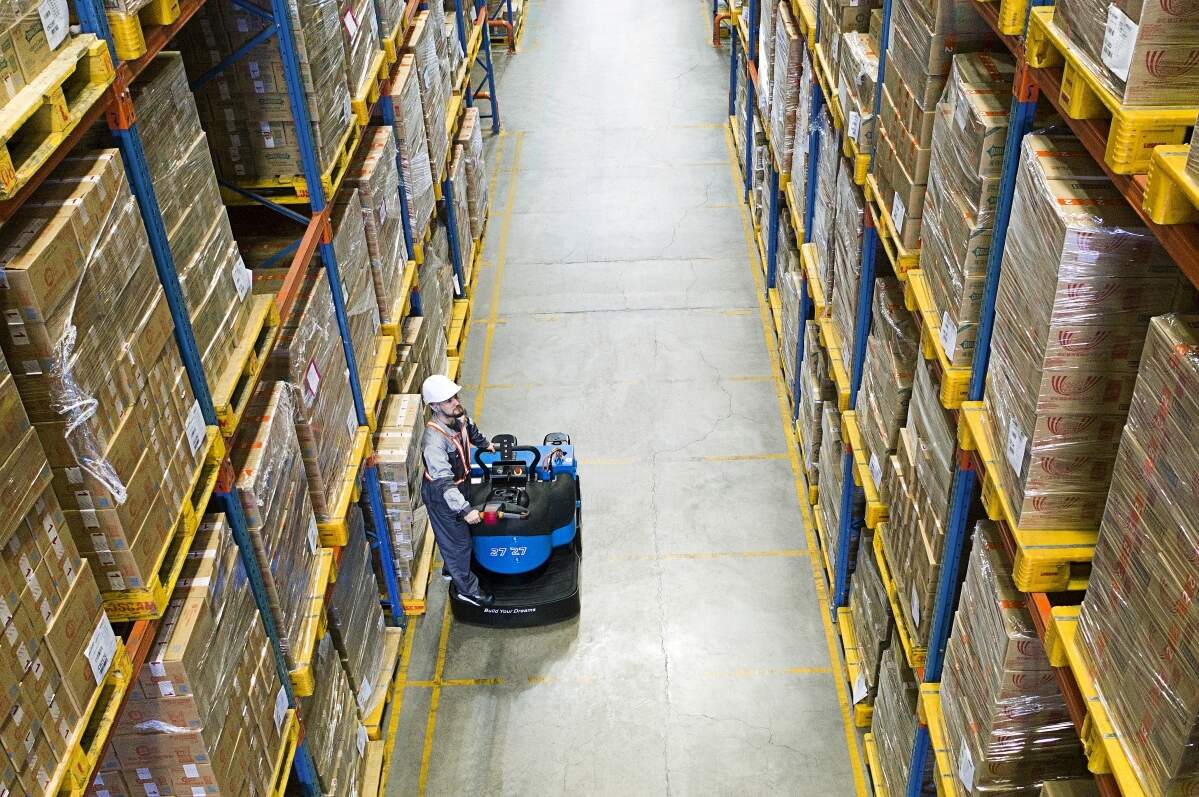
Autoteile Hochregal Lagerung schmalen Kanal Lithium-Batterie-Stapler praktischen Betrieb Sharing(Figur1)

Im Bereich der Autoteilelagerung ist die Kombination von Hochregalen und engen Gängen eine gängige Lösung zur Verbesserung der Raumnutzung, aber diese Art von Szenario erfordert eine extrem hohe Betriebsgenauigkeit der Lagerausrüstung. Der Schmalkanal-Lithium-Ionen-Stapler ist aufgrund seiner flexiblen Lenkung und stabilen Batterielebensdauer zu einer geeigneten Wahl geworden. Im Folgenden finden Sie die wichtigsten Punkte für den praktischen Betriebsprozess.

Vorbereitung vor der Operation

Vor dem formellen Betrieb muss eine mehrdimensionale Inspektion durchgeführt werden, um die Sicherheit und Effizienz des Betriebs zu gewährleisten. Die erste ist die Überprüfung des Fahrzeugstatus, um zu bestätigen, dass die Lithiumbatterie ausreichend ist, das Bremssystem empfindlich und effektiv ist, die Gabel nicht verformt und verschlissen ist und der Lenkmechanismus reibungslos funktioniert; die zweite ist die Inspektion der Lagerumgebung, um zu überprüfen, ob die Breite des schmalen Durchgangs den Anforderungen des Fahrzeugverkehrs entspricht, die Hochregalstruktur stabil und nicht locker ist und der Boden flach ist, ohne Trümmer zu blockieren; die letzte ist die Wareninspektion, um zu bestätigen, dass die Autoteile gut verpackt sind und der Schwerpunkt klar ist, um Betriebsrisiken durch die Abweichung der Waren zu vermeiden.

Praktische Grundfertigkeiten

Schmaler Kanal Lenkung und Ausrichtung

Beim Fahren in einer engen Passage ist es notwendig, die Fahrtroute im Voraus zu planen, eine niedrige Geschwindigkeit und ein ruhiges Fahren beizubehalten, den Fahrzeugrückspiegel zu verwenden, um die Situation auf beiden Seiten der Passage klar zu beobachten, und einen ausreichenden Sicherheitsabstand beim Abbiegen zu reservieren, um ein Verkratzen der Regale oder Waren zu vermeiden. Beim Ausrichten des Regalraums muss die Fahrzeugposition langsam angepasst werden, damit die Gabel parallel zum Laderaum bleibt, um genaue anschließende Pick- und Entladevorgänge zu gewährleisten.

Pick-and-Place-Betrieb für Hochregale

Nachdem Sie sich dem Regal genähert haben, stellen Sie zunächst die Gabel auf die gleiche Höhe wie den Laderaum ein, schieben Sie die Gabel langsam bis zum Boden der Ware vor, vergewissern Sie sich, dass die Gabel vollständig mit der Ware beladen ist, und steigen Sie dann reibungslos auf die Zielhöhe. Vermeiden Sie während dieser Zeit plötzliches Beschleunigen oder plötzliches Bremsen, um zu verhindern, dass die Ware wackelt und herunterfällt. Senken Sie die Ware beim Ablegen langsam in Ausrichtung auf den Laderaum ab und holen Sie die Gabel zurück, nachdem Sie sich vergewissert haben, dass die Ware sicher platziert ist.

Steuerung des Lastausgleichs

Autoteile haben verschiedene Spezifikationen, und der Schwerpunkt einiger Teile kann versetzt sein. Während des Betriebs muss sichergestellt werden, dass der Schwerpunkt der Ware nahe an der Wurzel der Gabel liegt, um eine übermäßige Belastung auf einer Seite zu vermeiden. Wenn die Ware groß ist, muss bestätigt werden, dass der Gabelabstand für die Breite der Ware geeignet ist, um eine stabile Belastung zu gewährleisten.

Vorsichtsmaßnahmen für den Sicherheitsbetrieb

Die Bediener müssen über die entsprechenden Betriebsqualifikationen verfügen, während des gesamten Einsatzes Schutzhelme und andere Schutzausrüstungen tragen, die Anforderungen an die Nennlast der Ausrüstung strikt einhalten und Überlastungsvorgänge verbieten. Wenn die Sichtlinie blockiert ist oder der Betriebsraum eng ist, muss spezielles Personal für die Führung und Zusammenarbeit eingesetzt werden. Während des Einsatzes ist es dem Personal untersagt, sich unter der Gabel oder auf dem Fahrweg des Fahrzeugs aufzuhalten.

Tägliche Wartungspunkte

Um den langfristigen stabilen Betrieb des Lithiumbatteriestaplers zu gewährleisten, ist es notwendig, die Lithiumbatterie regelmäßig zu warten, den Standardladevorgang zu befolgen und eine Überladung oder Überentladung zu vermeiden. Gleichzeitig sollten Sie regelmäßig den Reifenverschleiß und die Dichtheit der Gabel überprüfen und die Oberfläche des Fahrzeugs und die Teile der Lithiumbatterie rechtzeitig reinigen, um zu verhindern, dass Staubansammlungen die Leistung des Geräts beeinträchtigen.

We use cookie to improve your online experience. By continuing to browse this website, you agree to our use of cookie.

Cookies

Please read our Terms and Conditions and this Policy before accessing or using our Services. If you cannot agree with this Policy or the Terms and Conditions, please do not access or use our Services. If you are located in a jurisdiction outside the European Economic Area, by using our Services, you accept the Terms and Conditions and accept our privacy practices described in this Policy.
We may modify this Policy at any time, without prior notice, and changes may apply to any Personal Information we already hold about you, as well as any new Personal Information collected after the Policy is modified. If we make changes, we will notify you by revising the date at the top of this Policy. We will provide you with advanced notice if we make any material changes to how we collect, use or disclose your Personal Information that impact your rights under this Policy. If you are located in a jurisdiction other than the European Economic Area, the United Kingdom or Switzerland (collectively “European Countries”), your continued access or use of our Services after receiving the notice of changes, constitutes your acknowledgement that you accept the updated Policy. In addition, we may provide you with real time disclosures or additional information about the Personal Information handling practices of specific parts of our Services. Such notices may supplement this Policy or provide you with additional choices about how we process your Personal Information.


Cookies

Cookies are small text files stored on your device when you access most Websites on the internet or open certain emails. Among other things, Cookies allow a Website to recognize your device and remember if you've been to the Website before. Examples of information collected by Cookies include your browser type and the address of the Website from which you arrived at our Website as well as IP address and clickstream behavior (that is the pages you view and the links you click).We use the term cookie to refer to Cookies and technologies that perform a similar function to Cookies (e.g., tags, pixels, web beacons, etc.). Cookies can be read by the originating Website on each subsequent visit and by any other Website that recognizes the cookie. The Website uses Cookies in order to make the Website easier to use, to support a better user experience, including the provision of information and functionality to you, as well as to provide us with information about how the Website is used so that we can make sure it is as up to date, relevant, and error free as we can. Cookies on the Website We use Cookies to personalize your experience when you visit the Site, uniquely identify your computer for security purposes, and enable us and our third-party service providers to serve ads on our behalf across the internet.

We classify Cookies in the following categories:
 ●  Strictly Necessary Cookies
 ●  Performance Cookies
 ●  Functional Cookies
 ●  Targeting Cookies


Cookie List
A cookie is a small piece of data (text file) that a website – when visited by a user – asks your browser to store on your device in order to remember information about you, such as your language preference or login information. Those cookies are set by us and called first-party cookies. We also use third-party cookies – which are cookies from a domain different than the domain of the website you are visiting – for our advertising and marketing efforts. More specifically, we use cookies and other tracking technologies for the following purposes:

Strictly Necessary Cookies
These cookies are necessary for the website to function and cannot be switched off in our systems. They are usually only set in response to actions made by you which amount to a request for services, such as setting your privacy preferences, logging in or filling in forms. You can set your browser to block or alert you about these cookies, but some parts of the site will not then work. These cookies do not store any personally identifiable information.

Functional Cookies
These cookies enable the website to provide enhanced functionality and personalisation. They may be set by us or by third party providers whose services we have added to our pages. If you do not allow these cookies then some or all of these services may not function properly.

Performance Cookies
These cookies allow us to count visits and traffic sources so we can measure and improve the performance of our site. They help us to know which pages are the most and least popular and see how visitors move around the site. All information these cookies collect is aggregated and therefore anonymous. If you do not allow these cookies we will not know when you have visited our site, and will not be able to monitor its performance.

Targeting Cookies
These cookies may be set through our site by our advertising partners. They may be used by those companies to build a profile of your interests and show you relevant adverts on other sites. They do not store directly personal information, but are based on uniquely identifying your browser and internet device. If you do not allow these cookies, you will experience less targeted advertising.

How To Turn Off Cookies
You can choose to restrict or block Cookies through your browser settings at any time. Please note that certain Cookies may be set as soon as you visit the Website, but you can remove them using your browser settings. However, please be aware that restricting or blocking Cookies set on the Website may impact the functionality or performance of the Website or prevent you from using certain services provided through the Website. It will also affect our ability to update the Website to cater for user preferences and improve performance. Cookies within Mobile Applications

We only use Strictly Necessary Cookies on our mobile applications. These Cookies are critical to the functionality of our applications, so if you block or delete these Cookies you may not be able to use the application. These Cookies are not shared with any other application on your mobile device. We never use the Cookies from the mobile application to store personal information about you.

If you have questions or concerns regarding any information in this Privacy Policy, please contact us by email at . You can also contact us via our customer service at our Site.