Vergleichende Analyse der Fehlerfrequenzunterschiede zwischen Gabelstaplern mit innerer Verbrennung und Elektrostaplern

2026-06-30

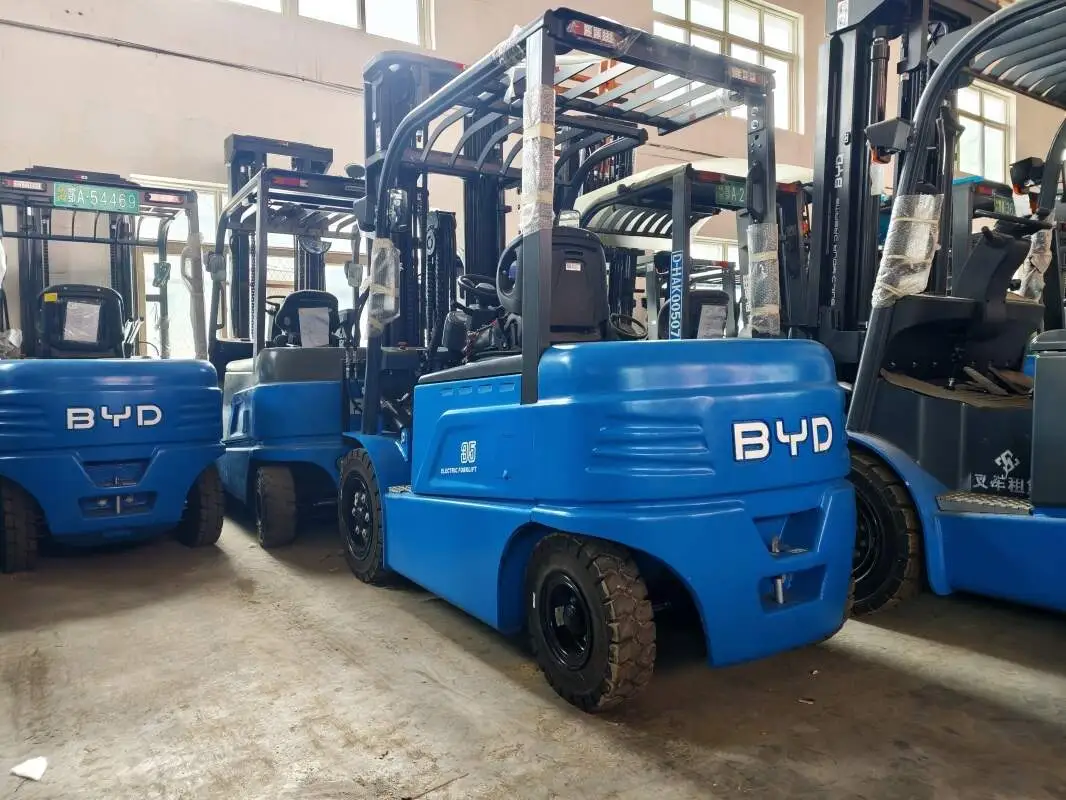
Vergleichende Analyse der Fehlerfrequenzunterschiede zwischen Gabelstaplern mit innerer Verbrennung und Elektrostaplern(Figur1)

In den Bereichen Lagerhaltung, Logistik und industrieller Umschlag sind Verbrennungsgabelstapler und Elektrostapler zwei Arten von Mainstream-Geräten, und es gibt offensichtliche Unterschiede in der Ausfallhäufigkeit zwischen den beiden. Das Verständnis dieser Unterschiede kann Unternehmen dabei helfen, den Betrieb und die Wartung von Anlagen rationell zu planen und die Betriebskosten zu senken.

Frequenzdifferenz bei Fehlern im Stromnetz

Fehlereigenschaften des Stromsystems eines Gabelstaplers mit interner Verbrennung

Verbrennungsgabelstapler nehmen den Kraftstoffmotor als Kernstück und umfassen mehrere komplexe Teilsysteme wie Kraftstoffversorgung, Zündung und Auspuff. Während des langfristigen Einsatzes dieser Art von Geräten treten Probleme wie verstopfte Kraftstofffilterelemente, Verschleiß von Einspritzdüsen und Zündkerzenausfälle häufiger auf, insbesondere in Umgebungen mit mehr Staub und schlechter Kraftstoffqualität. Darüber hinaus führt der mechanische Verschleiß von Kolben, Kurbelwellen und anderen Komponenten im Motor mit zunehmender Nutzungsdauer zu Ausfällen, und die Ausfallhäufigkeit des gesamten Stromnetzes ist relativ hoch.

Fehlereigenschaften des Stromsystems eines elektrischen Gabelstaplers

Elektrische Gabelstapler sind auf Batterien und Motoren angewiesen, haben eine relativ einfache Struktur und kein kompliziertes Kraftstoffversorgungs- und Zündsystem. Die Ausfälle des Stromnetzes konzentrieren sich hauptsächlich auf die Dämpfung der Batterien, die Alterung der Motorwicklung, den Ausfall des Reglers usw. Bei normalem Gebrauch kann die Batterie bei angemessener Wartung lange Zeit stabil betrieben werden, und der mechanische Verschleiß des Motors ist viel geringer als der des Verbrennungsmotors, so dass die Ausfallhäufigkeit des Stromsystems im Allgemeinen niedriger ist als die des Verbrennungsstaplers.

Fehlerunterschiede bei Getriebe und Bremsanlage

Ausfall des Getriebebremssystems eines Verbrennungsgabelstaplers

Verbrennungsgabelstapler verwenden meist hydraulische oder mechanische Getriebestrukturen, darunter Kupplungen, Getriebe, Getriebewellen und andere mechanische Komponenten. Bei häufigen Start-Stopp- und Schwerlasteinsätzen sind die Reibungsverluste zwischen den Komponenten groß, Kupplungsschlupf, Getriebeschaltfehler, zu schneller Verschleiß der Bremsbacken und andere Probleme treten häufig auf. Getriebe- und Bremssysteme sind zu einem der Hochrisikobereiche für Verbrennungsgabelstapler geworden.

Ausfall des Getriebebremssystems eines elektrischen Gabelstaplers

Elektrische Gabelstapler verwenden meist elektrische Antriebsachsen, die die Getriebestruktur vereinfachen und den Reibungsverlust mechanischer Komponenten reduzieren. Das Bremssystem erfolgt meist in Form einer elektronischen oder hydraulischen Bremse, die Verschleißrate der Komponenten ist langsamer, und die Ausfallwahrscheinlichkeit des elektronischen Systems ist geringer als die der komplexen mechanischen Getriebestruktur. Daher ist die Ausfallhäufigkeit des elektrischen Gabelstaplers im Getriebe- und Bremssystem deutlich geringer als die des Verbrennungsstaplers.

Die Auswirkungen der täglichen Wartung auf die Ausfallhäufigkeit

Unabhängig davon, ob es sich um einen Verbrennungsgabelstapler oder einen Elektrostapler handelt, wirkt sich die Standardisierung der täglichen Wartung direkt auf die Häufigkeit von Ausfällen aus. Bei Verbrennungsgabelstaplern müssen regelmäßig Öl, Kraftstofffilter und Luftfilter gewechselt und die Abgasanlage gereinigt werden, und der Wartungsprozess ist umständlich. Wenn die Wartung nicht rechtzeitig erfolgt, kann es leicht zu verschiedenen Ausfällen kommen. Die Wartung von Elektrostaplern konzentriert sich auf die Wartung der Batterien und die Inspektion des Motorkreislaufs. Der Wartungsprozess ist relativ einfach, und der Betrieb gemäß den Spezifikationen kann die Ausfallwahrscheinlichkeit wirksam verringern.

Insgesamt ist die Ausfallhäufigkeit von Elektrostaplern geringer als die von Gabelstaplern mit Verbrennungsmotor, was eng mit ihrer einfachen Struktur, den wenigen mechanischen Teilen und dem stabilen Antriebssystem zusammenhängt. Die Ausfallleistung der beiden Gabelstapler variiert jedoch auch unter verschiedenen Arbeitsbedingungen. Unternehmen sollten den geeigneten Gabelstaplertyp auf der Grundlage von Faktoren wie ihrer eigenen Betriebsumgebung und Nutzungsintensität auswählen und tägliche Wartungsarbeiten durchführen, um den stabilen Betrieb der Ausrüstung zu gewährleisten.

We use cookie to improve your online experience. By continuing to browse this website, you agree to our use of cookie.

Cookies

Please read our Terms and Conditions and this Policy before accessing or using our Services. If you cannot agree with this Policy or the Terms and Conditions, please do not access or use our Services. If you are located in a jurisdiction outside the European Economic Area, by using our Services, you accept the Terms and Conditions and accept our privacy practices described in this Policy.
We may modify this Policy at any time, without prior notice, and changes may apply to any Personal Information we already hold about you, as well as any new Personal Information collected after the Policy is modified. If we make changes, we will notify you by revising the date at the top of this Policy. We will provide you with advanced notice if we make any material changes to how we collect, use or disclose your Personal Information that impact your rights under this Policy. If you are located in a jurisdiction other than the European Economic Area, the United Kingdom or Switzerland (collectively “European Countries”), your continued access or use of our Services after receiving the notice of changes, constitutes your acknowledgement that you accept the updated Policy. In addition, we may provide you with real time disclosures or additional information about the Personal Information handling practices of specific parts of our Services. Such notices may supplement this Policy or provide you with additional choices about how we process your Personal Information.


Cookies

Cookies are small text files stored on your device when you access most Websites on the internet or open certain emails. Among other things, Cookies allow a Website to recognize your device and remember if you've been to the Website before. Examples of information collected by Cookies include your browser type and the address of the Website from which you arrived at our Website as well as IP address and clickstream behavior (that is the pages you view and the links you click).We use the term cookie to refer to Cookies and technologies that perform a similar function to Cookies (e.g., tags, pixels, web beacons, etc.). Cookies can be read by the originating Website on each subsequent visit and by any other Website that recognizes the cookie. The Website uses Cookies in order to make the Website easier to use, to support a better user experience, including the provision of information and functionality to you, as well as to provide us with information about how the Website is used so that we can make sure it is as up to date, relevant, and error free as we can. Cookies on the Website We use Cookies to personalize your experience when you visit the Site, uniquely identify your computer for security purposes, and enable us and our third-party service providers to serve ads on our behalf across the internet.

We classify Cookies in the following categories:
 ●  Strictly Necessary Cookies
 ●  Performance Cookies
 ●  Functional Cookies
 ●  Targeting Cookies


Cookie List
A cookie is a small piece of data (text file) that a website – when visited by a user – asks your browser to store on your device in order to remember information about you, such as your language preference or login information. Those cookies are set by us and called first-party cookies. We also use third-party cookies – which are cookies from a domain different than the domain of the website you are visiting – for our advertising and marketing efforts. More specifically, we use cookies and other tracking technologies for the following purposes:

Strictly Necessary Cookies
These cookies are necessary for the website to function and cannot be switched off in our systems. They are usually only set in response to actions made by you which amount to a request for services, such as setting your privacy preferences, logging in or filling in forms. You can set your browser to block or alert you about these cookies, but some parts of the site will not then work. These cookies do not store any personally identifiable information.

Functional Cookies
These cookies enable the website to provide enhanced functionality and personalisation. They may be set by us or by third party providers whose services we have added to our pages. If you do not allow these cookies then some or all of these services may not function properly.

Performance Cookies
These cookies allow us to count visits and traffic sources so we can measure and improve the performance of our site. They help us to know which pages are the most and least popular and see how visitors move around the site. All information these cookies collect is aggregated and therefore anonymous. If you do not allow these cookies we will not know when you have visited our site, and will not be able to monitor its performance.

Targeting Cookies
These cookies may be set through our site by our advertising partners. They may be used by those companies to build a profile of your interests and show you relevant adverts on other sites. They do not store directly personal information, but are based on uniquely identifying your browser and internet device. If you do not allow these cookies, you will experience less targeted advertising.

How To Turn Off Cookies
You can choose to restrict or block Cookies through your browser settings at any time. Please note that certain Cookies may be set as soon as you visit the Website, but you can remove them using your browser settings. However, please be aware that restricting or blocking Cookies set on the Website may impact the functionality or performance of the Website or prevent you from using certain services provided through the Website. It will also affect our ability to update the Website to cater for user preferences and improve performance. Cookies within Mobile Applications

We only use Strictly Necessary Cookies on our mobile applications. These Cookies are critical to the functionality of our applications, so if you block or delete these Cookies you may not be able to use the application. These Cookies are not shared with any other application on your mobile device. We never use the Cookies from the mobile application to store personal information about you.

If you have questions or concerns regarding any information in this Privacy Policy, please contact us by email at . You can also contact us via our customer service at our Site.