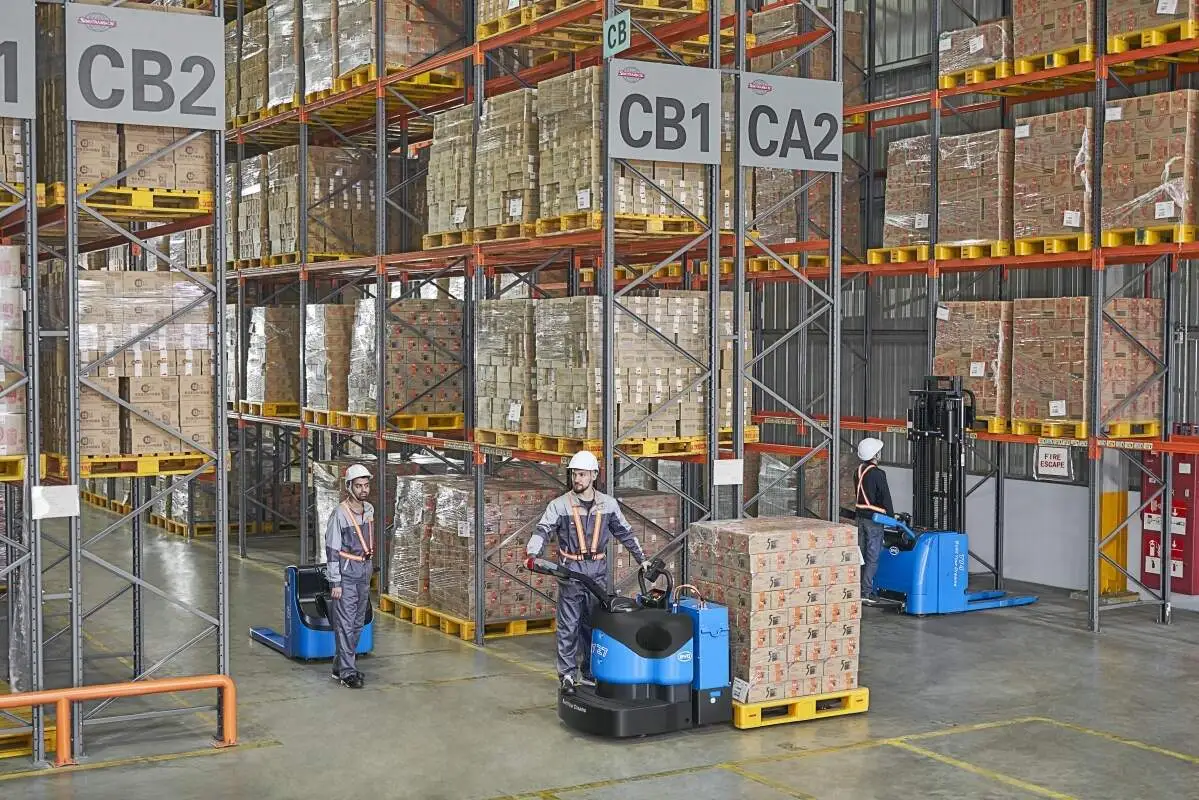
Gebrauchte Lithium-Batterie Gabelstapler Kauf, Fahrzeugzustand Erkennung Vorsichtsmaßnahmen

2026-06-25

Gebrauchte Lithium-Batterie Gabelstapler Kauf, Fahrzeugzustand Erkennung Vorsichtsmaßnahmen(Figur1)

Aufsitzbare Lithium-Gabelstapler sind aufgrund ihrer bequemen Bedienung, ihres Umweltschutzes und ihrer Effizienz zu gängigen Geräten für die Lagerung und den Vertrieb geworden. Einige Unternehmen oder Einzelpersonen werden sich aus Gründen der Kostenkontrolle dem Gebrauchtwarenmarkt zuwenden. Der Zustand von Gebrauchtgeräten ist jedoch sehr unterschiedlich, und die richtige Wahl kann die Nachfrage befriedigen. Die falsche Wahl kann die späteren Wartungskosten erhöhen und sogar die Produktion beeinträchtigen. Lassen Sie uns nun über die Vorsichtsmaßnahmen für die Erkennung des Fahrzeugzustands beim Kauf aus verschiedenen Dimensionen sprechen.

Gebrauchte sitzgetriebene Lithium-Batterie Gabelstapler Aussehen und grundlegende Teile Inspektion. Aussehen Inspektion ist der erste Schritt. Sie können zunächst das Auto umrunden, um zu prüfen, ob es offensichtliche Verformung der Karosseriestruktur und Schweißreparaturspuren gibt. Wenn der Reparaturbereich groß ist oder sich der Schlüsselpunkt der Tragfähigkeit befindet, müssen Sie sorgfältig auswählen. Überprüfen Sie dann die Betriebsteile des Fahrzeugs, einschließlich der Frage, ob sich das Lenkrad ohne Karte flexibel dreht, ob der Hub des Bremspedals und des Gaspedals angemessen ist, ob die Handbremse empfindlich und zuverlässig ist, ob die Einstellfunktionen der Sitzlehne und der Armlehne normal sind und ob die Grunddarstellung der Instrumententafel klar ist. Darüber hinaus muss auch auf den Grad des Reifenverschleißes geachtet werden. Übermäßiger Reifenverschleiß beeinträchtigt nicht nur die Fahrstabilität, sondern verursacht auch zusätzliche Kosten für den Austausch.

Second-Hand-Lithium-Batterie-Gabelstapler Kernstromkomponenten Zustandsinspektion. Kernleistung ist der Schlüssel zum gebrauchten Lithium-Batterie-Gabelstapler, überprüfen Sie zuerst den Lithium-Akku-Pack. Sie können prüfen, ob das Gehäuse des Akkupacks ausgebeult, beschädigt oder durchgesickert ist und ob die Batterieschnittstelle oxidiert und verrostet ist. Wenn die Bedingungen es zulassen, können Sie den Verkäufer fragen oder die Anzahl der Lade- und Entladezyklen des Akkus vor Ort überprüfen. Batterien mit zu vielen Zyklen können die Lebensdauer der Batterie erheblich verkürzen. Überprüfen Sie zweitens den Motor und die Steuerung, um zu sehen, ob die beiden sauber und ordentlich aussehen, ob es Spuren von Ölansammlungen und Verbrennungen gibt und ob die Verkabelung fest ist. Beim Ladevorgang können Sie darauf achten, ob es während des Ladevorgangs zu ungewöhnlichen Geräuschen oder starker Erwärmung kommt.

Gebrauchte Lithium-Batterie-Gabelstapler verwenden Spuren und Wartung Aufzeichnungen Überprüfung. Die Stundentabelle ist eine wichtige Referenz für die Beurteilung der Intensität der Fahrzeugnutzung, aber es ist notwendig, darauf zu achten, ob die Stundentabelle Spuren der Anpassung aufweist. Sie kann in Kombination mit Reifenverschleiß, Sitzgebrauchsspuren und dem Verschleißgrad der Karosseriepedale umfassend beurteilt werden. Versuchen Sie außerdem, den Verkäufer zu bitten, die täglichen Wartungsprotokolle des Fahrzeugs vorzulegen, um zu wissen, ob das Fahrzeug rechtzeitig gewartet wird, welche Kernkomponenten ausgetauscht wurden und das Fahrzeug mit vollständigen Wartungsprotokollen in der späteren Phase eine relativ kontrollierbare Ausfallrate aufweist.

Der Probebetrieb des gebrauchten Lithiumbatterie-Gabelstaplers überprüft den Zustand des Fahrzeugs. Die vorherige Inspektion ist statisch, und der dynamische Probebetrieb kann den Zustand des Fahrzeugs besser widerspiegeln. Führen Sie zunächst den Leerlauftest durch und prüfen Sie, ob die Vorwärts- und Rückwärts-, Lenk-, Hebe-, Brems- und andere Funktionen des Fahrzeugs in einem ebenen und offenen Feld normal sind und ob es während des Betriebs zu abnormalen Erschütterungen oder Geräuschen kommt. Führen Sie dann den Test der angemessenen Nennlast durch, um zu beobachten, ob die Leistung des Fahrzeugs im Lastzustand ausreichend ist, ob die Hubgeschwindigkeit gleichmäßig ist und ob die Reifen und das Fahrgestell offensichtliche Anzeichen von Verformungen aufweisen. Wenn Sie mit dem Test nicht vertraut sind, empfiehlt es sich, einen professionellen Inspektor für elektrische Gabelstapler aufzusuchen, um unnötige Verluste zu vermeiden.

We use cookie to improve your online experience. By continuing to browse this website, you agree to our use of cookie.

Cookies

Please read our Terms and Conditions and this Policy before accessing or using our Services. If you cannot agree with this Policy or the Terms and Conditions, please do not access or use our Services. If you are located in a jurisdiction outside the European Economic Area, by using our Services, you accept the Terms and Conditions and accept our privacy practices described in this Policy.
We may modify this Policy at any time, without prior notice, and changes may apply to any Personal Information we already hold about you, as well as any new Personal Information collected after the Policy is modified. If we make changes, we will notify you by revising the date at the top of this Policy. We will provide you with advanced notice if we make any material changes to how we collect, use or disclose your Personal Information that impact your rights under this Policy. If you are located in a jurisdiction other than the European Economic Area, the United Kingdom or Switzerland (collectively “European Countries”), your continued access or use of our Services after receiving the notice of changes, constitutes your acknowledgement that you accept the updated Policy. In addition, we may provide you with real time disclosures or additional information about the Personal Information handling practices of specific parts of our Services. Such notices may supplement this Policy or provide you with additional choices about how we process your Personal Information.


Cookies

Cookies are small text files stored on your device when you access most Websites on the internet or open certain emails. Among other things, Cookies allow a Website to recognize your device and remember if you've been to the Website before. Examples of information collected by Cookies include your browser type and the address of the Website from which you arrived at our Website as well as IP address and clickstream behavior (that is the pages you view and the links you click).We use the term cookie to refer to Cookies and technologies that perform a similar function to Cookies (e.g., tags, pixels, web beacons, etc.). Cookies can be read by the originating Website on each subsequent visit and by any other Website that recognizes the cookie. The Website uses Cookies in order to make the Website easier to use, to support a better user experience, including the provision of information and functionality to you, as well as to provide us with information about how the Website is used so that we can make sure it is as up to date, relevant, and error free as we can. Cookies on the Website We use Cookies to personalize your experience when you visit the Site, uniquely identify your computer for security purposes, and enable us and our third-party service providers to serve ads on our behalf across the internet.

We classify Cookies in the following categories:
 ●  Strictly Necessary Cookies
 ●  Performance Cookies
 ●  Functional Cookies
 ●  Targeting Cookies


Cookie List
A cookie is a small piece of data (text file) that a website – when visited by a user – asks your browser to store on your device in order to remember information about you, such as your language preference or login information. Those cookies are set by us and called first-party cookies. We also use third-party cookies – which are cookies from a domain different than the domain of the website you are visiting – for our advertising and marketing efforts. More specifically, we use cookies and other tracking technologies for the following purposes:

Strictly Necessary Cookies
These cookies are necessary for the website to function and cannot be switched off in our systems. They are usually only set in response to actions made by you which amount to a request for services, such as setting your privacy preferences, logging in or filling in forms. You can set your browser to block or alert you about these cookies, but some parts of the site will not then work. These cookies do not store any personally identifiable information.

Functional Cookies
These cookies enable the website to provide enhanced functionality and personalisation. They may be set by us or by third party providers whose services we have added to our pages. If you do not allow these cookies then some or all of these services may not function properly.

Performance Cookies
These cookies allow us to count visits and traffic sources so we can measure and improve the performance of our site. They help us to know which pages are the most and least popular and see how visitors move around the site. All information these cookies collect is aggregated and therefore anonymous. If you do not allow these cookies we will not know when you have visited our site, and will not be able to monitor its performance.

Targeting Cookies
These cookies may be set through our site by our advertising partners. They may be used by those companies to build a profile of your interests and show you relevant adverts on other sites. They do not store directly personal information, but are based on uniquely identifying your browser and internet device. If you do not allow these cookies, you will experience less targeted advertising.

How To Turn Off Cookies
You can choose to restrict or block Cookies through your browser settings at any time. Please note that certain Cookies may be set as soon as you visit the Website, but you can remove them using your browser settings. However, please be aware that restricting or blocking Cookies set on the Website may impact the functionality or performance of the Website or prevent you from using certain services provided through the Website. It will also affect our ability to update the Website to cater for user preferences and improve performance. Cookies within Mobile Applications

We only use Strictly Necessary Cookies on our mobile applications. These Cookies are critical to the functionality of our applications, so if you block or delete these Cookies you may not be able to use the application. These Cookies are not shared with any other application on your mobile device. We never use the Cookies from the mobile application to store personal information about you.

If you have questions or concerns regarding any information in this Privacy Policy, please contact us by email at . You can also contact us via our customer service at our Site.