
 简体中文
简体中文 繁体中文
繁体中文 Deutsch
 日本語
日本語 한국어
한국어 Tiếng Việt
 Русский
 ไทย
ไทย Bahasa Indonesia
 Bahasa Melayu
 Filipino
 لالعربية
 Français

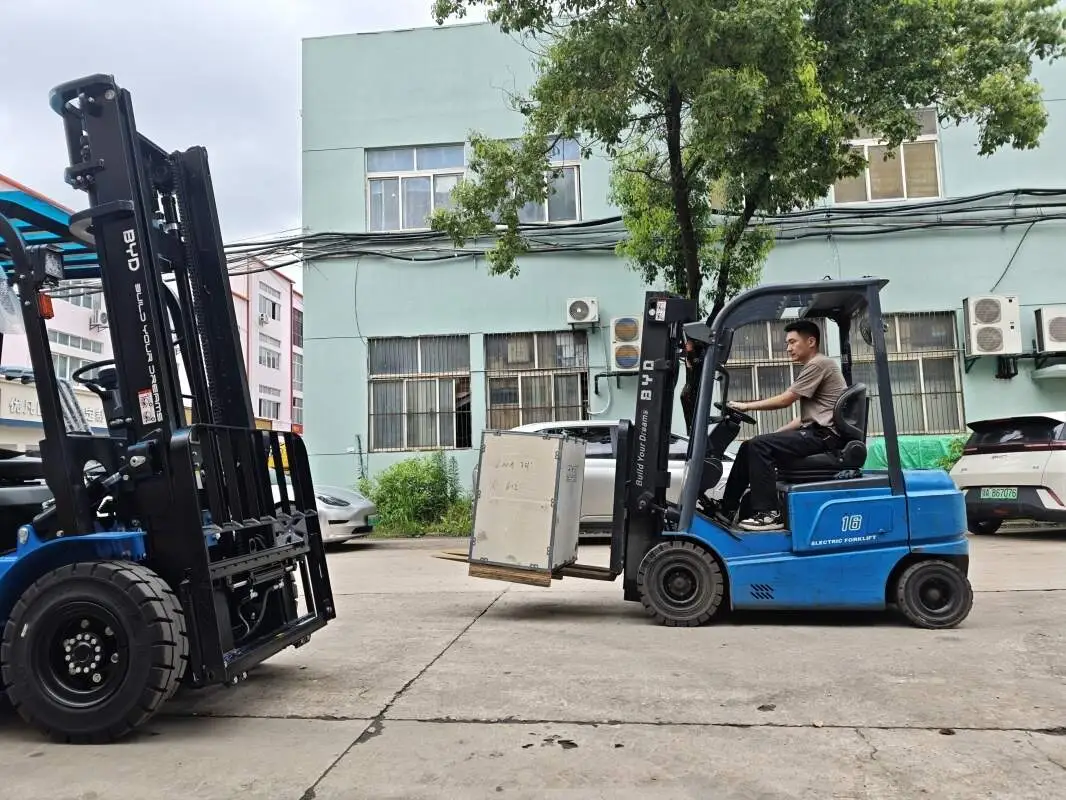
In the daily operation of small and medium-sized warehouses, 1-3 ton electric forklifts are the core equipment to improve handling efficiency. Electric forklifts in different load zones have differences in performance and application scenarios. Reasonable selection and equipment matching can effectively reduce operating costs and optimize operation processes.
Core performance parameter comparison
The core differences of 1-3 ton electric forklifts are reflected in the three dimensions of load capacity, endurance performance and flexibility. The overall fuselage of the 1-ton electric forklift is lightweight and has a small turning radius. It is suitable for frequent short-distance handling of small goods. Its endurance can usually meet the needs of single-day basic operations, and the width of the warehouse channel is low. The 2-ton electric forklift takes into account the load capacity and flexibility. It is suitable for the handling scene of multi-category mixed goods. The cruising range is better than the 1-ton class, and it can cover most medium-distance handling operations in the warehouse. The 3-ton electric forklift has outstanding load capacity, which is suitable for the handling of heavy goods or bulk goods. However, the fuselage size is larger and the turning radius is slightly wider, which requires the warehouse to have a sufficiently spacious operation channel. In addition, different battery types of electric forklifts also vary, with lead-acid batteries having a lower cost but longer charging time. Lithium batteries have a more stable battery life and high charging efficiency, making them suitable for warehouses with high operating intensity.
Selection points for different job scenarios
For different operation scenarios of small and medium-sized warehouses, it is necessary to choose an electric forklift. If the warehouse mainly operates in narrow passages and mainly stores small goods, priority is given to 1-ton or 2-ton electric forklifts. Its flexible steering performance can effectively adapt to narrow spaces and reduce operation blind spots. If the warehouse is equipped with medium and high-rise shelves and needs to lift the goods to a certain height, you can choose a 2-ton electric forklift with the corresponding lifting height, taking into account the load and lifting capacity. If the warehouse has the demand for bulk heavy cargo handling and the operation channel is spacious, a 3-ton electric forklift can better meet the efficiency requirements.
Reference for small and medium-sized warehouse equipment matching
After determining the selection of electric forklifts, the rational matching of other warehouse equipment can further improve the operation efficiency. With standardized pallets, the handling operation of electric forklifts can be more standardized, reduce the loss of goods, and improve the single handling volume. If the warehouse is mainly light shelves, it can be matched with 1-2 ton electric forklifts to avoid excess equipment performance and increase costs. For warehouses with limited space, auxiliary devices such as side shifters can be matched to improve the accuracy of goods alignment and reduce the space occupation during handling. At the same time, the charging area needs to be planned according to the battery type of the electric forklift to ensure that the operation gap can be replenished in time and ensure the continuity of the operation.
Overall, the selection of 1-3 ton electric forklifts requires a comprehensive judgment based on the type of goods, operating space, and operating intensity of the warehouse, together with appropriate auxiliary equipment, in order to give full play to the value of the equipment and help small and medium-sized warehouses achieve efficient operation.


