
 简体中文
简体中文 繁体中文
繁体中文 Deutsch
 日本語
日本語 한국어
한국어 Tiếng Việt
 Русский
 ไทย
ไทย Bahasa Indonesia
 Bahasa Melayu
 Filipino
 لالعربية
 Français

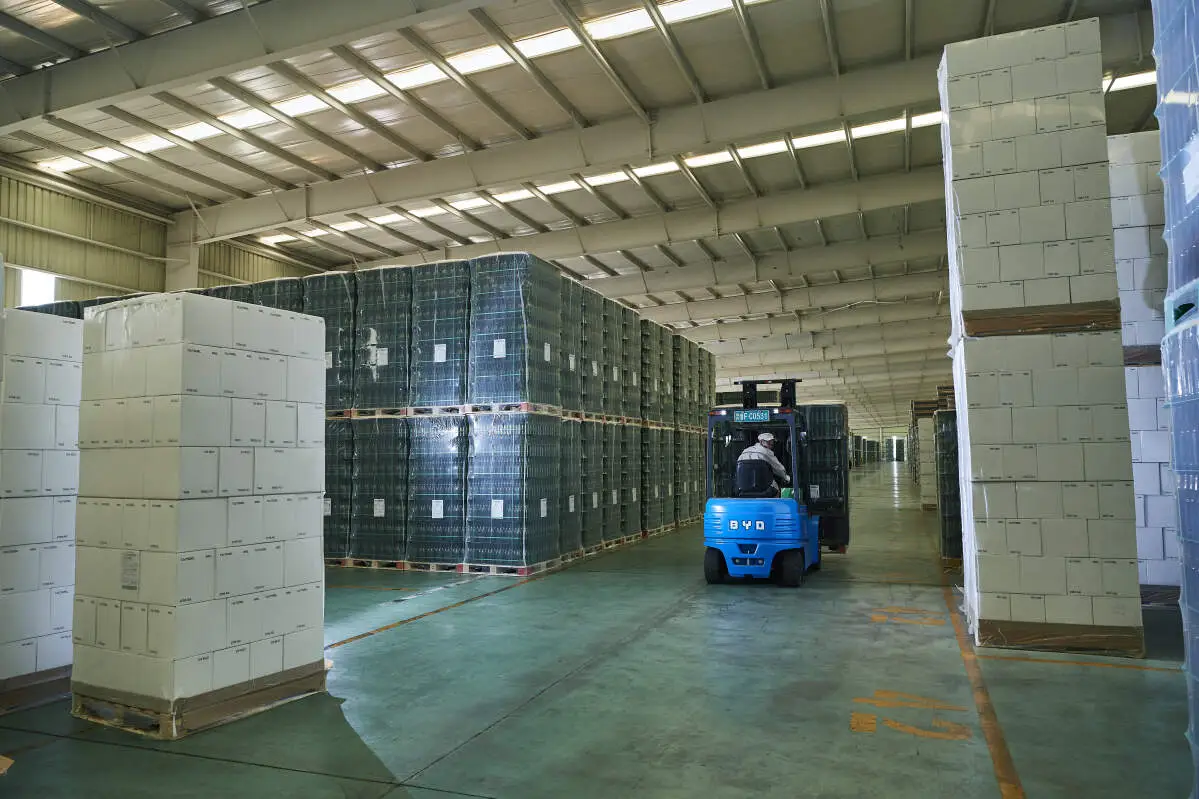
In recent years, the demand for flexible and efficient handling equipment in domestic warehousing, logistics and manufacturing has gradually increased. Electric forklifts have become the mainstream choice due to their more environmentally friendly and stable characteristics. Among them, 3.5-ton lithium-ion forklifts are suitable for a wide range of scenarios due to their moderate carrying capacity. The rental model has also attracted the attention of many small and medium-sized enterprises and temporary expansion demand subjects.
The 3.5-ton lithium forklift rental model mainly includes monthly short-term rental and annual long-term rental. Some service providers can provide a more flexible combination of stages according to demand, but the core still revolves around these two categories. The applicable scenarios of monthly short-term rental are more abundant, such as the peak period of big promotion and stocking of e-commerce platforms or retailers, the trial operation stage of new factories or new warehouses, and the gap between temporary failures of self-owned equipment to be repaired and replaced. In such scenarios, enterprises do not need to occupy large amounts of equipment funds for a long time, and can quickly solve the handling gap. The annual long-term lease is more suitable for entities with relatively stable business volume but do not want to bear large fixed asset investment, such as small and medium-sized manufacturing enterprises with daily handling needs, regional warehousing centers, etc. Long-term cooperation usually also provides some service or cost adjustment space.
Regarding the cost reference for the monthly and annual rental of 3.5-ton lithium-ion forklifts, it is necessary to make it clear that the specific value is affected by many factors, and there is no absolutely uniform standard. The first is the configuration difference of the vehicle itself, such as the standard configuration battery of different cruising mileage, the degree of newness of the vehicle, etc. The higher the configuration, the longer the battery life, and the better the vehicle condition, the higher the cost of the vehicle. Secondly, the length of the lease period. The average monthly cost of long-term rentals by year generally has a certain proportion of discounts compared with short-term rentals by month, and the specific discount range varies. Then there is the use scenario of the vehicle, such as the model used only in ordinary flat storage, and the cost of the latter will increase compared with the model with thermal insulation protection for cold storage Finally, whether to include value-added services. Common value-added services include regular free inspections, free or discounted replacement of wearing parts, 24-hour emergency rescue, etc. The more comprehensive the value-added service coverage, the overall cost will be adjusted accordingly. Under the premise of using ordinary flat warehouses, excluding special modifications, and covering basic inspection and some emergency services, the monthly short-term rental cost of 3.5-ton lithium-ion forklifts is about a few thousand to 10,000 yuan. The average annual cost of long-term rental is about a certain discount range for the monthly rental fee under the same configuration and service.


