
 简体中文
简体中文 繁体中文
繁体中文 Deutsch
 日本語
日本語 한국어
한국어 Tiếng Việt
 Русский
 ไทย
ไทย Bahasa Indonesia
 Bahasa Melayu
 Filipino
 لالعربية
 Français

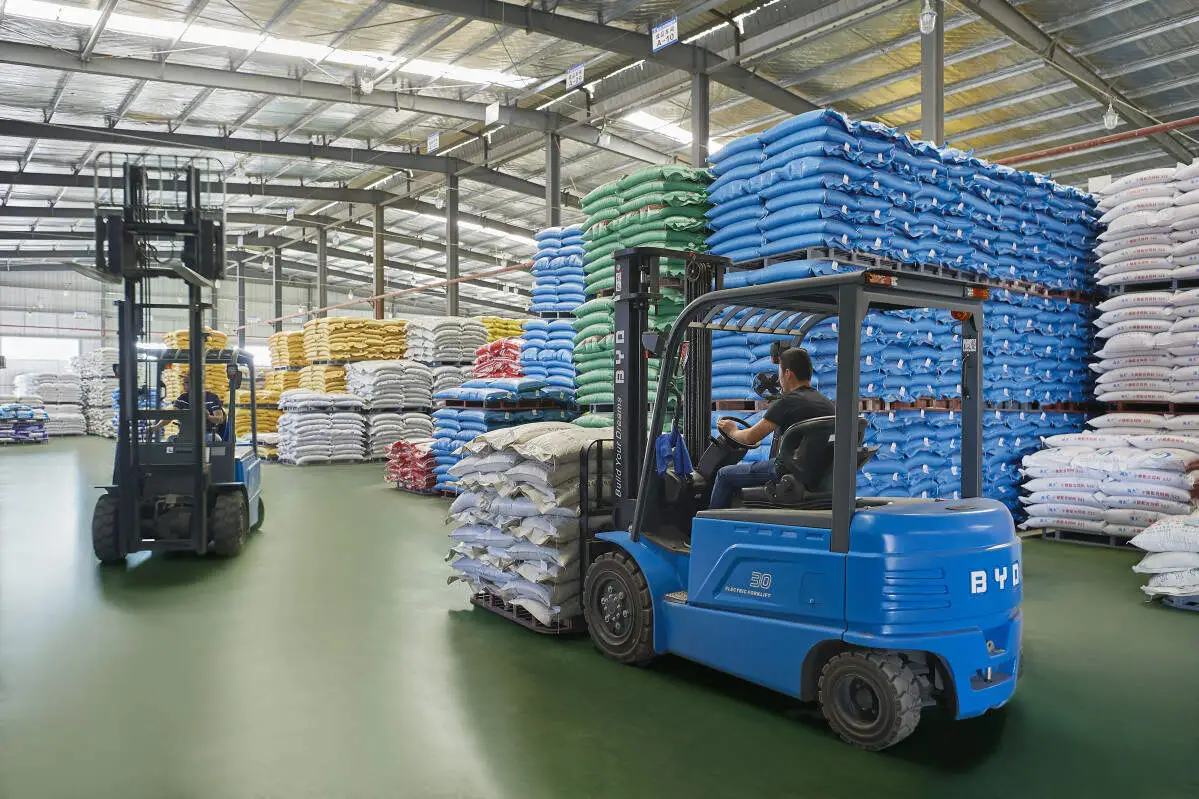
Choose the right fast charging configuration for the 3.5-ton lithium battery forklift to reduce the waiting time of workshop equipment
Electric forklifts are increasingly used in modern warehouses and manufacturing workshops. 3.5-ton lithium-ion forklifts have become the mainstream choice for many enterprises due to their moderate carrying capacity, stable power, environmental protection and energy saving. However, in the scenario of continuous operation, the waiting time of ordinary charging methods may affect the production rhythm. Reasonable configuration of fast charging functions has become one of the keys to improving equipment utilization and shortening total operating hours.
Before considering the fast charging configuration of a 3.5-ton lithium-ion forklift, it is necessary to understand the actual power consumption and operation requirements of the workshop. The first is to check the power capacity of the workshop. Fast charging requires higher current and voltage than ordinary charging. If the power capacity is insufficient, it may not be able to start fast charging normally, and even affect the stable operation of other equipment. Enterprises can ask professional electrical personnel to evaluate the workshop power grid in advance to confirm whether a small-scale power grid transformation is required, or choose a fast charging scheme that adapts to the current power grid to avoid wasting resources due to blind configuration. Secondly, it is necessary to sort out the daily operation time and rest gap of the forklift, for example, if the workshop is two shifts, the rest gap is short, and the single charging amount needs to be able to support most of the subsequent shifts; if there is a long idle period in a single shift or three shifts, it can also be combined with fast charging and slow charging to protect the battery while meeting the emergency replenishment needs.
The suitable fast charging configuration mainly includes the suitable charging machine and the fast charging interface of the vehicle itself. The suitable charging machine should fully match the battery type, capacity and voltage level of the 3.5-ton lithium-ion forklift, so as to ensure the charging efficiency and avoid irreversible damage to the battery. Generally speaking, the suitable fast charging charger can replenish the battery power from 20% to 80% in a short time. This range is the high-efficiency charging area of the battery, which can quickly meet the replenishment demand and relatively prolong the service life of the battery. The fast charging interface of the vehicle itself needs to have good sealing and durability, because there may be dust, water stains, etc. in the workshop environment, and the performance of the interface will directly affect the safety and stability of charging.
In addition to choosing the right fast charging configuration, it is also important to use and maintain it reasonably. For example, try to avoid charging when the battery power is lower than 10%, and do not overuse fast charging. Fast charging can be used as a means of emergency replenishment, and slow charging mode is preferred for daily charging. Regularly check the fast charging interface and the connecting cable of the charger to ensure that there is no damage or loosening. According to the requirements of the instruction manual, regularly maintain the battery to keep the battery in good condition.


