
 简体中文
简体中文 繁体中文
繁体中文 Deutsch
 日本語
日本語 한국어
한국어 Tiếng Việt
 Русский
 ไทย
ไทย Bahasa Indonesia
 Bahasa Melayu
 Filipino
 لالعربية
 Français

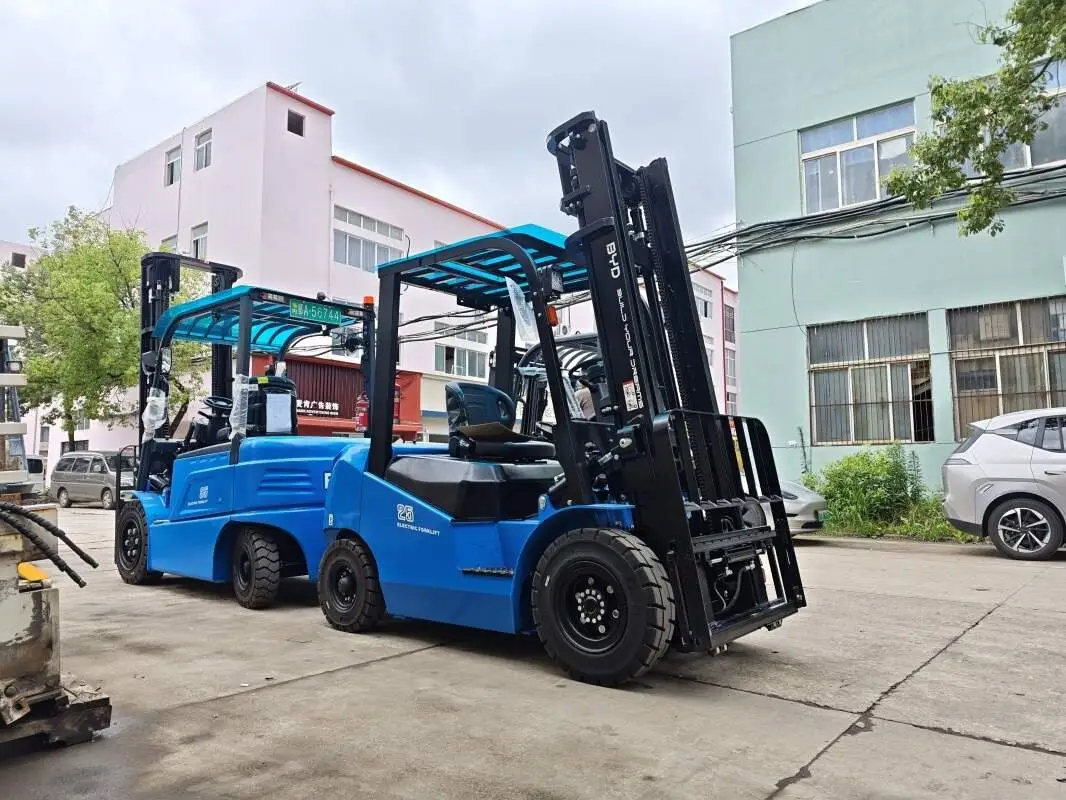
Large material transfer workshops usually involve the handling of heavy and bulky materials such as heavy parts and whole boxes of goods, which puts forward higher requirements for the performance of forklifts. 3-ton lithium-ion forklifts have become the selection direction of many workshops due to their environmentally friendly and efficient characteristics, but whether they can adapt to specific working conditions needs to be analyzed from multiple dimensions.
Load capacity adaptation is the core consideration. The single handling weight of the large material transfer workshop is mostly concentrated in the range of 2-3 tons, and some scenarios may involve short-term overweight handling. The rated load of the 3-ton lithium battery forklift just covers the mainstream demand. Its reinforced frame structure and optimized load-bearing design can stably carry 3-ton materials to complete the lifting and handling actions. However, it should be noted that when there are scenarios such as ramp handling and high-level stacking in the workshop, it is necessary to combine the climbing capacity of the forklift with the redundancy of the lifting height to ensure the stability of the operation under the load state and avoid safety risks caused by the working conditions exceeding the adaptation range.
The battery life and charging mode need to match the rhythm of the operation. The operation intensity of the large material transfer workshop is high, and the single-day operation time is mostly 8-12 hours. The battery life of the 3-ton lithium battery forklift needs to be in line with the operation needs of the workshop. Generally, the models equipped with large-capacity lithium batteries can meet the requirements of single-day continuous operation. At the same time, the workshop needs to be equipped with suitable charging facilities. If the operation gap is short, you can choose the model that supports fast charging, and use the fragmentation time such as lunch break and shift change to supplement the energy to avoid affecting the production efficiency due to battery life interruption. In addition, if the workshop is in a low temperature environment, it is necessary to confirm the discharge efficiency of the battery at low temperature to ensure the
Site space adaptation affects traffic and handling efficiency. Large material transfer workshops often have narrow passages, dense cargo, and many corners. The body size of the 3-ton lithium-ion forklift needs to be adapted to the width of the workshop passage, and the compact turning radius can improve the flexibility of passing in narrow areas. At the same time, the length of the fork of the forklift needs to match the size of the material. Too long or too short may affect the safety and efficiency of handling. In addition, if there are indoor and outdoor cross-operation scenarios in the workshop, the waterproof and dustproof level of the lithium-ion forklift needs to meet the basic requirements of outdoor operations to avoid damage to the equipment due to environmental factors.
The operation efficiency adaptation needs to be in line with the production rhythm. Large material transfer workshops have higher requirements for handling efficiency. The starting speed and lifting speed of 3-ton lithium-ion forklifts need to be adapted to the operation rhythm of the workshop. Compared with traditional fuel forklifts, lithium-ion forklifts have greater instantaneous torque and faster start acceleration, which can reduce the time consumption of material handling. At the same time, the daily maintenance cost of lithium-ion forklifts is lower, and there is no need to change oil and filter elements frequently, which can reduce downtime for maintenance and further improve the overall operation efficiency of the workshop.
Overall, 3-ton lithium-ion forklifts are highly adaptable in large material transfer workshops, but companies need to choose the right configuration based on the actual working conditions such as the load characteristics, operating hours, and site conditions of their own workshops in order to give full play to their advantages and ensure the efficiency and safety of material transfer.


