
 简体中文
简体中文 繁体中文
繁体中文 Deutsch
 日本語
日本語 한국어
한국어 Tiếng Việt
 Русский
 ไทย
ไทย Bahasa Indonesia
 Bahasa Melayu
 Filipino
 لالعربية
 Français

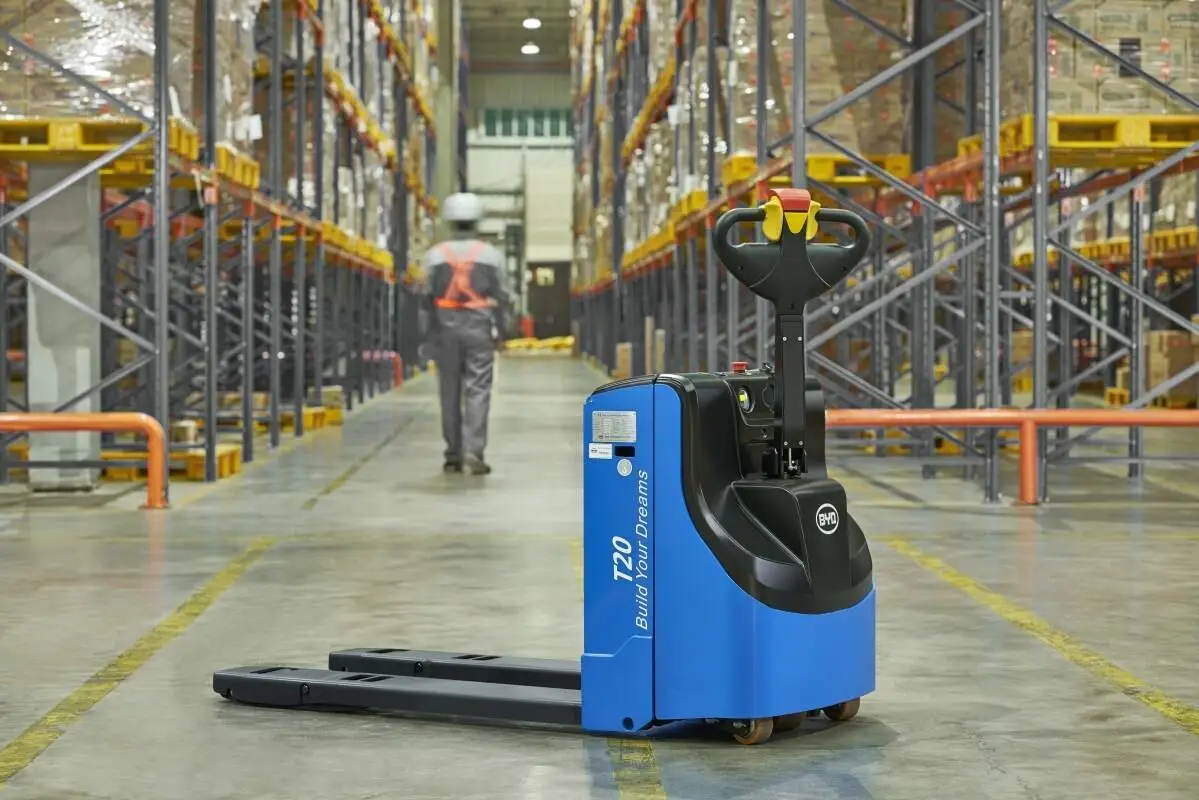
With the improvement of environmental protection requirements, indoor zero-emission workshops have become standard in many manufacturing industries, and the choice of on-site handling equipment has also been upgraded. New energy lithium-ion forklifts have become the ideal equipment for such workshops due to their zero-emission, low-noise and other characteristics, showing significant advantages in multiple sub-scenarios.
Fine handling requirements in the electronics manufacturing plant
Electronic manufacturing workshops are mostly closed and dust-free environments, with strict requirements on air quality and noise control. Traditional fuel forklifts emit exhaust gas and generate large noise, which easily affects the production accuracy of electronic components and the working environment of employees. New energy lithium-ion forklifts have no exhaust emissions during operation, and the noise value is much lower than that of traditional forklifts, which can not only meet the clean needs of the workshop, but also reduce the interference to the production process. At the same time, the lithium-ion forklifts are flexible in shape and can be easily shuttled between narrow production line channels, adapting to the multi-batch and small batch material handling needs of electronic workshops.
Clean adaptation of food processing workshops
The food processing workshop has extremely high requirements for hygiene standards, and the production area needs to be kept odor-free and pollution-free. The lithium-ion forklift does not contain fuel-related parts, and will not cause problems such as fuel leakage and volatile odor, which is in line with the hygiene standards of food production. In addition, the appearance of the lithium-ion forklift is smooth and easy to clean, which can easily cope with the regular disinfection operations of the workshop and reduce the risk of food contamination. In special environments such as low-temperature refrigeration workshops, the battery performance of the lithium-ion forklift is stable, and it can adapt to continuous operation at lower temperatures to ensure the efficient handling of cold chain materials.
Pharmaceutical manufacturing compliance needs
The pharmaceutical production workshop belongs to a closed environment with high cleanliness and high compliance, and any pollution source may affect the quality of medicines. The zero-emission characteristics of the new energy lithium-ion forklift prevent harmful components in the exhaust gas from polluting the production environment at the root, which is in line with the production specifications of the pharmaceutical industry. At the same time, the lithium-ion forklift has good running stability, reduces the vibration during material handling, and avoids damage to the drug packaging or affecting the composition. Its precise control performance can also complete the precise access operation in the narrow drug storage area.
Efficient operation of indoor warehousing and distribution centers
Indoor warehousing and distribution centers usually have a large cargo turnover, which has high requirements on the battery life and efficiency of handling equipment. Lithium-ion forklifts support fast charging, which can use the rest time of the workshop to complete the replenishment, reduce downtime and wait time, and improve the overall operation efficiency. Compared with traditional lead-acid battery forklifts, lithium-ion forklifts have a longer service life and lower maintenance costs, which can save long-term investment for warehousing operations. In addition, the intelligent configuration of lithium-ion forklifts can be connected with the warehouse management system to achieve accurate scheduling of material handling, and adapt to the efficient operation requirements of modern warehousing.
In summary, new energy lithium-ion forklifts, with their characteristics of zero emissions, low noise, and high adaptability, are perfectly adapted to the needs of various scenarios in indoor zero-emission workshops, helping enterprises to meet environmental protection requirements while improving on-site handling efficiency and promoting green and intelligent upgrades of production and operation.


