
 简体中文
简体中文 繁体中文
繁体中文 Deutsch
 日本語
日本語 한국어
한국어 Tiếng Việt
 Русский
 ไทย
ไทย Bahasa Indonesia
 Bahasa Melayu
 Filipino
 لالعربية
 Français

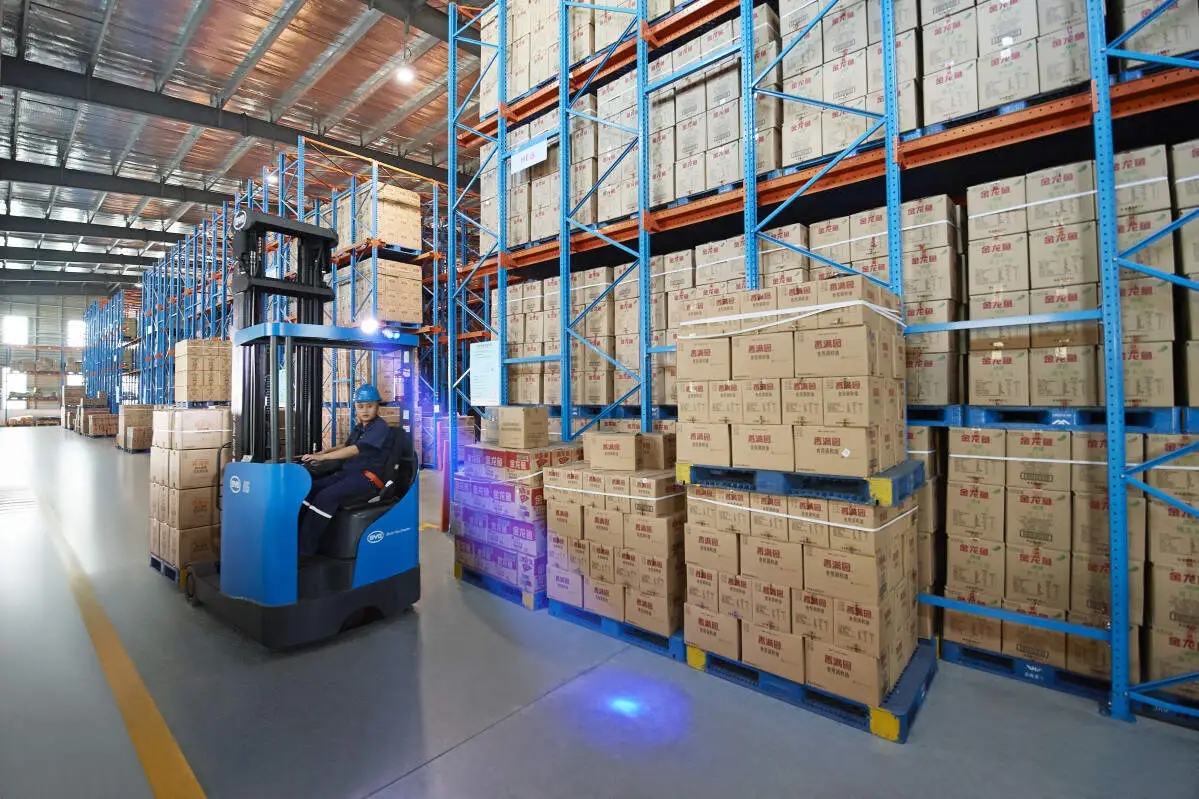
At present, the environmental compliance and production comfort requirements of indoor operations in domestic warehousing and logistics, production and manufacturing are constantly improving. 2-ton electric forklifts have become common handling equipment in various small and medium-sized workshops and warehouses due to their moderate load capacity. Among them, environmental protection and noise performance are the core highlights that distinguish them from traditional fuel forklifts.
From the perspective of environmental protection performance, the advantages of a 2-ton electric forklift are very significant. First, it uses batteries as a power source, and does not produce carbon monoxide, nitrogen oxides, fine particles and other pollutants emitted by fuel forklifts during operation, which is particularly important for the internal environment of the workshop and the health of personnel. Especially in scenes with high cleanliness requirements such as food processing, pharmaceutical production, and electronic assembly, the characteristics of no exhaust emissions fully comply with the production specifications of relevant industries, and can also meet the basic requirements of plant environmental impact assessment. Secondly, electric forklifts do not have fuel pipelines, fuel tanks, and other components, so there will be no fuel leakage to pollute the ground. The difficulty and cost of daily cleaning and maintenance are reduced, and safety hazards caused by oil pollution can also be avoided.
From the perspective of noise performance, the 2-ton electric forklift also has a good experience. On the one hand, the battery-driven motor runs smoothly, and the noise source mainly comes from the tire friction and steering system. The overall operating volume is much lower than that of traditional fuel forklifts. Drivers who operate in the cab for a long time will not be disturbed by excessive noise, and they are not prone to fatigue, which can indirectly improve the safety and efficiency of the operation. On the other hand, the lower ambient noise also meets the relevant requirements of the workshop operation area in the "Industrial Enterprise Noise Control Design Code". It will not affect the normal communication between workers, nor will it interfere with the normal operation of surrounding precision instruments. It is suitable for all kinds of production and storage environments that are sensitive to sound.


