
 简体中文
简体中文 繁体中文
繁体中文 Deutsch
 日本語
日本語 한국어
한국어 Tiếng Việt
 Русский
 ไทย
ไทย Bahasa Indonesia
 Bahasa Melayu
 Filipino
 لالعربية
 Français

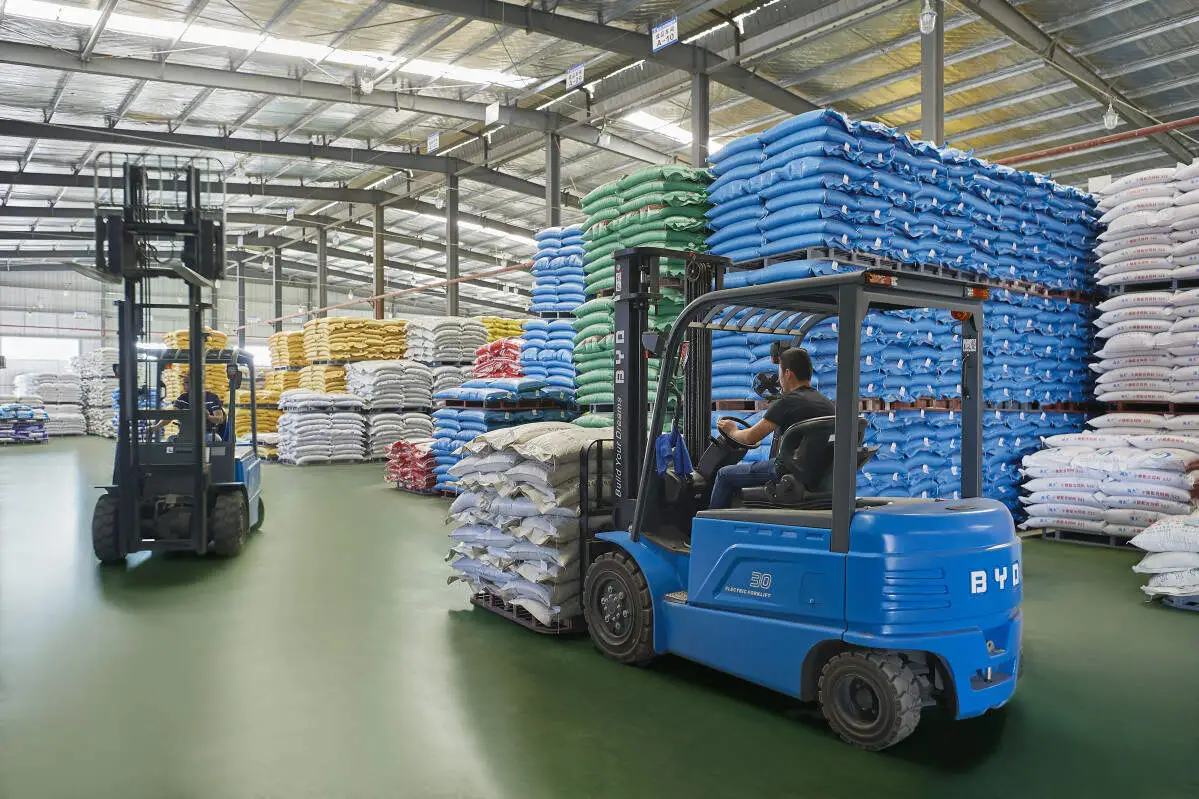
In the warehousing and logistics system, the transshipment and stacking of goods within the warehouse are high-frequency core links. Selecting appropriate handling equipment can effectively improve operational efficiency and reduce operating costs.
At present, in the 2-ton storage and handling equipment, the acceptance of lithium-ion forklifts is increasing, and many warehouses are considering or have completed adaptation.
Let's talk about the advantages of adapting a 2-ton lithium battery forklift to warehouse operations first. From a power perspective, it uses lithium batteries as a power source, and the charging speed is relatively fast. There is no need to replace the battery pack frequently. Some models support fast charging mode, which can continue to be put into operation after a short time of replenishment, which can meet the needs of two-shift or even some three-shift warehouses. In addition, the discharge stability of lithium batteries is better. When the load is close to 2 tons, the power output will not be significantly attenuated, and the operation process is more stable. From a maintenance perspective, lithium batteries do not need to be regularly added with water and cleaned electrodes like lead-acid batteries, and the maintenance frequency and maintenance cost are lower. They only need to do a good job of appearance cleaning and simple component inspection every day. From the perspective of environmental protection and operating environment, lithium batteries do not generate harmful gases such as acid mist during charging and use, and there is no obvious noise pollution, providing a more comfortable working environment for warehouse staff and meeting the development requirements of green warehousing.
Let's talk about the warehouse adaptability of a 2-ton lithium-ion forklift. Its body is usually compact and has a small turning radius, making it suitable for working in narrow warehouse passages, such as traditional beam-type shelf warehouses and the lower space of attic shelf warehouses. In terms of load capacity, the rated load of 2 tons can basically meet the daily needs of most warehouses, such as handling pallet-loaded food, daily necessities, electronic parts, small and medium-sized machinery parts, etc. In addition, some 2-ton lithium-ion forklifts can also be equipped with different attachments, such as side shifters, distance adjustment forks, etc., to further expand the operation scene, such as handling goods with irregular sizes and adjusting the position of pallets on the shelves.
It should be noted that when the warehouse adapts a 2-ton lithium-ion forklift, it should choose the appropriate model and parameter configuration according to its actual situation, such as channel width, cargo weight, operating time, etc. At the same time, it is necessary to do a good job in the daily maintenance of the forklift and the training of the operator to ensure the safe and efficient operation of the equipment.


